ESPN Hires The Athletic Editorial Director Sergio Gonzalez
Want more from Front Office Sports
in your search results?
At Ponte Vedra High School, Mike Harrison’s hours are long. On any given day, the athletic director is selling and programming ads for the state-of-the-art videoboards in Ponte Vedra’s outdoor stadium and indoor gym; producing custom hype videos for big games; and making sure individual athletes and teams get adequate promotion across the school’s social media channels.
Harrison says his role is “completely different in lots of ways,” since he started at another northeast Florida high school in 2015.
He’s one of roughly a dozen long-tenured high school and state athletic administrators from around the U.S. who Front Office Sports spoke with in recent months. They say that while the job is still incredibly fun and rewarding, the role of a high school AD is more demanding and visible than ever.
ADs say the biggest changes picked up around five years ago, when the opening of the NIL floodgates coincided with the rise of short-form social media. The stakes of high school sports instantly rose, leaving ADs to manage increasingly ambitious athletes and their increasingly involved families.
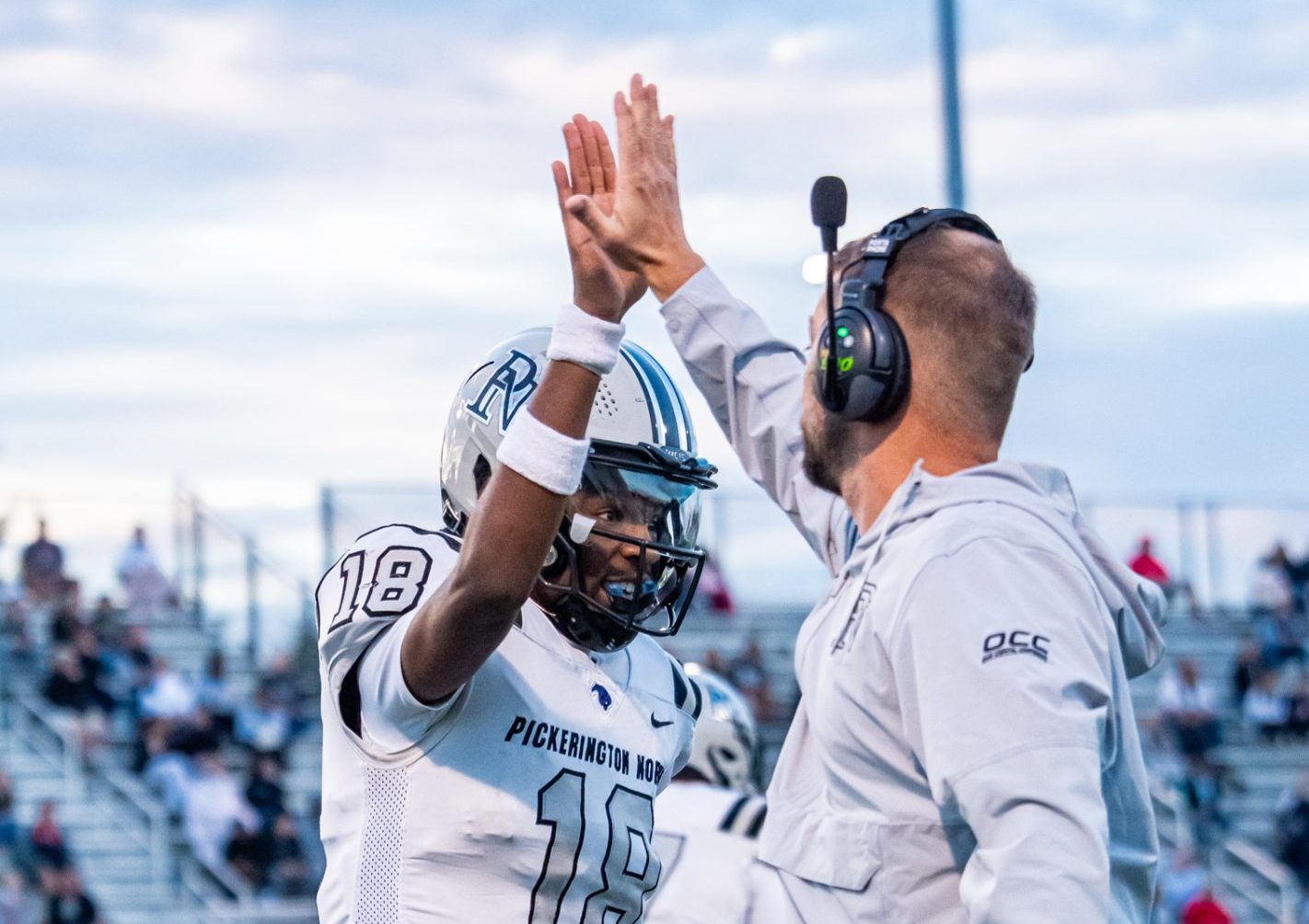
Things have seldom slowed down, and many of these ADs now must view high school sports through the lens of the college athletics arms race. As Colin Beemiller, AD at Pickerington High School North in central Ohio, puts it: “Most of us are running mini colleges at this point.”
High School “Transfer Portal”
One of the biggest changes—and challenges—the name, image, and likeness era brought to college sports is the unrestricted transfer portal. A version of this is taking hold at the high school level, particularly in a handful of states with lax open-enrollment policies, like Florida.
The Sunshine State reportedly saw more than 7,000 athletic transfers during the 2025–26 academic year, up from 5,688 the year before. Harrison, whose school sits in an upscale suburb of Jacksonville, says the churn makes it “extremely difficult” to build relationships and consistently field strong teams. In September, he told FOS: “Soccer starts up here the week after next, and I had kids just last week enroll and say, ‘We want to try out.’”
While Florida’s free-for-all is an outlier right now, it may not be for long. Georgia’s comparatively restrictive rules haven’t stopped school-hopping, according to Kory Keys, AD at Milton High School in metro Atlanta. With plenty of public and private schools in the city’s affluent suburbs, he says “parents will move and enroll their kid[s] somewhere else if they feel like they’re not getting the opportunity they think they deserve.”
This leaves ADs having to re-recruit teams and make a hard sell for their players to stay, just like in college. As a result, ADs and their surrounding support bases—fellow administrators, districts, boosters—are pushing for more resources when and wherever they can.
Keys wants to get an indoor practice facility built at Milton High School—or at least put a pavilion over the school’s turf football field to satisfy the asks of families who have told him the field itself isn’t enough. Beemiller’s Pickerington High School North recently finished a $120,000 weight-room renovation and installed videoboards on the football field and in the gym.
More Cooks in the Kitchen
Pushing for the prospect of NIL earnings at the college level, young athletes are often showing up to high school events with crews in tow.
ADs are now facing sidelines saturated with “private content creators” hired by athletes or their families to capture personal photos and videos. Stands are also filling with entourages of travel coaches and specialized trainers, who often inflate expectations.
“A lot of families are paying like seven different coaches telling them, ‘Hey, your kid is going to be the next Ohio State recruit,’ when that’s just not the reality,” says Beemiller. After Pickerington North’s first football scrimmage this August, he says the team’s coaches fielded calls from eight different parents concerned about playing time.
Some outsiders have also assumed pseudo-agent roles, conditioning families to expect near-immediate, individualized promotion. Another central Ohio–based AD says: “If your program doesn’t have highlight reels up within an hour of a game, you’re behind and probably going to hear about it.” (To cope with this demand, many ADs have started recruiting student volunteers—usually those interested in technology and journalism—to capture and share content during games.)
All of this jockeying adds up to a much more diplomatic role for ADs, which can feel almost political. Ponte Vedra’s Harrison, in his 11th year as an AD and 28th year in education more broadly, notes, “You can’t just sneak out the back door of the gym after the game anymore. Today’s group … they want interactions; they want response; they want visibility. You have to shake hands.”
NIL Burden?
Even as high school athletics is increasingly looking like college, there is one thing ADs haven’t yet had to grapple with: NIL. For all the ways the prospect of NIL earnings is changing behavior in and around high school sports, actual deals remain rare.
Though high school students are legally allowed to engage in NIL deals in a vast majority of states, all ADs FOS spoke with generally described them as a “non-factor” in their day-to-day work. At their schools, NIL activity has been limited to a handful of high school star athletes doing small-time endorsements with local businesses in exchange for free products or hosting youth camps bearing their names.
Still, ADs are bracing for deal compliance to be added to their to-do lists. “We can all see it coming out of the corner of our eyes,” says Chris DeClercq, AD at San Ramon Valley High School in the Bay Area. “It’s on the horizon and only a matter of time before it becomes material for more students.”
Download the FOS App
The business of sports, in your pocket.



Scan the QR code to get the app now.