Want more from Front Office Sports
in your search results?
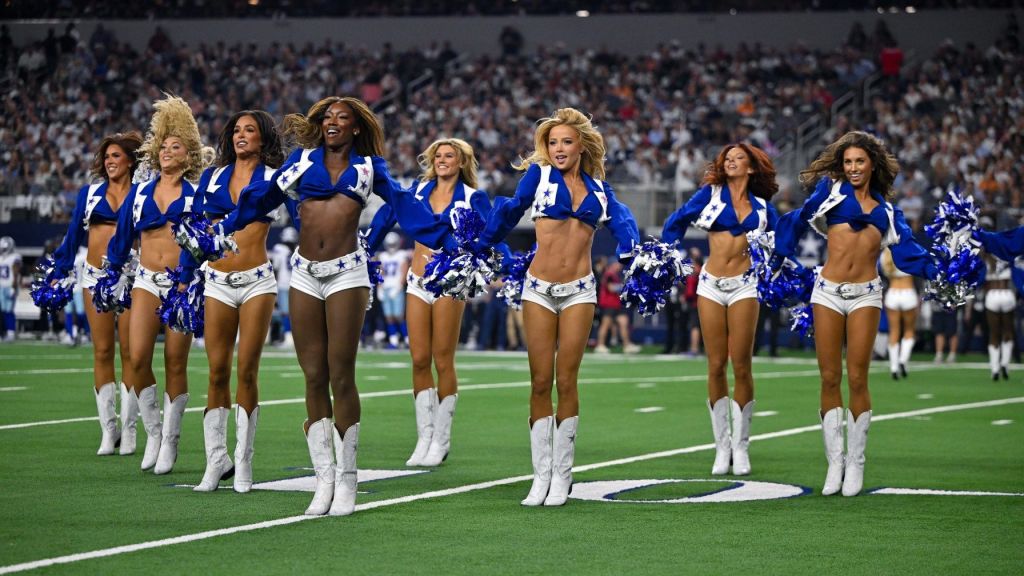
The Cowboys officially recognized the Dallas Cowboys Cheerleaders Association (DCCA) as a union last Friday. It marks the second successful labor-organizing effort by an NFL cheerleading squad.
The first came in 1995, when the Bills cheerleaders won a National Labor Relations Board ruling and formed the National Football League Cheerleaders Association. But the team and the union were both disbanded in 2014, after five former members filed a wage-theft and mistreatment lawsuit.
The DCCA’s formation comes as the Dallas Cowboys Cheerleaders—a household name for decades—have reached a new stratosphere of popularity, fueled by the 2024 premiere of the Netflix documentary series America’s Sweethearts: Dallas Cowboys Cheerleaders. Now in its third season, the show was a near-instant hit and has turned many individual members into media personalities.
Sports-labor experts tell Front Office Sports that the squad’s newfound superstardom puts them in a strong position to succeed in collective bargaining negotiations—even against an organization as tightly controlled as Jerry Jones’s Cowboys.
Public, Personal, and Professional
As in most labor negotiations, increased pay will top the cheerleaders’ agenda, sources tell FOS. It’s an issue on which they already have some momentum: The team received a 400% raise ahead of the 2025 NFL season, bringing their hourly rate to roughly $75.
Collective bargaining will take this a step further, with discussions likely centered on “how many hours it takes to be a Dallas Cowboys Cheerleader and whether that constitutes a full-time job,” according to Lisa Pike Masteralexis, a professor of sport management and senior associate dean at UMass Amherst’s Isenberg School of Management.
While the cheerleaders perform only at Cowboys home games, they practice almost daily during the football season and appear at high-profile events across Texas throughout the year. Their audition process is monthslong, and many cheerleaders have embarked on annual media tours to promote America’s Sweethearts since its 2024 premiere. John Wolohan, a professor of sports law at Syracuse, says this schedule—depicted in the Netflix show—gives the Cowboys’ cheerleaders a “strong argument that they’re a lot busier than most other NFL cheer squads” and thus deserving of additional benefits like healthcare, mandated breaks, and greater control over travel frequency and conditions.
The Cowboys, meanwhile, will likely want to codify rules around how the cheerleaders present themselves and what additional business ventures they can pursue—as well as any punishments for breaking these guidelines, including fines.
Stipulations about cheerleaders’ physical appearances and their relationships with Cowboys players or personnel are also fair game. And since many cheerleaders have become social media stars, the Cowboys may also seek greater control—including exclusivity terms—around any brands they are paid to promote online.
In short, UMass’s Masteralexis says, this collective bargaining process is “really going to be about where the line between the cheerleaders’ public and personal lives is drawn.”
Netflix did not respond to a request for comment about whether the unionization efforts would be part of any upcoming America’s Sweethearts seasons. The Dallas Cowboys and the Dallas Cowboys Cheerleaders Association (DCCA) declined to comment, referring FOS to their joint statement released last Friday.
Will the Cheerleaders Get What They Want?
Experts tell FOS the Cowboys’ proactive recognition of the DCCA is a positive signal and reflects the “legitimate power” the cheerleaders hold. If the team hadn’t taken this step, they would’ve had to initiate an election for recognition through the National Labor Relations Board (like the Buffalo Jills did in 1995).
To Masteralexis, it also suggests the Cowboys “want to negotiate this in a private back room—not in public or through the press,” where sympathy is likely to be on the cheerleaders’ side.
Dallas has topped Forbes’ ranking of the world’s most valuable sports teams for more than a decade, most recently pegged at a $13 billion valuation. “When you look at what the team is worth versus the several hundred dollars per game these women are currently being paid, it doesn’t add up,” adds Masteralexis, who is also a sports labor lawyer. “It’s in the Cowboys’ best interest to keep things out of the public eye.”
But public support doesn’t guarantee the cheerleaders will get everything they want. The DCCA’s biggest potential weakness is its members’ relatively short careers, which could make it hard to sustain the unity needed to wield any union’s most powerful tool: a strike.
“In most industries, unionized workers have 30-, 40-, or 50-year careers. So it’s often worth it to sit out six months to get a better deal for the next however many decades,” explains Gabe Feldman, director of Tulane’s sports law program. “That’s likely not going to be the case for NFL cheerleaders, who—like the players themselves—typically only perform for a handful of years.”
Setting a Precedent?
Most NFL teams have cheerleading squads, but none are remotely as popular or revenue-generating as the Cowboys’. That makes copycat unionization efforts by other pro sports cheer and dance teams less likely, though not impossible. Multiple sources pointed to the Patriots’ and Raiders’ cheerleaders as potential candidates, given their relatively high profiles.
Recent sports-centric labor-organizing efforts have yielded mixed results. Minor League Baseball players and professional pickleball players successfully organized in 2022 and 2025, respectively, while NCAA athletes have failed to unionize.
Tulane’s Feldman says the DCCA’s path may resemble campus labor movements more than traditional sports unions. Athletes bargain through league-wide agreements because they need uniform rules to govern competition; cheerleaders, in contrast, can negotiate directly with their individual employers—much like adjunct professors and other university employees who have unionized on a school-by-school basis.
Whether it sparks a broader movement—and they get all their demands met—the Cowboys cheerleaders’ unionization effort still marks a significant turning point. “It’s the beginning of a process, not the end of a process,” Feldman says. “But it’s certainly a meaningful moment and opportunity for cheerleaders to get not only greater compensation, but overall protections, too.”
Download the FOS App
The business of sports, in your pocket.



Scan the QR code to get the app now.