Want more from Front Office Sports
in your search results?
With just a month to go before MLB’s nuclear winter begins, offseason player movement is already off to a frenetic start.
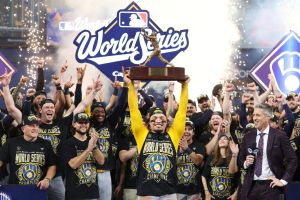
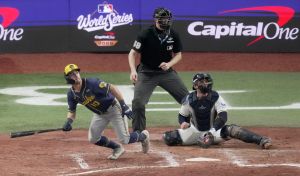
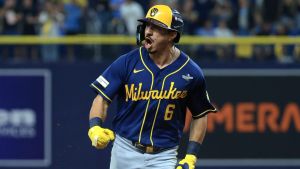
This week’s end of the World Series, won by the Brewers for the first time in franchise history, formally started MLB’s offseason, and with it a series of contractual and roster decisions. Unlike prior offseasons, though, ongoing labor strife between MLB and the MLB Players Association and an expected management lockout beginning Dec. 1 are helping compress the market.
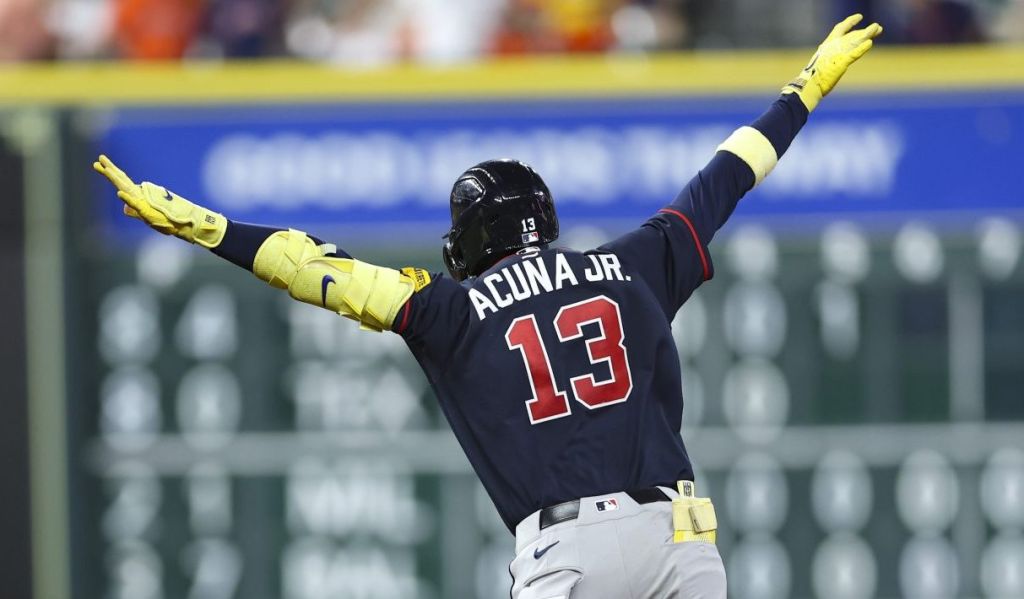
With Monday’s deadline for 2027 contract option decisions looming, many players and teams have already started to make decisions for next year. The Padres’ Michael King declined a player option on his contract and will become one of the top free agent starting pitchers after the Dodgers’ Tarik Skubal. The Braves exercised club options on star players Ronald Acuña Jr. and Ozzie Albies, keeping two key pieces of their talent core in place. The Marlins did the same with starting pitcher and 2022 National League Cy Young Award winner Sandy Alcantara.
Mets third baseman Bo Bichette opted into the second season of a three-year, $126 million contract with the club, while Diamondbacks pitcher Corbin Burnes did the same to stay in what is a six-year, $210 million deal.
By midday Friday, 155 players formally became free agents, with more expected in the coming days as more contract option decisions are made. While Brewers pitcher Dustin May declined his $20 million mutual option for next year and will add to that free agent list, the defending champions will have an unusual amount of continuity whenever play resumes.
Beginning Monday at 5 p.m. ET, free agents can begin signing with other teams. That same day, one-year qualifying offers are due, worth $23.15 million and providing draft pick protection to teams. Decisions on those offers will be due by Nov. 9. Clubs and pending free agents, however, will be looking at those qualifying offers without knowing for certain what MLB’s overall economic structure or the nature of the draft next year will be.
Heightened Uncertainty
The offseason player market will be short-lived, as MLB club owners are expected to lock out the union on Dec. 1—at which point all roster-related movement would cease.
MLB club owners are seeking several dramatic changes, including a hard salary cap and floor, significant restrictions on free agency, a retooled draft, and a 154-game regular season. The union vehemently opposes many of those potential measures, particularly the cap, and is looking to preserve the core of the current, market-based economic system.
Amid that divide, the league recently detailed in a memo to club owners that essentially all player-related activity would stop as soon as a lockout begins, including a halt on player trades, signings, and contract negotiations.
Additionally, all player images and videos would be removed from official league outlets such as the MLB website, and any contact between team staffers and players, even socially, would be severely restricted. Those practices duplicate what happened during a lockout during the 2021-22 lockout.
The similarity to a half decade ago, however, begins to fade when considering the scope of management’s current labor proposals—which could radically restructure the state of the game—and the fractious state of the negotiations. Both sides have held out some hope of a deal ultimately being struck, but doing so would require sizable movement from the current negotiating positions.
Download the FOS App
The business of sports, in your pocket.



Scan the QR code to get the app now.