Want more from Front Office Sports
in your search results?
MILWAUKEE — The MLB labor situation is undoubtedly bleak, with team owners and the MLB Players Association starkly divided on several core economic issues, including management’s ardent push for a hard salary cap and floor that the union has branded a “nuclear bomb.”
While the owners are expected to impose a lockout when the current collective bargaining agreement expires in December, bleak is not entirely hopeless. Amid the ongoing bargaining acrimony, there are still glimmers of hope that, if built upon in the coming weeks and months, could result in the league once again managing to avoid missing games.
Among the faint signs of progress during an otherwise difficult set of negotiations:
- The two sides are talking regularly. Since the spring, the league and union have held regular bargaining sessions since the late winter, including this past week. Talks are set to continue through the offseason, differing from the more on-and-off cadences that have happened in prior rounds of bargaining.
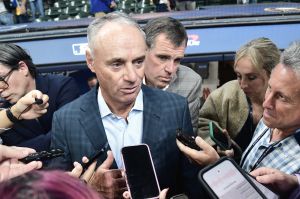
- Both sides know the considerable economic stakes of a work stoppage. MLB just registered a fourth-straight attendance increase for the first time since 2007. Television viewership is also at a historically high level. After the highly damaging 1994-95 strike, it took several years for MLB to recover at the gate, and even that required several major on-field developments including Cal Ripken Jr. breaking the league’s record for consecutive games played, as well as the Yankees dynasty There is no guarantee of similar milestones this time around. “Look, no fan wants to miss games. Obviously, we won’t want to miss games, either,” MLB commissioner Rob Manfred said. “I’m not prepared to write the process off as ending in a really ugly labor battle.”
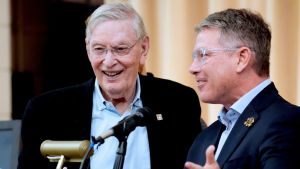
- Manfred is well aware of his legacy. Manfred is set to complete his current contract and retire in early 2029. He has taken great pride in not having lost any games to work stoppages since he became a full-time league employee in 1998, and would like that streak to continue. “I’m an optimist. You’ve got to commit yourself to the process,” Manfred said in response to a Front Office Sports question. “People have to be flexible in terms of what they’re willing to talk about, willing to consider. We’ve been fortunate that over recent decades that we’ve found a way to work it out, and I’m hopeful that we’ll be able to do it again this time.”
- Club owners are not entirely resigned to missing games. Despite a rising chorus of club leaders calling for a salary cap and floor, one team owner told FOS on the condition of anonymity that bargaining progress has been made on several non-economic fronts. “I know the headlines are pretty bad right now, but there’s a lot of other underbrush being cleared out right now,” he said.
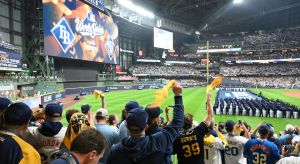
- The union has a similar mindset heading into the offseason. Prior to Game 1 of the World Series, MLBPA interim executive Bruce Meyer said he also holds a sliver of optimism that progress on the core issues can still happen. “At the end of the day, we have a common interest with them in not missing baseball games,” he said.
Despite this, there is still plenty of hard work to do. The salary cap is the obvious elephant in the room, with both sides insisting they’re unified behind their respective positions at unprecedented levels. Recent days have seen several club owners heighten their call for the cap, while Meyer said that such systems are designed to “artificially suppress player salaries, player movement, and player guarantees.”
Upcoming steps include additional bargaining sessions, an owners meeting in mid-November, and an MLBPA annual meeting less than two weeks later in Arizona. That latter session, happening just before the Dec. 1 expiration of the current labor pact, could coincide with further last-minute negotiations between the two sides.
“We have professionals on both sides. We haven’t missed a game in baseball in 30 years, unlike the cap-based sports where they’ve missed thousands of games. So I remain hopeful. We’re there in good faith. I hope they are, too, and we’ll see what happens,” Meyer said.
A somewhat similar dynamic occurred during the 2021–22 round of bargaining, which included a 99-day lockout, but ultimately resulted in a deal that preserved a full season in 2022. That round, however, did not include proposals as sweeping as management’s current push for a cap, a retooled reserve system, or a restructured draft.
Download the FOS App
The business of sports, in your pocket.



Scan the QR code to get the app now.