Want more from Front Office Sports
in your search results?
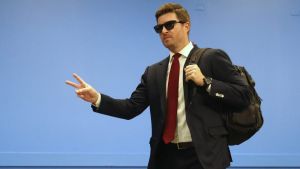
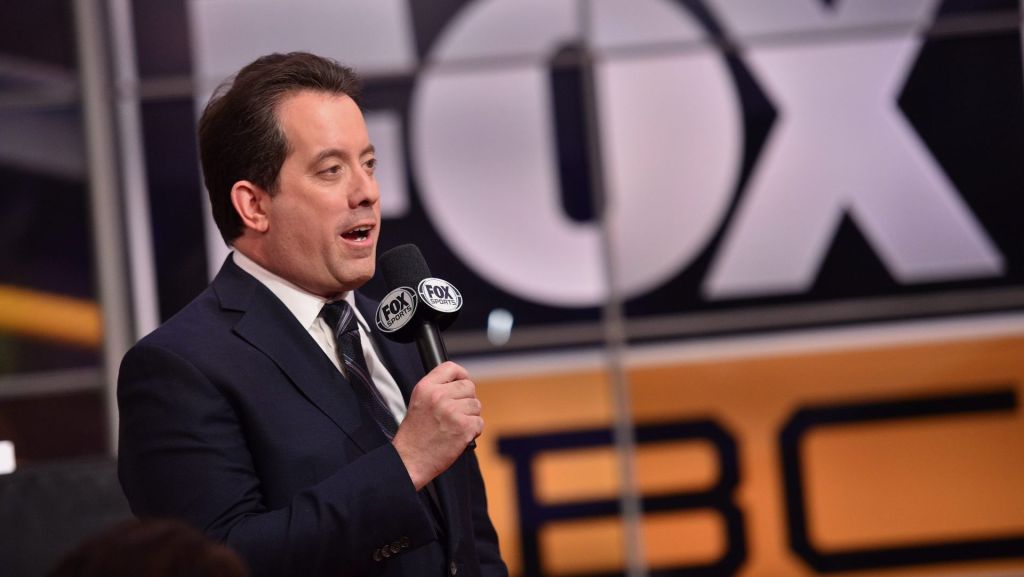
Kenny Albert has called NFL games in roughly 60 stadiums throughout his career, but has never watched a full Sunday of NFL RedZone—just the cost of doing business as Fox’s longest-tenured NFL play-by-play announcer.
“We’ve made the rounds through the years,” Albert told Front Office Sports this week ahead of kicking off his 33rd season at Fox. He’ll be in Detroit on Sunday on the call for Saints-Lions alongside analyst Jonathon Vilma, his booth partner of seven years.
Albert has picked up plenty of tricks of the trade throughout the years from his father, Hall of Fame sportscaster Marv Albert, and uncles, Al and Steve Albert, who were successful sports voices in their own right. “I always joke that our house back when I was a youngster, when my uncles would come over, it felt like I was listening to the first all-sports radio station,” he said.
And as the NFL season gets underway, Albert—who holds the record for most national TV games called across the NFL, NBA, MLB, and NHL—will keep up the busy this month adding in a Phillies-Mets game on Sept. 17 and some Rangers preseason action to his football duties. “It’ll be a fun stretch,” he said. “Six days, three different sports.”
Below is a Q&A of a portion of Albert’s conversation with FOS, some of which has been lightly edited.
Front Office Sports: What is the biggest challenge of calling multiple sports?
Kenny Albert: The preparation is the most important aspect, being a play-by-play broadcaster. I have a checklist that I go through before every game. It starts about a week before. It involves a lot of reading, watching previous games, communication with our crews, and going to practices, talking to coaches and players, preparing my charts, going through statistics and various other publications. Football preparation is certainly the most volume, because we could have two teams late in the season that we haven’t had all year, so you’re really playing catch up and the fans of those teams have pretty much watched every game that they’ve played. So you have to become an expert in a short time.
FOS: Is there a sport you haven’t called that you want to one day?
KA: I’ve done some boxing at the Olympics. I’ve worked some volleyball and water polo and track and field. Those were a lot of fun. I have a number of sports checked off the list. I guess the two that I’ve never been involved with are tennis and golf. I once had the opportunity to call college wrestling back in my early days working in the Washington, D.C., area, and that was the one sport—despite studying and watching prior events and even speaking with an Olympic wrestler—that I felt like I had no clue what I was watching.
FOS: Do you get a lot of questions from Fox colleagues about the early days of the company?
KA: Once in a while, and I enjoy telling some of the stories. Fox decided to go with four really young play-by-play announcers—the others were Joe Buck, Tom Brennaman, and Kevin Harlan, who have all had unbelievable careers, and the four of us were so lucky to get hired at that time. I’ll never forget when we were at our first NFL on Fox seminar down in Anaheim in the summer of 1994 and the Fox Sports logo popped up on the screen and John Madden raised his hand and said, “Why is it plural? We only have one sport. It should be Fox Sport.” And subsequently Fox signed contracts with the NHL the next year and Major League Baseball two years later and of course so many other sports since then.
FOS: Have you enjoyed calling more games with AFC teams in recent years as the CBS-AFC and Fox-NFC affiliations have become less strict?
KA: For about the first 25 years, Fox was predominantly the NFC network, although we would do NFC-at-AFC games frequently, but it always went by the visiting team. That’s changed a little bit. It’s become more prevalent to have an AFC-AFC matchup in the last two or three years. I remember how strange it was, though, the first couple of times, because I was so used to every game having at least one NFC team and most games having two. I think a Bills-Patriots game was the first game I ever worked involving two AFC teams.
FOS: Have you called a game in every single NFL stadium or market?
KA: I definitely have hit every NFL stadium. In some teams’ cases, I’ve done their games in two stadiums or even three, with some of the new stadiums. My first ever Fox game in 1994 was Rams-Cardinals. It was the L.A. Rams playing in Anaheim, down where the Angels play, and then they moved to St. Louis the next year, and now they’ve been back in L.A., both at the Coliseum and now at SoFi. So there are several teams that I’ve done games in multiple stadiums. I think I’m around 60 NFL stadiums if you count the ones overseas.
FOS: What stadium has the best media dining?
KA: Best press box food in the NFL: Tampa, for sure. NHL: Chicago, the Blackhawks have tremendous food up in the press box.
But in the NFL, Tampa has always had the best spread. It’s funny, I judge the stadiums a little differently than most fans would. For me, it’s the location of the broadcast booth. Some of them early on were really high—when the Cardinals played at Sun Devil Stadium, it was so high up. A bathroom in the booth or nearby is important because we only have a couple of minutes at halftime to go there.
FOS: Are you at all worried about the Sunday afternoon slate games getting diluted as the NFL continues to create more standalone windows?
KA: I don’t think so, because with 32 teams you’re always going to have 13-16 games a week, depending on the bye, and I think the majority will always be on Sundays, at least in our lifetimes. I would think that for the most part you’ll always have 8-10 games on Sundays. We’ve seen Amazon and Netflix and the streaming services come in ,and they’ve all done a terrific job.
It’s more rights fees for everybody—for the league and for the owners—and it keeps everybody working on the broadcast end of it. I’m sure we’ll see a lot more change over the next decade, two decades, as well. But as long as there are this many teams and possible expansion—sports is the best reality TV, so they’re going to need some place to put every game.
FOS: When you’re calling a game, do you have a sense when it is probably getting a lot of airtime on NFL RedZone?
KA I will because I’ll start getting a couple of texts from friends who aren’t necessarily getting our game in their home market. The funny thing is I’ve never really seen the RedZone channel. I’ve seen clips of it, but I’m working every Sunday, so I’ve never actually had the opportunity to utilize it. But you’re not really thinking about it during the broadcast.
FOS: I hear your kids are carrying on the Albert family tradition of working in sports?
KA: My daughters are both in the business, not in front of the camera or microphone. My older daughter, Amanda, is doing a great job as a producer/editor for the National Hockey League. My younger daughter, Sydney, is part of the NBC Page program—it’s a training program for between 12 and 16 months at NBC 30 Rock in Manhattan.
FOS: Do they want career advice from dad?
KA: With Amanda working at the NHL, we’re always sending articles and clips to each other. In 2025, when I was calling the Stanley Cup Final for TNT, we would exchange notes with each other. I would send her some of my pregame notes and she sent a couple of really helpful nuggets during some of those games that I was able to use on the air. Sydney, during the Olympics when I was calling hockey in Milan this past February, was actually working on the PR side, so she would send me some articles that were very helpful and if I saw something that might be beneficial to her and her department, I would pass it along as well.