Want more from Front Office Sports
in your search results?
As new USTA CEO Craig Tilley is working through his first US Open at the helm, his successor in Australia has a new suggestion that would drastically change the sport.
Tennis Australia CEO Andrew Abdo, who took over for Tiley last month, said at a conference Monday that Grand Slams may eventually consider shortening matches in an effort to attract a younger audience.
“Maybe in the future, Slams at different rounds or at different lengths of duration. Maybe we’re not playing best-of-five all the way through. Maybe the point-scoring system changes,” Abdo said at SportNXT.
He recognized that tennis “purists” will likely object, but said that other sports around the world have made similar changes that have allowed them to adapt with the times.
“If you’re not thinking about that product in a way that’s contemporary, in a way that’s going to connect with young people, then I think you’re going to be left behind,” Abdo said.
MLB instituted the most notable change that has sped up the sport, adding a pitch clock during the 2023 season that has cut average game length by around 30 minutes. The NBA has also explored changes to free-throw shooting, experimenting with one-shot free-throws in the G League and Summer League.
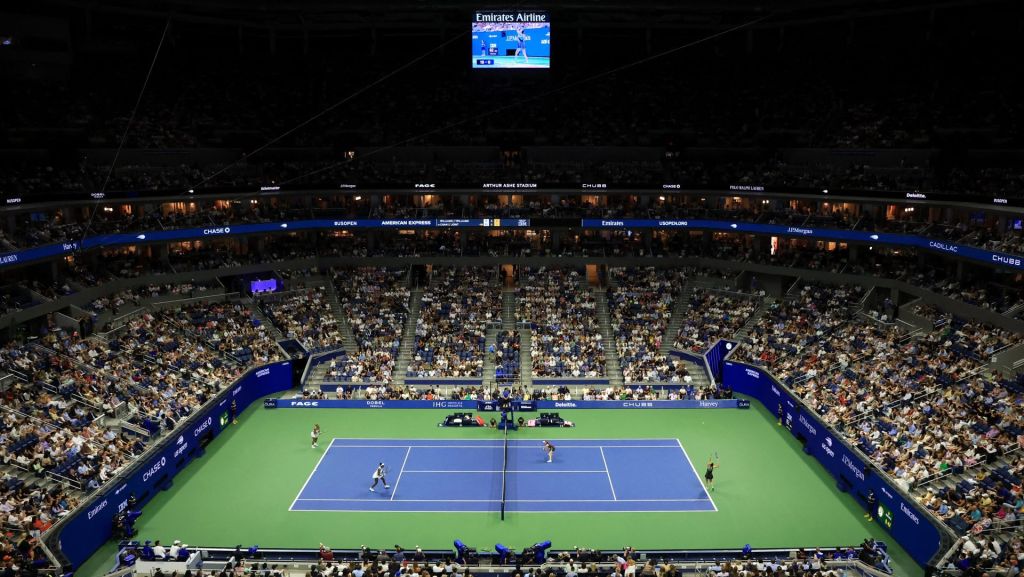
Abdo’s comments come as matches at the 2026 US Open have continuously bled past midnight.
During the tournament’s first main draw day last Sunday, the second night match at Arthur Ashe Stadium between Venus Williams and Sofia Kenin started at 12:13 a.m. and ended after 2 a.m. It was the latest start time for a match in the history of the US Open, following a near five-hour battle between Novak Djokovic and Mariano Navone that ran nearly five hours.
“I just don’t know any other sport where you have to start that late,” Williams, a seven-time Grand Slam champion, said after the match. “I definitely think there’s room for improvement there.”
ATP and WTA tournaments do not have the same problem as the majors, though it helps that men’s matches don’t run the risk of going five sets. But late-night matches aren’t necessarily an issue of tennis’s rules; Wimbledon and Roland-Garros organizers arrange their schedules to have limited late night play.
Wimbledon has a strict 11 p.m. curfew for matches. The French Open has just one night match scheduled per day at the Court Philippine-Chatrier, unlike the two night matches per day at the US Open.
But like the US Open, the Australian Open has had instances of late matches, including a 4 a.m. finish in a Round 2 match between Andy Murray and Thanasi Kokkinakis in 2023.
Djokovic, 39, actually floated the idea of cutting short tennis matches during an interview at Fanatics Fest in July.
“We should change the format of the scoring,” Djokovic told sports creator Nick.Knows.Ball. “Not play up to six games a set, play up to four, possibly no ad.”
Djokovic said he still thinks matches could be best-of-five under this format, but said they should stay within a two-hour window.
Women’s No. 3 Jessica Pegula said she understands that some tournaments are trying to appeal to certain broadcast requirements. (ESPN owns the rights to the US Open, the only Grand Slam played in the US.) But she still feels like there is opportunity for change.
“You have to wonder if it’s really the right thing for players to be finishing at 2:00 a.m.,
especially when it’s not—like I’m not watching on TV. I’m sleeping. Some people stay, but there is a lot of people that need to go home,” Pegula said last week at the US Open. “I definitely question whether there isn’t just a better way or just starting an hour earlier or just something different.”
Jeff Blackburn, CEO of Tennis Channel, which airs all ATP and WTA tournaments, said he is “more old school” and is in favor of keeping the match rules the way they are, and said he “doesn’t anticipate” there being a change in Slams. But he also believes players should not be playing well past midnight—and there are other ways to make those changes.
“There’s many things for [tournament organizers] to consider there, but foremost needs to be the players at the top,” Blackburn said. “Having the players play that deep into the evening—that’s a defect that needs to get addressed.”
Download the FOS App
The business of sports, in your pocket.



Scan the QR code to get the app now.