Want more from Front Office Sports
in your search results?
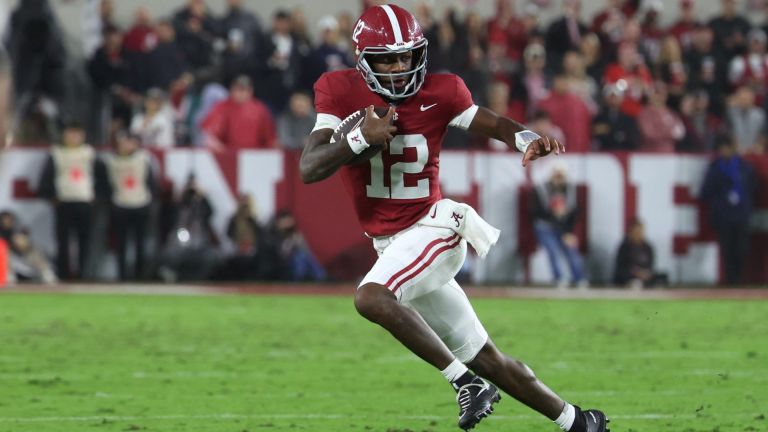
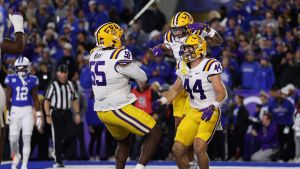
Last week, a Louisiana judge granted a temporary restraining order allowing players who had signed NFL contracts to go back to college programs. LSU has secured deals with two of them: Dae’Quan Wright and Zxavian Harris. But on Tuesday, SEC presidents tried to block these players from returning to college—the conference voted to sanction teams that roster former professional football or basketball players.
The events have put LSU, as well as its future players, on a collision course with the SEC. As of Tuesday night, LSU was still planning to sign Wright. Players’ lawyers are gearing up for a legal battle with the conference. LSU, which has repeatedly supported players on this issue, will likely do the same.
The ramifications go far beyond the SEC, however. The situation could test whether conferences have the legal authority to set and enforce rules the NCAA can’t. The entire college sports world is watching the powder keg in Baton Rouge with bated breath.
If conferences can’t enforce their own rules, one power conference school source said: “It would take us from light speed to ludicrous speed—‘spaceballs.’”
The Louisiana lawsuit wasn’t about getting former NFL players eligibility. Instead, it’s one of many cases arguing players who started college in 2022 and exhausted four years of eligibility should get a fifth year by being grandfathered into the NCAA’s new “age-based” eligibility policy. Plaintiffs included Wright, who played preseason games for the Browns, and Harris, who signed with the Saints but was waived on Aug. 8 before preseason began.
Last Wednesday, the judge granted a temporary restraining order not only allowing them to return to college, but also preventing the NCAA from blocking them from playing on account of their professional experience—so long as they terminated their pro contracts and repaid any wages.
The ruling didn’t open the floodgates—it only applied to the 16 football players who had signed onto the lawsuit. It was considered a one-off because the situation only arose from a challenge over the handling of the freshman class of 2022, rather than a challenge over professional eligibility rules. But it made waves across college football, especially after Wright was waived Sunday and his agent announced he had a deal with LSU—setting him up to be the first player in college football history to go from NFL preseason games to college football games.
Other sports are affected by the SEC’s stance. On Monday night, in a completely separate case unrelated to the class of 2022 eligibility fight, former St. John’s standout men’s basketball player RJ Luis Jr. secured an injunction to play men’s college basketball this season despite signing NBA contracts (though he never appeared in a regular season game). Luis also has a deal to play at LSU.
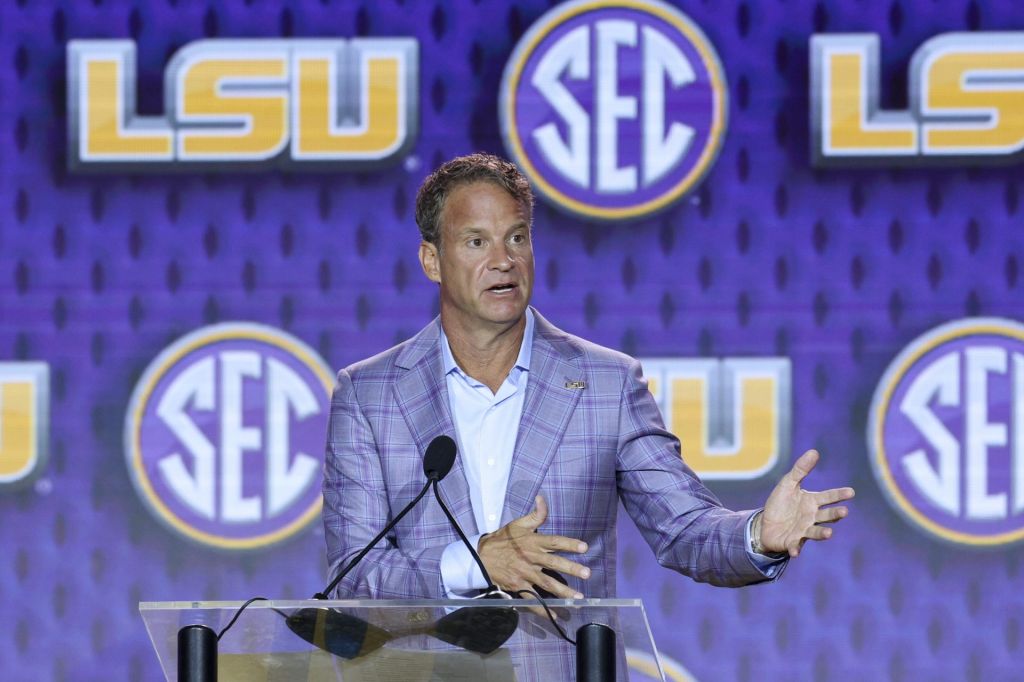
On Tuesday afternoon, the Big Ten announced it had voted unanimously to allow the conference to enforce a league-wide prohibition on players who signed NFL contracts. The SEC followed hours later, adding that it had empowered commissioner Greg Sankey to enforce “penalties” on schools that allowed players who signed with NBA, G-League, WNBA (or team affiliates), or pro football teams. The SEC vote was reportedly unanimous, including LSU president Wade Rousse; a university spokesperson did not confirm to FOS whether Rousse was at this meeting, or whether he voted yes. LSU athletics declined to comment on the SEC’s ruling Tuesday.
Attorney Darren Heitner, who works with Wright’s representation, told FOS on Tuesday night he still expected LSU to sign Wright, despite the SEC’s threats. According to the Louisiana injunction, Wright “is not only allowed to play, but must be allowed to play,” Heitner said. “Our understanding is that’s the intention of LSU right now as well. But if the SEC takes some sort of action to intervene, then we need to reassess, and determine what the next step is.”
As of Wednesday morning, Wright’s representation had not received indication that that position had changed. Also Wednesday, the SEC presidents voted on a set of steep penalties for schools who violate the rule—the vote was reportedly 15-0, with LSU president Wade Rousse abstaining.
Wright and his lawyers could file a motion in Louisiana asking the judge to clarify that the temporary restraining order also prevents the SEC from sanctioning them. Then, on Monday, a hearing is set to consider whether to turn the temporary restraining order into a preliminary injunction. That injunction would be valid until trial, which likely wouldn’t take place until after the end of college football season.
An attorney for Luis did not respond to a request for comment sent Tuesday night, but he could similarly fight for his injunction to apply to the SEC.
In addition to the ongoing litigation, more lawsuits could follow. LSU could prepare litigation against the SEC if it is penalized for playing Wright, Harris, or Luis. Meanwhile, the SEC could take the route the Big 12 took in the Brendan Sorsby debacle by filing a lawsuit asking a judge to affirm that it has the right to enforce rules, regardless of any ruling impacting the NCAA.
In the meantime, players who have participated in NFL preseason activities—and who fall into that class of 2022 freshmen category—are still considering filing lawsuits. These lawsuits may include conferences as defendants. Other conferences, including at the Group of 6 level, are discussing NFL player bans of their own, sources said.
Download the FOS App
The business of sports, in your pocket.



Scan the QR code to get the app now.