Want more from Front Office Sports
in your search results?
The Dodgers’ dynasty is over, at least for now, and MLB history is being made in Milwaukee.
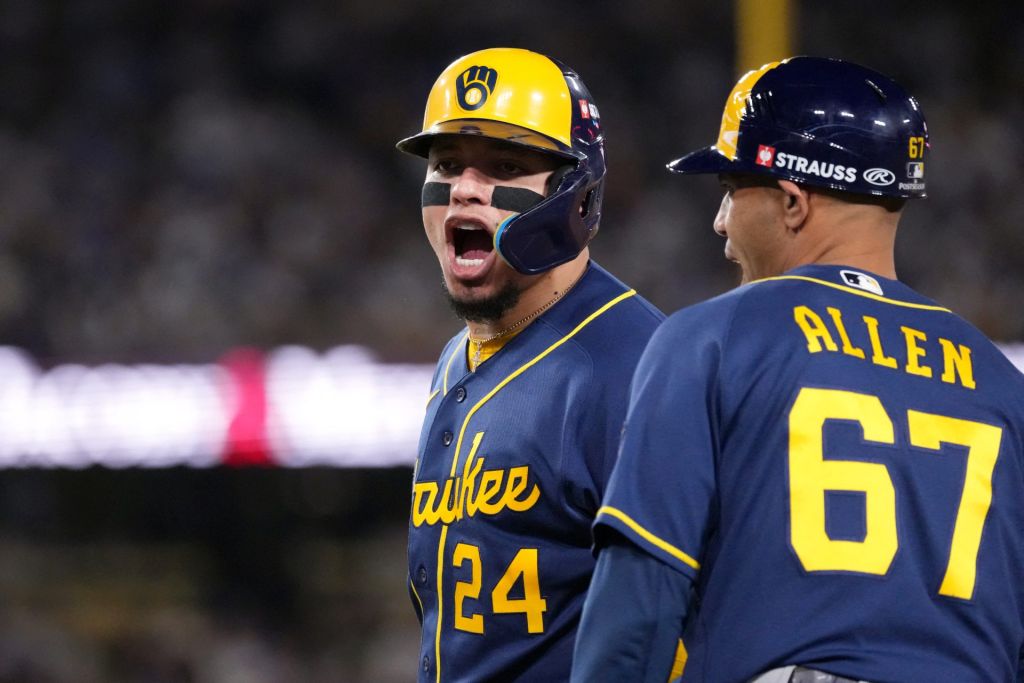
The Brewers completed an emphatic National League Championship Series sweep with a 6–4 win in Game 4 Thursday night over the two-time defending World Series champion Dodgers, and will advance to their first Fall Classic since 1982. Milwaukee is now seeking its first title in franchise history, while Los Angeles sees its dominance over MLB abruptly halted after titles in 2024 and 2025.
With the NLCS win, the Brewers also avenged a postseason sweep by the Dodgers in that round last year.
The pennant victory builds on a 103-win regular season for the Brewers that set a franchise record. While the Dodgers won 100 games of their own, the club’s fifth such season since 2019, a slumping Shohei Ohtani highlighted a widespread offensive drought that doomed the club on the field and sharply depressed ticket demand in Los Angeles.
Labor Overtones
The Brewers’ advance to the World Series further showcases the dramatic rise of MLB’s economic lower class this postseason. Operating in the league’s smallest media market and with the No. 19 luxury-tax payroll at $154.7 million, the Brewers will face either the Guardians or Rays in the World Series beginning Oct. 23 at American Family Field.
The Guardians, with MLB’s second-smallest payroll at $ 92.6 million, hold a 2–1 lead in the American League Championship Series after a 3–2 win over the Rays in Game 3 Thursday afternoon at Progressive Field. Tampa Bay has a $113.2 million payroll, the league’s fourth-lowest.
All that budget-based success contrasts starkly with top spenders such as the Dodgers, Mets, and Yankees, all of whom are now eliminated or didn’t even reach the 2026 postseason.
MLB team owners, however, are contending in ongoing labor negotiations with the MLB Players Association that such performance is not sustainable over the long term. The league has not had a small-market World Series winner since the 2015 Royals—though that streak will end this year—while nearly 80% of League Championship Series participants and 85% of World Series teams over the past decade have come from a top-15 market.
Management has proposed dramatic measures to address that, including a hard salary cap, significant restrictions to free agency, and an overhaul of the MLB draft. The union vehemently opposes those offers, particularly the salary cap, and is looking to retain the core of the sport’s current, market-based economic system.
Amid that stark divide, owners are expected to lock out the players in December when the current collective bargaining agreement expires.
Big Numbers
While labor storm clouds gather, fan frenzy is rising in Milwaukee. Tickets to the World Series opener have reached a get-in price of $2,058 each on the resale market, up by 93% in the last three days. Further escalation is expected over the next week.
Viewership, meanwhile, is also rising for Fox Sports, which is carrying the NLCS and World Series. The NLCS opener on Sunday averaged 10.7 million viewers, despite going up against Sunday Night Football on NBC. The MLB audience, while still trailing the NFL’s, was the largest for any LCS telecast on any network since 2010 and the most-watched LCS Game 1 since 2005.
Monday’s Game 2 fell to an average of 7.04 million viewers, but that mark still beat the comparable game from last year on Fox by 62% and was the most-watched LCS Game 2 since 2016.
Download the FOS App
The business of sports, in your pocket.



Scan the QR code to get the app now.