Want more from Front Office Sports
in your search results?
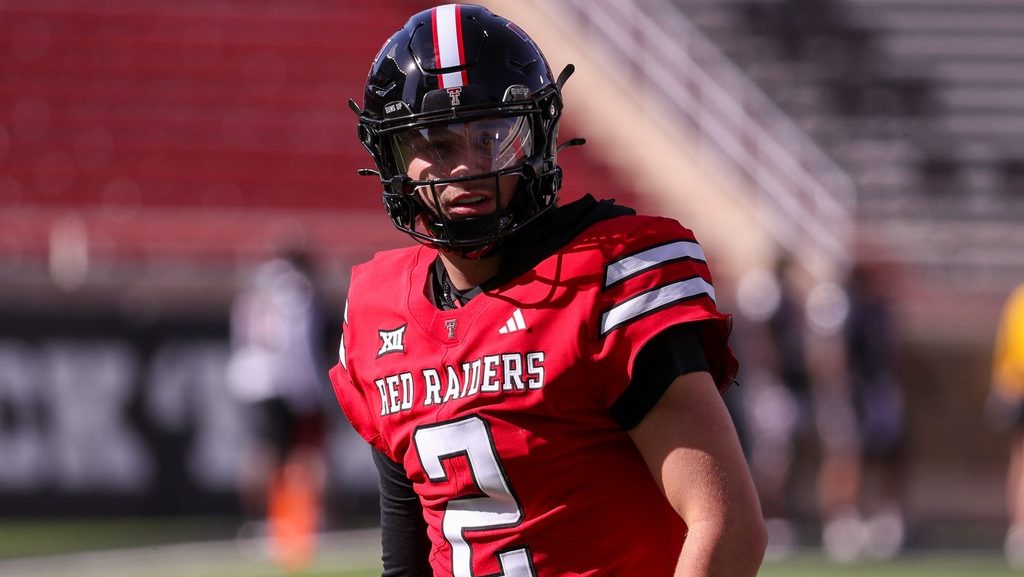
After committing multiple NCAA rules violations during years of gambling activity, Texas Tech quarterback Brendan Sorsby will be allowed to suit up for the Red Raiders this fall, a Texas judge has ruled.
The surprise decision came on Monday in Lubbock County district court, when retired Tarrant County Judge Ken Curr—who was assigned the case after a previous judge who was a Texas Tech alumnus recused himself—granted Sorsby’s request for a temporary injunction against the NCAA, which previously ruled him ineligible due to gambling activities.
The injunction is effective immediately and “will continue in full force and effect until the signing of the final judgment” in the case or until further order of the court, according to Monday’s decision.
The NCAA, which is likely to appeal Monday’s ruling, in a statement said it “strongly disagrees with the court’s ruling in Sorsby’s case and is deeply concerned about the damaging, far-reaching and broadly destabilizing ramifications of this outcome — which undermines and corrupts the integrity of sports.
“The NCAA is committed to supporting student-athlete mental health but must continue to aggressively defend against actions that defraud college athletics and threaten competitive integrity, such as betting on one’s own sport.”
In a statement posted to X/Twitter, NCAA president Charlie Baker said, “There is no better example of why targeted intervention from Congress is necessary. When you have schools and deep-pocketed supporters willing to look the other way on the glaring integrity threat of betting on your own team – and judges whose rulings effectively strip away our ability to stop them – only Congress can equip the @NCAA to apply this common sense rule to everyone fairly and consistently. The Protect College Sports Act would empower the NCAA to enforce rules including the gambling restrictions – it’s needed now more than ever.”
Sorsby will be suspended for the first two games of Texas Tech’s season—against Abilene Christian and Oregon State—as part of the injunction’s terms.
“As he returns to our football program, we remain committed to supporting Brendan’s recovery and ensuring his compliance with the court’s order, “Texas Tech athletic director Kirby Hocutt said in a statement. “A comprehensive support structure, including clinical care, monitoring, and compliance checks, will remain fully in place for the duration of Brendan’s time as a student at Texas Tech.”
Had the injunction not been granted, Sorsby likely would have turned to the NFL Supplemental Draft, the deadline for which is June 22.
The lawsuit was first filed on May 18 by Sorsby’s legal team, which includes House v. NCAA plaintiff lawyer Jeffrey Kessler, who on Monday told Front Office Sports: “It is a just result. Brendan gets to devote himself to his team and the education of athletes on the dangers of gambling addiction. He will continue his treatment, miss two games, and there is no injury to the competitive integrity of the NCAA. It is what we proposed and what the NCAA should have accepted had it been true to its promises to prioritize the welfare of athletes.”
The development comes just a few weeks after Sorsby and Texas Tech announced he would seek “residential treatment” for gambling addiction.
Texas Tech board chair and booster Cody Campbell said in a statement to FOS: “This unfortunate situation is the outcome of a broken system. I’m doing everything I can to fix it, but until there is a permanent solution, Texas Tech and its student athletes have to do the best they can to navigate and compete amid the chaos that exists in the reality of the world we live in.”
Sorsby’s Gambling Activity
Court documents from both Sorsby and the NCAA revealed a pattern in which Sorsby engaged in thousands of bets over his years playing college football, placing his own bets on games as well as parlays, and even placing bets through third parties.
According to a sworn affidavit by Sorsby, he admitted to engaging in sports betting beginning in high school, placing tens of thousands of bets on multiple sports throughout his time in college (first at Indiana, then at Cincinnati, and then at Texas Tech where he transferred this past offseason). Specifically, Sorsby admitted to placing bets on the Hoosiers football program when he was on the team.
According to the NCAA’s subsequent legal filings, Sorsby placed 40 wagers on IU football and parlays on individual players in 2022, totalling $850 in bets. He also placed more than 40 bets, totaling $1,400, on Hoosiers men’s basketball and 300 bets totalling $6,500 on other college football games. He placed more than $5,000 in bets through third parties when he got to Texas Tech, as sports betting is illegal in Texas.
The NCAA said in court documents it received a tip about Sorsby’s activity on March 11 from “an online gambling book, which had been informed by law enforcement.” The NCAA informed Texas Tech of this information on April 14. Sorsby and Texas Tech announced he would seek treatment on April 27.
Legal Arguments
The NCAA issues different penalties for different types of gambling activity. If a player bets on professional sports, for example, the player will face partial loss of eligibility and requirements for gambling training. The player could face some loss of eligibility for betting on college sports in general, including their sport, or other sports at their school. But if the player bets on their own team, and/or engages in activity that threatens the integrity of their sport—like match-fixing, point-shaving, or sharing proprietary information with bettors—they face permanent loss of eligibility.
Many of Sorsby’s bets—specifically those he placed on his own football team at IU—would render a permanent loss of eligibility by NCAA rules.
In the complaint, Sorsby’s attorneys argued that Sorsby should be reinstated despite his gambling activity because he had taken accountability for his actions, because he had never threatened the integrity of a game through his gambling activity, and because the NCAA had a duty to do what was in the best interest of athlete health and safety—in this case, by showing empathy for Sorsby’s gambling addiction.
But his lawyers argued he never threatened the integrity of IU football, as he only bet in favor of the team winning; thus not using any proprietary information to gain a betting advantage. He then ceased these bets once he was admitted to the permanent roster and was off the practice squad. Sorsby added he never bet on the Cincinnati Bearcats football team during his time with them.
In addition, Sorsby’s legal team said he immediately took responsibility for his actions, admitting to his activity and seeking treatment for gambling addiction within a week of the NCAA notifying Texas Tech of an investigation.
Separately, attorneys argued the NCAA harmed Sorsby by not swiftly responding to his requests for reinstatement. Whether he was ruled eligible or not, they argued, Sorsby needed an answer so he could consider whether to pursue the NFL Supplemental Draft.
The NCAA, however, responded in a statement saying they had never received a formal request for reinstatement. (In court documents filed later, the NCAA argued it had followed their procedures exactly as stated in NCAA bylaws, and therefore caused Sorsby no harm.)
Texas Tech then filed a formal request for reinstatement later in the day on May 18—which the NCAA denied on May 27. Texas Tech president Lawrence Schovanec penned a letter saying the school would appeal the ruling, though that appeal is likely moot given the judge’s ruling.
In addition, the NCAA argued it would, itself, be harmed if it were forced to grant Sorsby eligibility.
The NCAA wrote, “The relief Plaintiff seeks would make the NCAA the first and only major American sports league to allow an athlete to compete after betting on his own games.”
Download the FOS App
The business of sports, in your pocket.



Scan the QR code to get the app now.