Want more from Front Office Sports
in your search results?
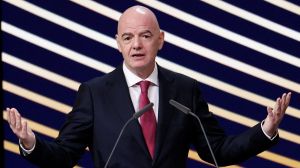
FIFA president Gianni Infantino posted a 15-slide message directed at people “busy planting seeds of hate” on Instagram on Sunday night, claiming the World Cup went off without incident.
Infantino’s Sunday night missive began: “To everyone who missed our beautiful game…sorry that you were so consumed by hate and criticism that you missed it all.” He went on to further single out people “behind their pens and papers, behind their screens spreading hate and false rumours.”
The post was filled with jarring and inaccurate claims; he wrote that the World Cup saw “zero incidents, zero hostility, zero violence, just joy, emotions, happiness, unity, and togetherness.”
Four people died during celebrations in Mexico City after Mexico beat Ecuador in the round of 32. South African midfielder Jayden Adams was found dead in Cape Town after returning from the tournament, and police are investigating a cause of death.
FIFA did not immediately respond to a request for comment about the inaccuracies or what prompted Infantino’s post.
Even and especially at its best, the World Cup—as always—stirred up hostility and political tensions. Argentine fans in Atlanta were captured on video fighting with one another on the night before the match, and with England fans after the semifinal win. The match reignited historic claims from the Argentine government, players, and fans against Great Britain over the Falkland Islands, including with an on-pitch demonstration by the players. In the U.K., more domestic abuse incidents were reported during the tournament than the past two World Cups and Euros.
Infantino also wrote that “Iran entered the United States without incident or conflict.” Iran’s coach, though, said his side was “perhaps the most oppressed” team in the tournament after the quick trip from Tijuana to Los Angeles took five hours with security screenings, then the team would need to return immediately after the match. Iran saw 11 federation members and team staffers denied entry into the U.S., including federation president Mehdi Taj.
The Iranian federation also said it would file a complaint to FIFA for denying its request to travel two days in advance of its match against Belgium.
Infantino wrote that “Football is bigger than hate and discrimination.” Multiple incidents of racist abuse occurred during the World Cup. Most notably, a Paraguayan senator called Kylian Mbappé a “colonised Cameroonian,” to which the French captain called her “a despicable woman and unworthy of your position.”
Infantino said the World Cup’s haters “mentioned the few people denied visas and overlooked the millions who were approved, from all parts of the world.”
The most high profile visa cases include that of Somali referee Omar Artan, denied entry into the U.S. over alleged “association with suspected members of terrorist organizations,” and Ghana midfielder Thomas Partey, who was not allowed into Canada for matches due to ongoing rape charges.
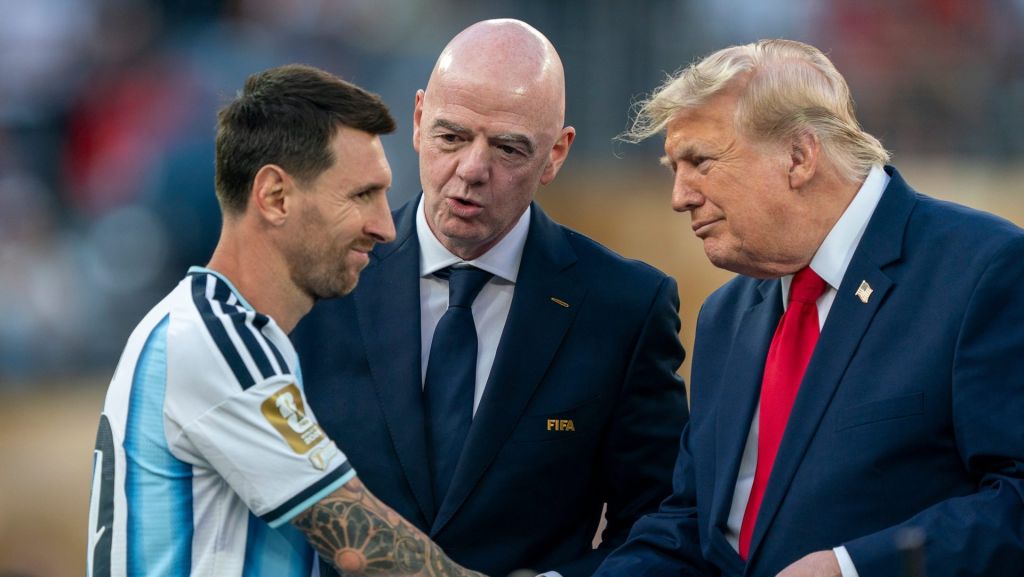
And fans from Haiti, Iran, Senegal, and Ivory Coast were simply banned from entering the United States under blanket Trump administration policy; others were subject to a $15,000 bond that deterred many from coming. (FIFA celebrated that it got the U.S. to waive this requirement, but that only applied to a certain subset of fans who had already purchased tickets and opted into an expedited visa process.)
Infantino did not mention Folarin Balogun’s red card or its subsequent suspension directly, but he was still defensive about the notorious incident.
“Indeed, ‘arguable’ referees’ decisions or ‘strange’ disciplinary rulings such as for instance potentially mistaken red or yellow cards or subsequent decisions not to ban players in certain situations are routine and widely accepted in some of the biggest leagues worldwide,” Infantino wrote. “It’s curious that the same countries employing these practices are the ones criticising.”
European leaders had blasted FIFA’s handlingof Balogun’s red card to the point where UEFA president Aleksander Ceferin—whose organization called the red card reversal an “unprecedented, incomprehensible and unjustifiable decision”—boycotted the tournament final. (Some European leagues do review red cards after games, which is not generally FIFA protocol.)
Infantino has not taken questions from reporters since a press conference before the opening match in Mexico City on June 10.
There, Infantino was also defensive and vague, saying, “We try to do our best” on a number of issues like Iran, high ticket prices, and visa restrictions. After initially telling people to “chill, relax,” Infantino later clarified that he meant “to trust us that we are working behind the scenes.”
He was more aggressive on Sunday night.
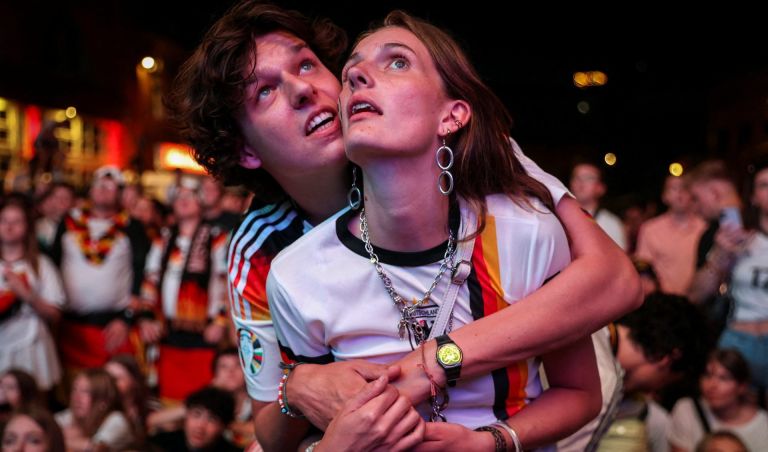
“To those spending their time and energy hating us, please take a moment to reflect, meditate, pray, or watch a football match and truly observe the faces, the eyes, the emotions,” Infantino wrote. “To the pens and papers, to all the screens, may you find love and peace where the people behind you couldn’t.
“May you find peace; we at FIFA have found ours and we deliver it, by delivering the most outstanding FIFA World Cup.”
Also on Sunday night, Rep. Jamie Raskin (D., MD) sent Infantino a letter asking for a list of any money or gifts exchanged between FIFA and anyone related to President Trump, and visitor logs at the governing body’s Miami and New York offices. FIFA houses its New York office in Trump Tower. The Athletic first reported news of the letter.
Raskin also asked Infantino to appear before the House Judiciary Committee, of which he is the ranking member.