Want more from Front Office Sports
in your search results?
On Monday, the Protect College Sports Act (PCSA) passed the Senate with an overwhelmingly bipartisan vote of 77–22.
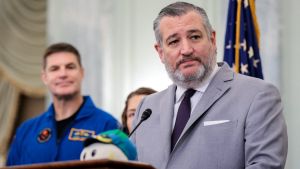
“We are here, at long last, on the verge of something historic,” PCSA co-sponsor, Sen. Ted Cruz (R., Texas), said Monday night.
The vote, which took six hours between debate and amendment consideration, was historic. Over the past six years, the NCAA and power conferences have spent well over $10 million combined lobbying for Congressional intervention in college sports. But no college sports bill has even made it to the floor of the House or Senate—until now.
The PCSA was introduced in May by Sens. Cruz, Maria Cantwell (D., Wash.), Eric Schmitt (R., Mo.) and Chris Coons (D., Del.). Cruz and Cantwell have been embroiled in negotiations over bill text for months. Cruz himself has been negotiating with various Democrats for the better part of three years.
A New Framework
The current version of the PCSA would:
- Double the revenue-sharing cap and codify NIL (name, image, and likeness) rights for college athletes, but implement measures to limit cap-circumvention
- Create a one-time transfer and implement a five-year, age-based eligibility policy
- Impose restrictions on agents and limit coaching transfers
- Offer a limited antitrust exemption and preemption of state laws to enforce transfer, eligibility, and player compensation restrictions
- Require schools to maintain certain health and safety standards and require schools that make more than $80 million per year maintain Olympic and women’s sports participation
- Prohibit power conferences from merging or expanding beyond 20 members and make power conference schools go independent for three years before switching conferences (though this provision sunsets after six years)
- Allow schools to pool and sell media rights as one package, provided 75% of FBS schools agree to do so
All of these provisions would take effect not on the day the bill is signed into law, but rather the first offseason/transfer portal period for each sport, FOS recently confirmed. The one exception: the media rights merger provision, which would not be possible until all current conference media rights contracts expire.
Amendments and Debate
Senators also voted on seven amendments, three of which were adopted: one to protect certain private rights of action (or abilities for players to sue), and one to require disclosure of foreign funds in college sports. Sen. Ashley Moody (R., Fl.) and Sen. Richard Blumenthal (D., Conn.), also successfully pushed an amendment to raise the power conference cap from 19 to 20 schools. (Moody said USF, Miami, and FSU would benefit from the change.)
Meanwhile, an amendment by Sen. Rand Paul (R., Ky.) offering a blanket antitrust exemption (with the ability to turn back the clock on athlete NIL rights) was struck down, as was an amendment from Sen. John Kennedy (R., La.) to prohibit schools from increasing ticket prices for sporting events year-to-year by more than 4%. Both amendments proposed by Sen. Cory Booker (D., N.J.)—to double a healthcare fund from $100 million to $200 million and implement a coaching salary cap and “one-time transfer” restriction for coaches—were struck down.
One concern raised during debate was shared by both Republicans and Democrats: the antitrust protections to cap player earnings.
Sen. Chris Murphy (D., Conn.) said: “We are taking a system that the Supreme Court said could not persist under our law [in NCAA v. Alston], and we are changing the law to allow that illegal system to persist.” Kennedy likened the bill to a group of plumbing companies agreeing to all pay plumbers a certain wage in order to maximize profits. “Well, that’s illegal,” he said. “It’s price fixing.”
What Happens Next
The bill faces a long road before arriving at President Donald Trump’s desk.
The House of Representatives gets to vote on the bill next, but is unlikely to take it up before the chamber returns after the midterm elections. Plus, if the bill is amended, it would have to return to the Senate for another vote. All of this must take place before the new Congress is sworn in on Jan. 3—otherwise, the bill would have to restart the legislative process.
It’s also expected to see opposition from Democrats and left-leaning advocacy groups, as well as a number of Republicans. (However, some Republicans concerned with the conference realignment portion of the bill may be satisfied by the new amendment.)
The deciding factor in the House, which needs a narrow majority to pass the bill, could be the ability for Trump to convince enough Republicans to support it.
That lobbying process appears to have already started. “We’ve done a great job in putting it together,” Trump told Sport and State at the Texas-Tennessee game this weekend. “We have to get it voted on. And we’re counting on the House. And I think the House will come through too.”
Download the FOS App
The business of sports, in your pocket.



Scan the QR code to get the app now.