Colin Cowherd Buys Stake in EPL’s Ipswich
In five days, one of Argentina, England, France, or Spain will hoist the World Cup trophy alongside President Donald Trump in New Jersey.
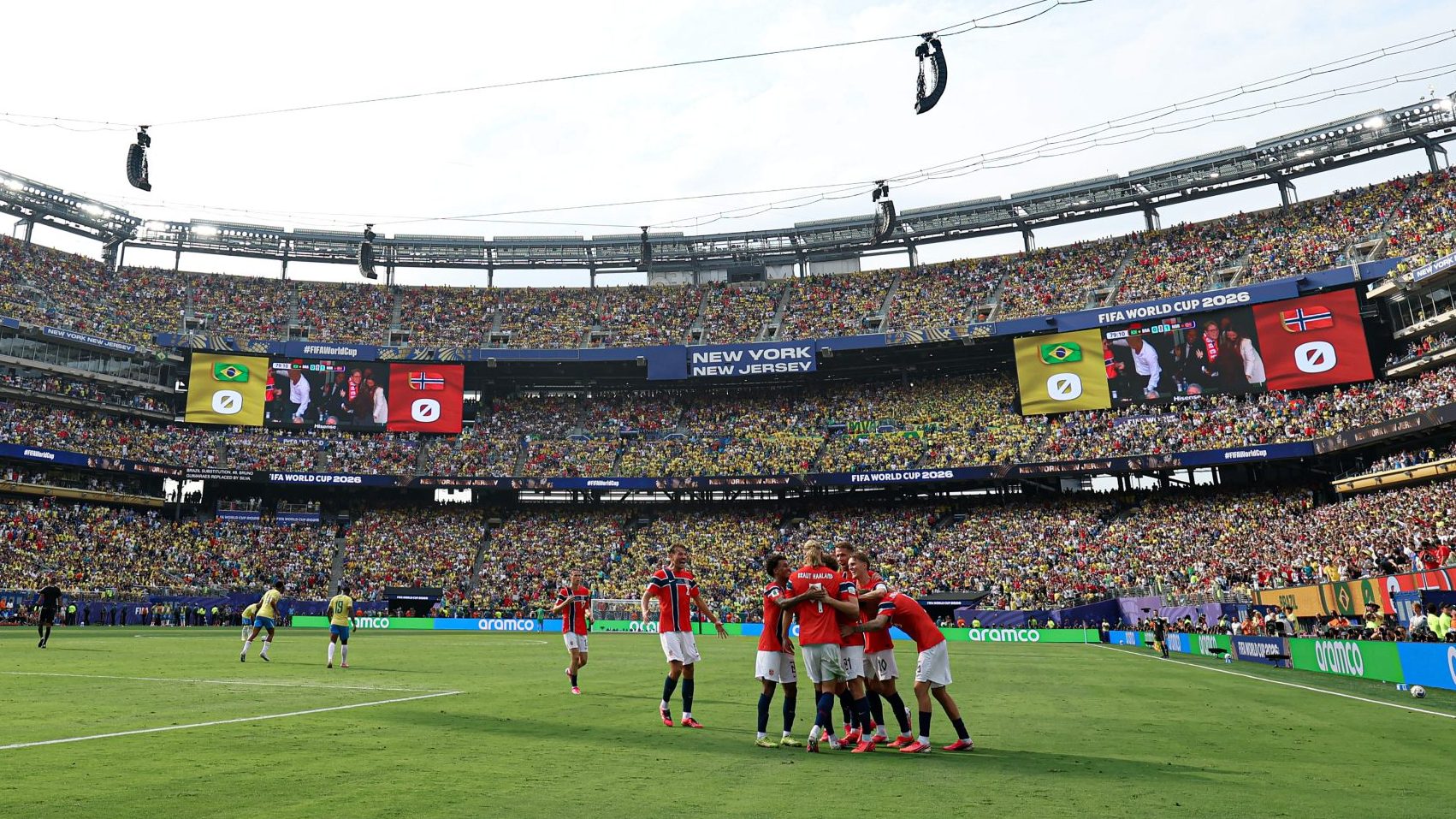
MetLife Stadium will host the World Cup final on July 19. It will be the eighth match of the tournament in the home of the NFL’s Jets and Giants located across the Hudson River from New York City.
The “battle” to host the final, in the words of Cowboys owner Jerry Jones, came down to Dallas and New Jersey. Dallas would’ve meant an indoor, climate-controlled match, but FIFA opted for New York City—or as it calls the stadium, “New York New Jersey.”
Opened in 2010, MetLife generally did not get the glowing reviews from World Cup visitors that newer stadiums in Los Angeles and Atlanta have. Both of those have unique and impressive architecture, with a translucent roof in Los Angeles designed to keep temperatures down while letting a breeze in, and a unique “iris-style” roof in Atlanta. MetLife’s most distinctive feature might be the enormous black speakers hanging over the field. Both The Athletic and Sports Illustrated ranked it as the worst venue in the entire tournament.
MetLife is also among the least accessible venues in the tournament, even more so after FIFA eliminated much of the parking around the stadium. With NJ Transit pricing the 13-mile, hour-long train from Penn Station at $98 round trip—up from the usual $12.90—the agency has not been coming close to its 40,000-rider per match capacity. The host committee’s $20 buses, funded in part by New York state, have been largely sold out, though post-match traffic has slowed journeys home.
Some in soccer have suggested that brand considerations played a role in FIFA’s decision-making. Though FIFA forces stadiums to cover up their sponsored names and signage, those companies have still received brand recognition from the World Cup. The Cowboys’ stadium usually bears the AT&T name, and Verizon is an official FIFA sponsor. But FIFA does not have an official insurance partner that would be upset with competitor MetLife being closely associated with the final.
While there may have been some business considerations at play in selecting the final venue, there is one indisputable fact that means much larger profits for FIFA at MetLife.
MetLife can fit far more fans for soccer than any other U.S. host, meaning FIFA can sell more tickets. According to FIFA’s official tournament capacities, which lists MetLife at 80,663 people, the only larger venue is Mexico City’s Estadio Azteca, host of the World Cup opener. Otherwise, no other stadium’s capacity comes within 10,000 people of MetLife.
On Monday, tickets for the final were selling between $14,995 and $32,970 on FIFA’s website, and the get-in price for Sunday’s match on secondary markets was around $6,800, according to resale data site TicketData. In ticket sales alone, FIFA can make millions more dollars by hosting the final in New Jersey than in Dallas. (AT&T Stadium fits about 80,000 seated fans for NFL games, but only about 70,000 for the World Cup.)
MetLife is also located in the biggest metropolitan area in the country with the most flights to and from Europe, and is the same place FIFA chose for last year’s Club World Cup final.
Still, putting the final at MetLife raises many questions, particularly about the playing conditions.
Mid-Afternoon Match
The match will be at 3 pm in the Eastern timezone, which is six hours behind Western Europe and just five hours behind England. That’s good news for European audiences that have gritted their way through middle-of-the-night kickoffs during this World Cup. England’s round of 16 match against Mexico started at 2am in London.
It’s less ideal for players competing in mid-afternoon, mid-July heat, as well as the fans watching them in person.
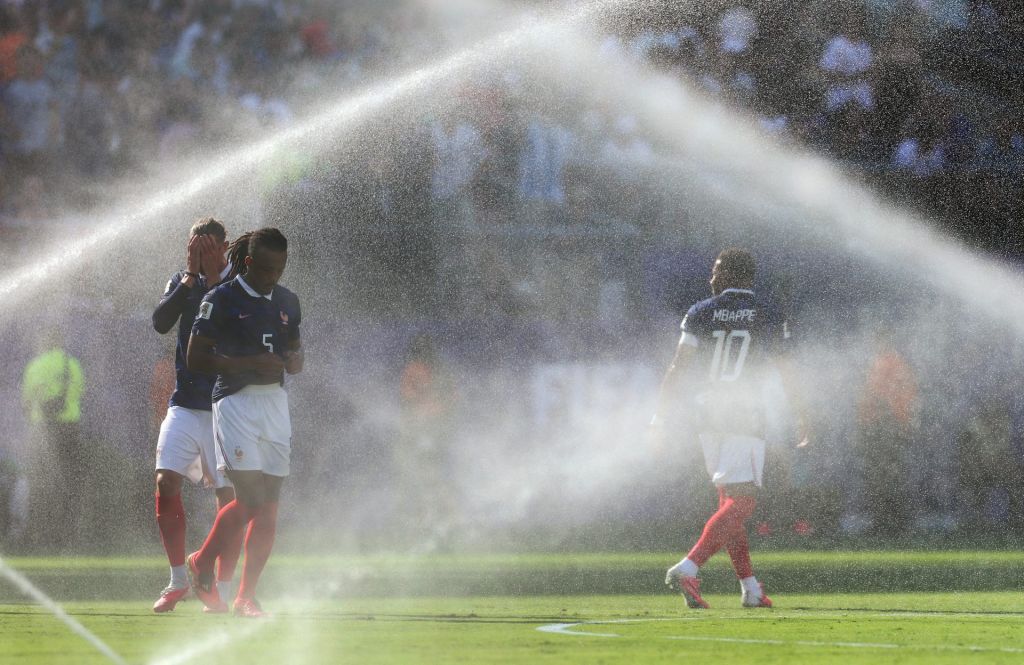
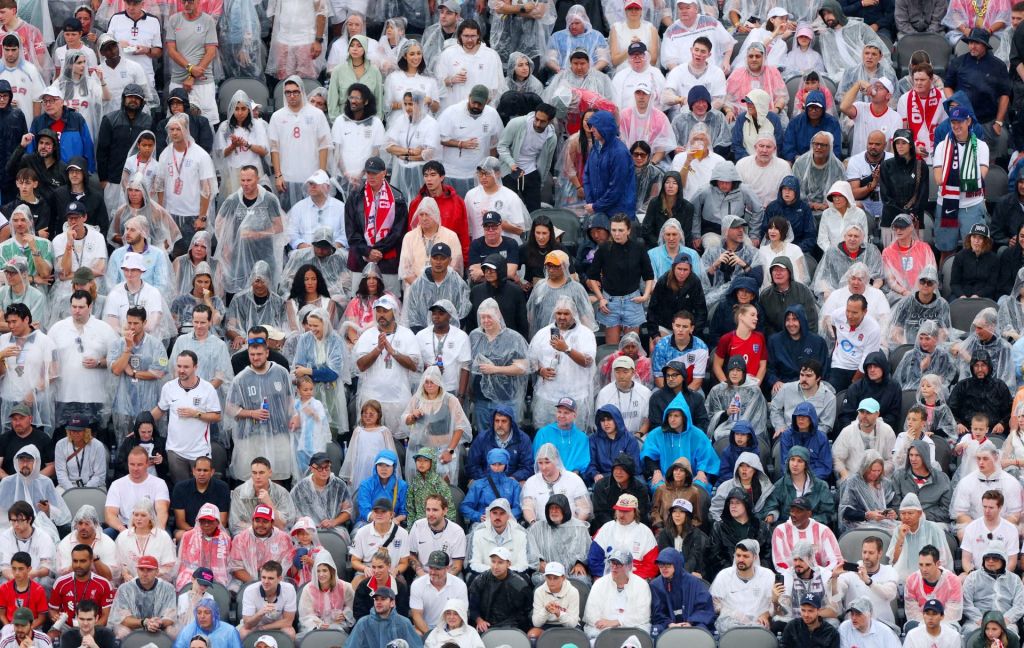
Heat has been a factor in many host cities, but it’s been particularly brutal in the Northeast, where France played three straight knockout round matches that were above 90 degrees at kickoff. Les Bleus’ Fourth of July match against Paraguay in Philadelphia was around 100 degrees. Rain and thunderstorms also hit New Jersey on group stage match days, with a shelter-in-place warning announced post-match after Norway beat Senegal, and heavy rain during England–Panama.
Players raised the alarm at MetLife last year.
The Club World Cup saw a stretch of brutally hot games that led FIFA to install permanent hydration breaks this year. Argentina and Chelsea’s Enzo Fernández called the playing conditions during the July 8 semifinal at MetLife “very dangerous” and said, “Let’s hope that next year they change the schedule.” That match, which also kicked off at 3 pm Eastern time, was 96 degrees at kickoff. The FIFPro global players union recommends a game be delayed or postponed if the ambient temperature exceeds 96.8 degrees; though several match postponements have been rumored during this tournament, FIFA has yet to delay a game because of heat or humidity.
After briefly abating, heat is returning to the Northeast this week. As of Monday afternoon, the forecast for Sunday afternoon is 85 degrees with a chance of thunderstorms.
Understanding MetLife’s Grass
Despite FIFA’s generally successful installation of temporary grass at stadiums with turf—with the fields in Los Angeles, Vancouver, and Dallas praised by players—several players and teams have said the pitch feels different in New Jersey, with varying degrees of alarm. The common theme is that the field feels hard and the grass seems short.
Sweden midfielder Taha Ali told Front Office Sports after a loss to France at MetLife on June 30 that the grass felt “closest to artificial” turf of any of the stadiums, but said it was “no problem.” After France’s previous match at MetLife, France coach Didier Deschamps said “there might be some cement below the grass.” Brazil star Vinícius Júnior, who played the tournament’s first match at MetLife, said “the grass dries out quickly” because of “the weather and the heat.”
MetLife is the only pitch at the tournament that has its particular combination of grass and what’s underneath it.
FIFA requires grass playing surfaces, which has been a struggle for NFL stadiums with turf in the U.S. at recent tournaments like CONMEBOL’s Copa América and the Club World Cup. This summer, FIFA rolled out temporary pitches at all 16 host stadiums—regardless of if they usually have grass or turf—after studying the issue with researchers at Michigan State University and the University of Tennessee.
What goes underneath the grass differs based on whether the stadium usually has a grass or turf field, according to Michigan State. For example, the former turf stadiums have less sand and a different ventilation system than stadiums that already had grass.
As for the playing surface itself, FIFA used two types of grass based on the local climate. Warmer weather stadiums like Miami got 100% Bermuda grass. Cooler climates like Seattle received a mix developed by Rutgers University of 84% Kentucky bluegrass and 16% perennial ryegrass.
Unlike its Northeast neighbors Boston and Philadelphia, MetLife got the Bermuda grass. A FIFA spokesperson told FOS the governing body learned from the Club World Cup that New Jersey was more similar to the warmer weather climates for grass development, and that it wanted a material that could hold up all the way through the final. Indeed, in 2020, the New York City region was reclassified as a subtropical climate.
Of all the venues that have Bermuda grass, MetLife is the only stadium that is a turf field when the World Cup is not in town. That means, considering what’s above and below the surface, MetLife’s World Cup pitch plan is unique among the 16 hosts.
Teams can tell. England coach Thomas Tuchel said MetLife’s grass was “very different to the pitch in Boston.”
FIFA pushed back on complaints about MetLife at the start of the tournament. “While there have been comments regarding the visual appearance of certain areas of the playing surface at NYNJ Stadium, FIFA’s Turf Management Team’s assessment is that every pitch is healthy and performing as intended for elite competition,” FIFA told The Athletic.
At this point, teams might just have to adapt to the conditions at MetLife: “The pitch was okay,” Sweden’s Victor Lindelöf said after the France loss. “Not the best I’ve played on, but still manageable.”
Why MetLife?
The heat problem, at least, could have been avoided entirely by playing the final at an indoor, climate-controlled stadium; both semis will be played indoors in Dallas and Atlanta.
Going into FIFA’s February 2024 announcement, New York and New Jersey officials professed to not know which way FIFA would go; a British tabloid even reported that FIFA had chosen Dallas.
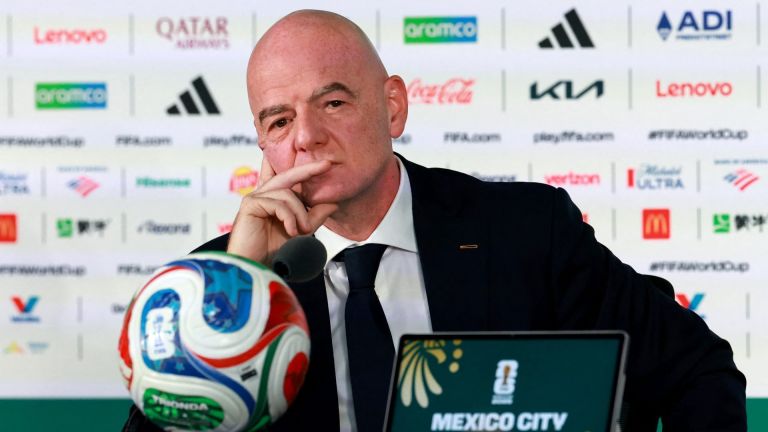
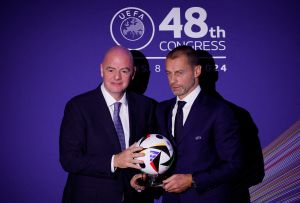
At the time of the decision, FIFA president Gianni Infantino said that “being in New York, which is such a cosmopolitan city, where you have between New York and New Jersey over 200 nationalities already there, celebrating and uniting the world, is really something unique.”
Former New Jersey governor Phil Murphy—a lover of soccer and owner of the NWSL’s Gotham FC—signed the host agreement with FIFA. It was a lunch with Murphy, Infantino, former New York mayor Eric Adams, Jets owner Woody Johnson, and Giants owner John Mara that may have sealed the final for New Jersey. But Murphy left office in January 2026 due to term limits, and was replaced by Gov. Mikie Sherrill, who quickly adopted a much more combative posture towards FIFA and the World Cup generally.
Sherrill shut down the planned FIFA Fan Fest in Liberty Park, opting for smaller watch parties throughout the state. She then went to war with FIFA over public transit, reprimanding the governing body for not helping host cities with transportation costs, and saying she refused to subsidize a deal with FIFA that her administration “inherited.” FIFA said it was “quite surprised” by her approach.
But FIFA did get one leader far friendlier to it, and he’ll be there Sunday. When it picked the final venue in 2024, Joe Biden was in the White House, and his administration generally kept FIFA at arms length. Now that Trump has returned as president, he’s struck up a far closer partnership with Infantino, and that will culminate with his first World Cup appearance on Sunday. Infantino confirmed Trump will present the trophy to the winner, as he did with Chelsea at the Club World Cup when he was a major presence in their celebration.
As with every sporting event Trump attends, fans can expect the possibility of stricter bag policies, increased security, and longer lines to get in the door. That would have been the case at any stadium.