INDIANAPOLIS — On Friday, President Donald Trump issued a sweeping executive order aimed at implementing a one-time transfer rule, setting eligibility standards that would prohibit former professional athletes by putting a five-year cap on the eligibility window, and limiting pay-for-play NIL (name, image, and likeness) deals. The biggest question, however, is whether any of the stipulations in the order are legally enforceable.
But regardless of its enforceability, Trump’s executive order may still be valuable to college sports leaders.
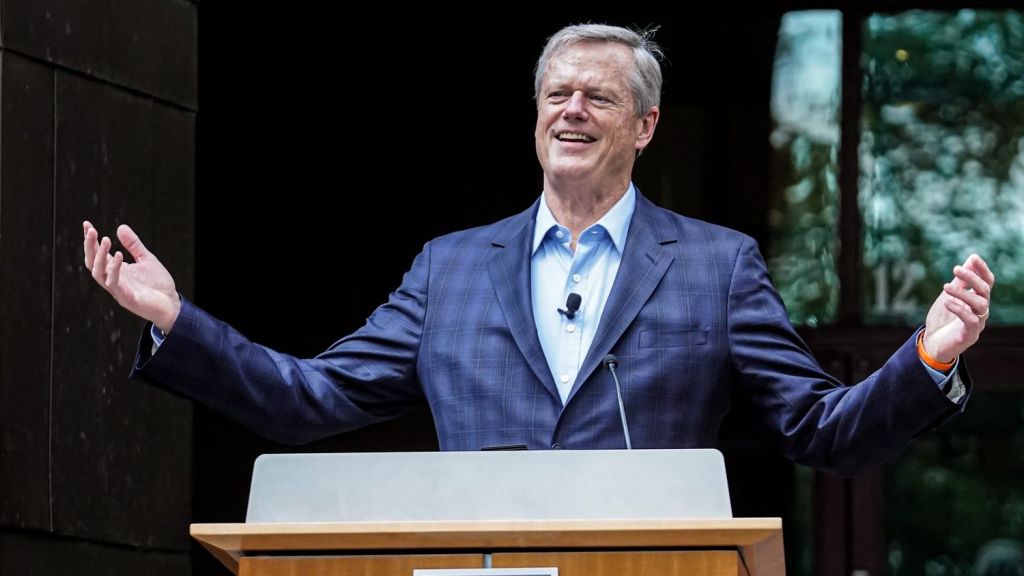
At the men’s Final Four on Saturday, NCAA President Charlie Baker told reporters he “appreciates” Trump’s interest in the issue and sees the executive action as positive. In his view, it signaled momentum in Washington for a federal solution to college sports and provided a potential blueprint for issues federal legislators should tackle.
“Having been a governor, I mean, you write executive orders for all sorts of reasons,” Baker said. “Sometimes, it’s to create an opportunity to clarify whatever existing authority you may have at the agency level. And sometimes, it’s to encourage the legislature to move on those kinds of issues.”
Baker invoked the current situation with NCAA eligibility rules as an example. Since 2024, the organization has fought dozens of lawsuits challenging its eligibility restrictions at both the federal and state level. Though the NCAA has won the majority of these lawsuits, they ultimately take time to wind through the courts—and represent instability in the interim.
“I think part of the message from [Trump] is, can we figure out some way to push this a little harder through the legislative process and get something on the books that works and represents what most people are looking for at this point—which is a much simpler eligibility process, which we’ve been talking to our committees about,” he said.
Score Act Status
Ultimately, Baker—as well as several conference commissioners—acknowledged that an actual law is necessary to achieve the NCAA’s goals of winning back control over its rules (and for preventing college athletes from ever being deemed employees). Baker said he sees the executive order as a way to move the needle on Capitol Hill, because it suggests what issues legislators should focus on.
“There’s no question that the conversation in the House and the Senate both picked up after we had our big group meeting in D.C.,” he said, referring to Trump’s “Saving College Sports” roundtable in March. “A number of the issues that he raises in the executive order, which are things certainly that we’ve been dealing with, we’ve either moved to solve or are currently working on. And based on the conversations that we’ve had with people in Washington, a lot of what’s in that executive order is consistent with those conversations as well.”
Baker added he was encouraged by some Democrats who praised the order, including Sen. Maria Cantwell (D., Wash.)
To date, neither house of Congress has brought a sweeping college sports bill to a vote. The SCORE Act, which would restore the NCAA’s control over rules about athlete compensation, transfers, eligibility, and other issues, is the closest bill to reaching the House floor. But House leadership has struggled to bring the bill to the floor, having to cancel votes twice.
Currently, negotiations are continuing in the House on the bill, a source familiar with the matter told Front Office Sports this week. The issues are both with the content of the bill and external—and unrelated—political factors.
Baker, for his part, did not want to wager a guess as to if or when the SCORE Act would be brought to a vote. “Having spent a lot of my time in public life, I don’t make predictions,” he said.