Want more from Front Office Sports
in your search results?
DESTIN, Fla. — The agenda at SEC spring meetings in Destin this week was long. Would the SEC agree to expand the College Football Playoff to 24 teams? Would there be any answers about how to improve NIL rules enforcement? Would the conference seriously consider a “breakaway” of sorts to enforce its own rules?
By the time meetings wrapped on Thursday, none of the questions had clear answers. Plus, in the middle of it all, a group of Republican and Democrat senators dropped the Protect College Sports Act, a long-awaited bipartisan college sports bill.
As coaches boarded private jets Wednesday and administrators filtered out, the prevailing theme was a consensus on the problems—but none on the solutions.
NIL Rules Violations Are Rampant
After the House v. NCAA settlement, the power conferences formed the College Sports Commission to scrutinize all NIL deals over $600 to ensure they weren’t pay-for-play in disguise But almost a year into the CSC’s existence, millions of dollars worth of deals are being left in limbo, the “revenue-sharing cap” has become a floor, rather than a ceiling. Still some aren’t reporting deals at all.
“We asked the question, do we want to be governed? And I think the answer was yes,” Texas A&M athletic director Trev Alberts said ahead of the meetings. “We need the CSC to be successful. We want them to be successful.” But the lack of faith in enforcement was causing schools to eschew the rules.
CSC CEO Bryan Seeley met with administrators Wednesday, and had what he described as “productive” and “honest” conversations. He described what he sees as the main problem to a group of reporters: that commitments outside the rules were made to players, and now those bills are coming due.
“A lot of schools, it appears, made a lot of NIL guarantees coming out of the football transfer portal and basketball transfer portal that they’re not allowed to do under the rules,” he said. “And now, there is increasing pressure on them to get those NIL deals clear. A lot of those NIL deals will not get cleared because they don’t comply with the rules. And so there is—there are conversations happening right now about what that means. What do we do?”
Seeley’s solution: Schools need to resubmit deals that comply with the rules their own settlement stipulated. “We’re not here to, like, crack down on people. We want to enforce the rules that people want.”
Cautious Optimism on College Sports Bill
For years, the SEC—along with the NCAA and other power conferences—have been lobbying for a Congressional bill that would enable them to enforce rules on transfers, eligibility, athlete compensation, and prevent players from becoming employees.
The SCORE Act, which they previously endorsed, has failed to reach the House floor for a vote three times. But this week senators introduced the bipartisan Protect College Sports Act, which might have a better chance of passing than the SCORE Act.
Florida AD Scott Stricklin said he is “optimistic that there’s a bipartisan effort that is coming out of the Senate, I think is a positive. … There’s some real positives related to limited transfers, regulation of agents, more transparency, all of that was positive.”
The bill doesn’t prohibit college athletes from being deemed employees—something the SEC has lobbied for—but commissioner Greg Sankey said that isn’t “a stopping point for us.”
All four power conferences, as well as the NCAA, applauded the bipartisan efforts but said they had to study the bill before taking a stance on it.
The Problem With an SEC Breakaway
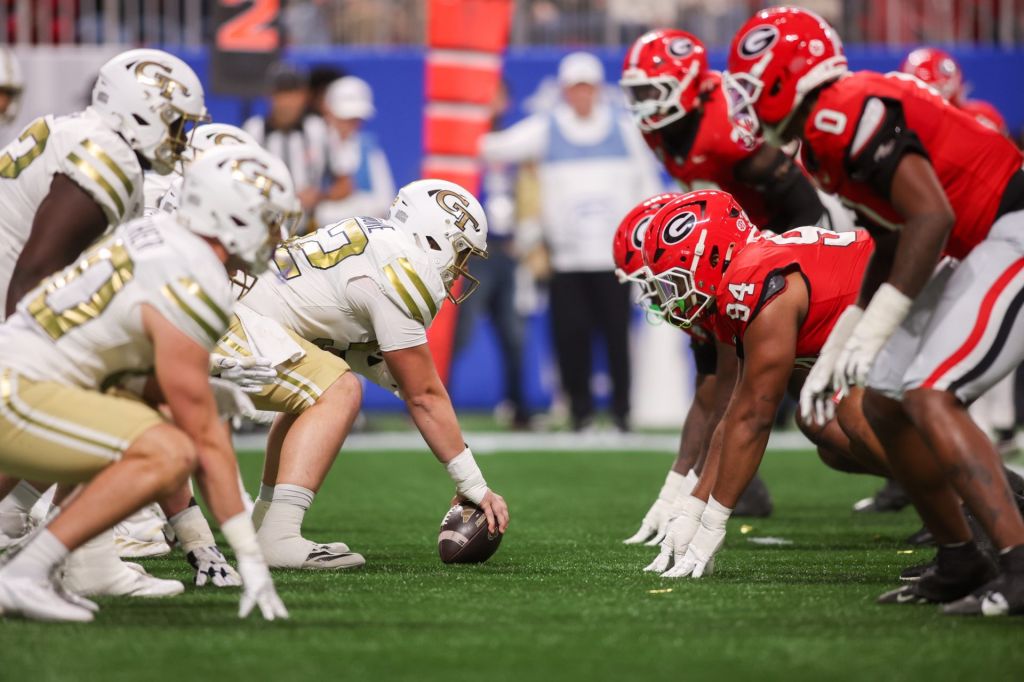
If the bill doesn’t pass, and the current enforcement mechanism of the CSC continues to stall, administrators at Georgia spoke this week about a “breakaway,” where the SEC would set or enforce its own rules at the conference level.
On the heels of comments made last week by Georgia president Jere Morehead, football coach Kirby Smart proclaimed: “I’ve said this for a long time to our president, I’ve been a huge advocate that if we can’t find rules that everybody plays by, then we should play on our own. I’m not afraid of that. I’m not afraid to break away and say that our conference is strong enough to go out and play.” Georgia AD Josh Brooks said NIL enforcement would be the “most pressing” step in that breakaway.
The problem, multiple ADs noted, is if the SEC is enforcing rules other conferences aren’t, that could be a competitive disadvantage. Stricklin, for example, described it as a potentially “draconian” step.
CFP Expansion Still on Hold
In order for the CFP to expand in 2027-28, the SEC and Big Ten have to reach a consensus by Dec 1. Last week, Big Ten commissioner Tony Petitti drew a line in the sand, saying his league was aligned on a 24-team Playoff, and that if the SEC wouldn’t agree, they would just wait.
On Tuesday, Tennessee AD Danny White reiterated his endorsement of the 24-team field. But by the end of the meetings, it was clear that multiple SEC administrators felt they didn’t have enough data to endorse a 24-team field. Athletic directors—as well as Sankey—said they were concerned about what a 24-team field would do to the value of regular-season games, and whether it would require the conference to abandon the financially valuable SEC championship game.
“We just signed a six-year deal for a 12-team playoff,” Texas AD Chris Del Conte said. “From two, went to four, was 12, and all of a sudden, that’s not enough. We’re in year two of that. Let’s get a little more data, in my mind. Every time there’s something, we’re rushing to something new.”
Sankey said the conference likely wouldn’t make a final decision on whether to endorse the 24-team model until this fall.
Download the FOS App
The business of sports, in your pocket.



Scan the QR code to get the app now.