
Max Kellerman, LeSean McCoy Off DAZN Boxing Show As Mario Lopez Joins
Want more from Front Office Sports
in your search results?
College sports has been a political battleground for candidates across the ideological spectrum for years. They’ve turned games into makeshift political rallies and spent millions on advertising during major sporting events. But few have actually dared to make policies to actually alter NCAA sports—except President Donald Trump.
The further Trump gets into his term, the more he is leaving his fingerprints on college sports policy. He hasn’t shied away from associating himself with the professional leagues, either—but he has already taken multiple executive actions directly impacting the NCAA level. “President Trump has shown more interest in college sports than any other president in recent memory. Perhaps ever,” says Jarrod Loadholt, partner at D.C. lobbying firm Ice Miller.
Since taking office in January, Trump has used executive orders to weigh in on the NIL (name, image, and likeness) landscape and the athlete-employee status debate, as well as ban transgender athletes from women’s sports and require schools to protect the Olympic pipeline.
Some issues come directly from Trump’s campaign priorities, such as restricting transgender athletes’ eligibility. But others, including athlete compensation issues, haven’t received any airtime until now.
Loadholt describes college sports issues as “political gold,” because they give Trump the opportunity to build close relationships with popular sports figures, such as Nick Saban, and take on popular issues, including college football fans’ concern with the role of NIL in recruiting.
Another lobbyist who requested to remain anonymous tells FOS that Trump has evaded the criticism politicians often face when wading into the political realm: “It’s also interesting to me that anytime a politician talked about sports and public policy there was always a ‘long list of things’ they ought to be doing [ahead] of sports,” but that Trump “gets none of that blowback.”
“Just like millions of Americans across the country, sports are one of President Trump’s greatest passions,” the White House said in a statement to FOS. “President Trump has prioritized protecting student-athletes and athletic opportunities because he recognizes the critical role college sports play in fostering qualities of leadership, teamwork, and a sense of pride in younger generations. As a champion-level golfer himself, this President is committed to promoting a legacy of athletic excellence and showcasing American greatness.”
Trump’s foray into college sports began just one month after the inauguration, when he signed an executive order aimed at banning transgender athletes from competing in women’s sports from kindergarten through college. The executive order, “Keeping Men Out of Women’s Sports,” directed the Department of Education to consider schools that allowed trans athletes on women’s teams to be in violation of Title IX. (The law prohibits sex discrimination in educational settings and has come to govern equity in college sports.)
Almost immediately, the order had a major effect on college sports both directly and indirectly. In February, the NCAA introduced its own blanket ban. In July, the United States Olympic and Paralympic Committee followed suit for athletes across all of its national governing bodies. And on Monday, U.S. Citizenship and Immigration Services issued new guidance aimed at preventing the issuance of visas for transgender athletes hoping to participate in women’s sports.
The Department of Education has also conducted investigations into transgender athlete participation on women’s teams. Several universities, including San Jose State and the University of Pennsylvania, have been embroiled in controversy as a result. (Penn reached an agreement with the agency in July to close the investigation in exchange for striking former transgender swimmer Lia Thomas’s records and banning trans athletes from women’s sports at Penn going forward.)
Throughout his campaign—and the first few months of his second presidency—Trump was noticeably silent about another major controversy in college sports: athlete compensation.
He met with Nick Saban, golfed with SEC commissioner Greg Sankey, and reportedly held talks with billionaire Cody Campbell, the Texas Tech NIL collective cofounder and university Board of Regents chairman. (Notably, however, NCAA president Charlie Baker told FOS in June that Trump has not spoken with him.) For months, rumors swirled that Trump was considering an executive order involving the NIL landscape, and/or possibly creating a presidential commission on college sports that would include Campbell and Saban.
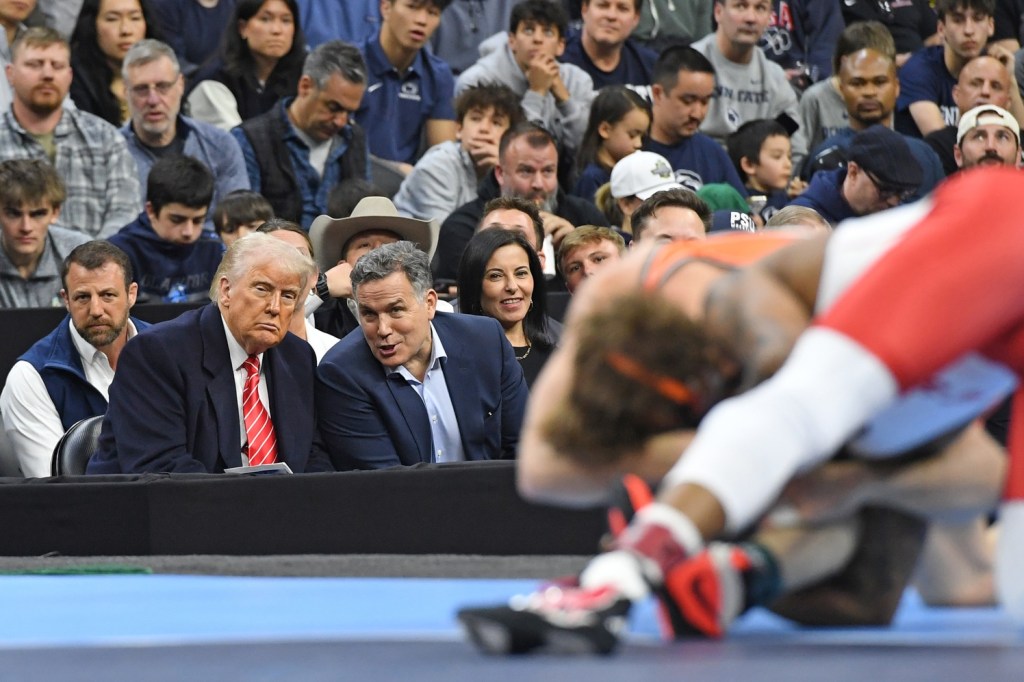
Ultimately, Trump ended up issuing a wide-ranging executive order on July 24 titled “Saving College Sports.” (The order did not establish a commission specific to college sports—though Trump put in place a broader sports, fitness, and nutrition commission on July 31, which includes Campbell.)
The order attempts to ban third-party “pay-for-play” NIL deals, and requests that the National Labor Relations Board explore athlete employment status—hinting that it should state athletes are legally considered amateurs, and not university employees.
The executive order also attempted to preserve the strength of NCAA Olympic sports, which serve as the main pipeline for Team USA, at a time when many are threatened by new financial factors across the college sports landscape, most notably the House v. NCAA settlement. The executive order states that athletic departments earning at least $125 million should increase Olympic sports scholarships and offer maximum roster spots; those earning at least $50 million should provide maximum allowable roster spots and maintain existing scholarships; and schools making less should not “disproportionately” eliminate opportunities.
But otherwise it does little by way of concrete action. The executive order is most significant because it serves as an endorsement of the NCAA’s wishlist for Congress. The governing body has spent six years lobbying for a law that will provide a federal NIL standard that overrules disparate state laws; antitrust protections to set restrictions on eligibility, transfers, and athlete compensation; and a provision confirming athletes are amateurs and not university employees.
The executive order also suggests Trump is in favor of largely Republican-led efforts to push NCAA-backed legislation through Congress. For example, the executive order “complements” and echoes many of the policies of the SCORE Act, which is currently in line to be introduced on the House floor for a vote. In addition to provisions related to agents and Olympic sports, the SCORE Act awards the NCAA all the items on its aforementioned wishlist.
It’s unclear whether the Trump Administration will have success in enforcing these policies, however, given Trump has tasked much of the Department of Education with enforcement of the two orders. He has said publicly he wants to ultimately shutter the agency, and has already begun to strip its resources. (A White House spokesperson did not respond to a request for comment for this story.)
Whether he makes a concrete impact, Trump clearly wants to be seen as involved in these issues going forward. Says lobbyist Loadholt: “We should all anticipate that the White House will continue to engage.”
Download the FOS App
The business of sports, in your pocket.



Scan the QR code to get the app now.