Want more from Front Office Sports
in your search results?
Financial pressures in the post-House settlement era are reshaping college sports. Some schools are cutting Olympic programs entirely, while others are exploring private-equity investment as they search for new ways to meet rising costs tied to increased athlete compensation.
Wichita State on May 5 discontinued its men’s and women’s golf programs. In recent weeks, at least four Division I schools have announced tennis cuts. And last April, Grand Canyon University cut its men’s volleyball team despite a 2024 Final Four berth. Meanwhile, the University of Utah in December unveiled a controversial agreement with private-equity firm Ottro Capital, and the Big 12 recently announced a deal with RedBird Capital Partners and Weatherford Capital that gives schools the option for a line of credit up to $30 million.
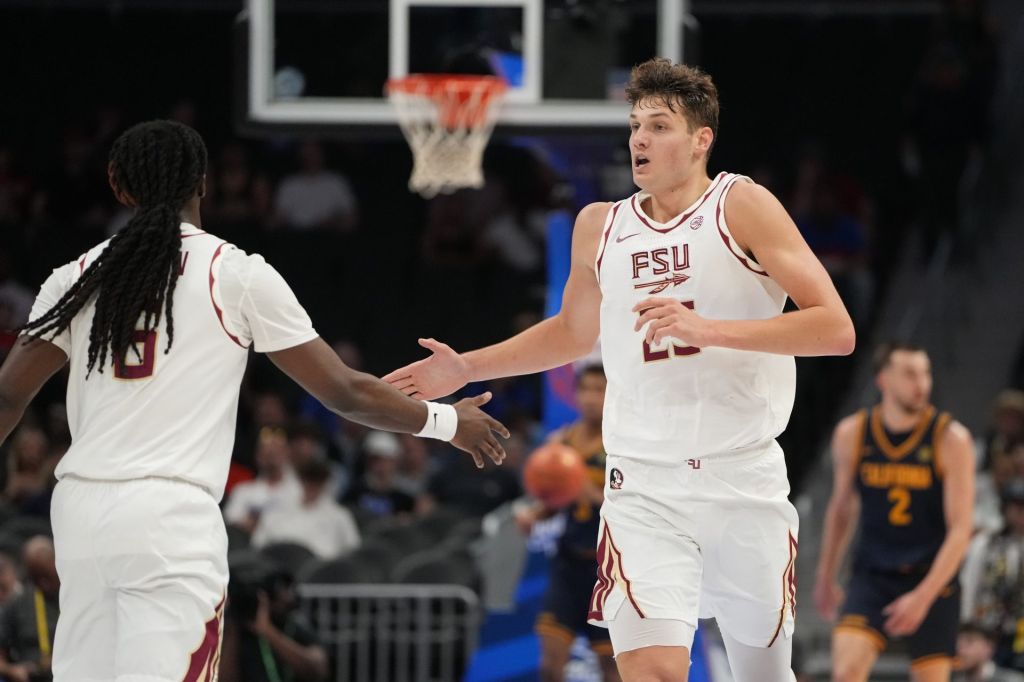
Florida State University is pursuing a different approach. “Cutting sports isn’t part of the equation for us,” Stephen Ponder, president and CEO of Seminole Boosters—the fundraising and revenue-generation arm supporting FSU athletics—tells Front Office Sports.
Through an agreement reached last month with Nocap Sports, FSU formed the Seminole Business Network, which aims to generate new, recurring athletics revenue. Under the Nocap model, businesses located anywhere in the U.S. that are owned by FSU boosters or alumni switch to a network of companies in areas like payments, insurance, energy, car rental, software, and aviation. Those providers are willing to offer preferred pricing or discounts because they are promised access to the pipeline of new customers.
When one of those businesses uses a Nocap partner, a portion of the money changing hands in the transaction is shared back with the athletic department. Nocap makes money through the program by receiving a “small piece” of the revenue that results from successful deals, according to president and CEO Nicholas Lord.
“What we’ve done is kind of flip the whole model on its head and created a way for donors—specifically donors who own businesses or are decision makers in businesses—to basically turn their operating expenses into a revenue stream for the university,” Lord tells FOS.
A New Revenue Stream
The first agreement under the Seminole Booster Network was with a donor who owns car dealerships who changed to a Nocap-affiliated payments processing provider. Now, anytime a customer swipes a credit or debit card at any of those dealerships, FSU makes money. In just one year, that deal generated about $125,000 for FSU, which Lord says will be recurring revenue the school can count on. The dealership, meanwhile, is saving roughly $700,000 annually because of lower credit card processing fees, according to Lord.
FSU has long relied heavily on donor and booster contributions to fund athletic operations. Roughly a quarter of its $212 million in fiscal 2025 athletics revenue came from donor contributions, but the total $55.6 million in contributions was lower than the previous year’s $62.3 million, according to the Tallahassee Democrat. High-profile donations, such as those from Mark Cuban to Indiana University or Mike Repole with St. John’s can be program-changing, but there’s no guarantee those contributions will continue year after year as athletic departments face rising costs.
At FSU, any money the program generates is treated as “unrestricted revenue,” not NIL, Seminole Boosters executive VP of development Chris Wilson tells FOS. “It can always go to the greatest need, and the athletic director is always going to decide where the greatest need is.”
In addition to FSU, Nocap recently began working with Villanova, and is in business with the University of South Carolina, the University of Pittsburgh, and Xavier University. Nocap expects more schools to follow.
Ponder says everyone at FSU—from the university president and athletic director to the board of trustees and donors—has been supportive of the Seminole Business Network.
“It’s innovative, and people like the fact that we’re thinking differently,” he tells FOS. “I do think you’ll see more people doing this.”