Want more from Front Office Sports
in your search results?
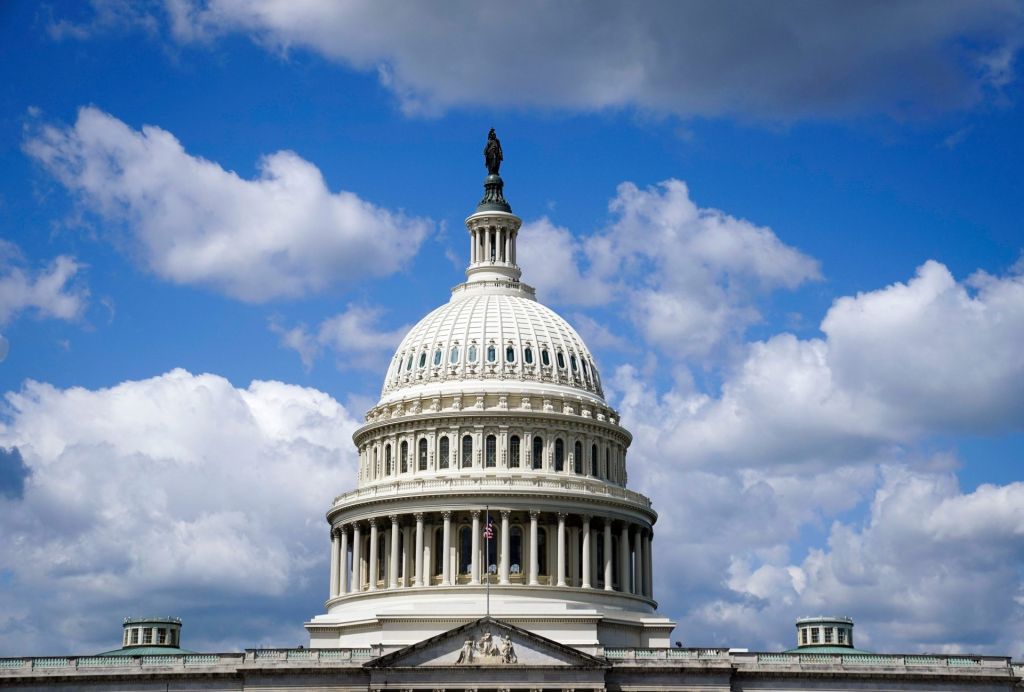
On Wednesday, the SCORE Act, a college athlete compensation bill endorsed by the NCAA and power conferences, took another crucial step in becoming the first bill of its kind to reach the floor of Congress for a vote.
The Student Compensation and Opportunity through Rights and Endorsements (SCORE) Act advanced through two full committee markups, Energy and Commerce, and Education and the Workforce, that were held simultaneously. It passed Energy and Commerce 30-23 on straight party lines, and passed Education and the Workforce 18-17.
The two committees discussed disparate drafts of the SCORE Act, which will have to be reconciled in the House Rules Committee. The bill will then be sent to the House floor, where it is likely to pass given the Republican majority. Despite two Democrats co-sponsoring the bill, it may not have enough Democratic support to pass the Senate.
The SCORE Act is the fruit of a yearslong lobbying campaign by the NCAA and power conference to rein in the athletes’ rights movement and reassert control over compensation rules. The legislation fulfills the major requests on the NCAA’s wishlist.
Here are the main provisions included in the bill:
- It would require any college sports governing body to allow athletes to profit off NIL, but would give them the power to set certain restrictions on what kind of deals they could sign.
- It offers new parameters on NIL agents.
- If a school has coaches on their payroll who earn more than $250,000 a year, they have to offer certain medical benefits and sponsor a minimum of 16 sports.
- The NCAA, College Sports Commission, and conferences would be protected against challenges to compensation rules, eligibility rules, and transfer rules. There are some athletes’ rights protections, however: a minimum for the cap on revenue-sharing compensation and a guarantee players can transfer at least once without penalty.
- The bill pre-empts state laws and grants the NCAA antitrust protections.
- The bill would prohibit athletes from becoming employees.
Both committees discussed a version of the bill that would set new “transparency” requirements for the contracts for any NIL deals over $600, including that agreements are in writing. The bills also strengthened regulations around agents, including giving the NCAA or another entity the power to set rules about which agents could work with players, and set a limit on how much money agents can take from players for negotiating deals. Lawmakers/the bills’ sponsors are asking the FTC to commission a study on agent regulations.
Additionally, the Committee on Education and the Workforce discussed a version of the bill that requires athletic departments that earn at least $20 million a year to provide additional medical and educational benefits and 16 varsity sports. (An earlier version of the bill stipulated that schools provide these benefits if coaches earn a certain amount of money.)
The two committees are only able to discuss, or potentially amend, aspects of the bill over which they have jurisdiction. Any differences between the two bills would be reconciled through the Rules Committee, which would combine them and send them to the House floor for a potential vote.
The bill would likely pass the House given the Republican majority, but faces a steeper hurdle in the Senate. At least seven Democrats would have to vote yes on it (assuming every Republican does as well), and there’s little evidence that bipartisan negotiations have yielded enough votes. The bipartisan hangup is mostly around giving the NCAA antitrust protections and requiring athletes to be amateurs rather than employees, as that would strip their ability to collectively bargain.
For at least a year, a bipartisan group of legislators, including Sens. Ted Cruz (R., Texas), Cory Booker (D., N.J.), and Richard Blumenthal (D., Conn) have been in closed-door negotiations over these and other issues, and so far have made no public indications that they’ve reached a resolution.
Last week, Sen. Maria Cantwell (D., Wash.) released a statement criticizing the SCORE Act—Republican Rep. Michael Baumgartner signed onto the statement as well. Then, on Wednesday, Sen. Chris Murphy (D., Conn.) introduced a bill that would give athletes the right to collectively bargain—diametrically opposed to the SCORE Act.
Also on Wednesday, a group of five state attorneys general—including conservative AGs from Florida and Tennessee—released a statement against the SCORE Act’s antitrust protections for the NCAA.
During the Energy and Commerce markup, two Democrats, Rep. Lori Trahan (D., Mass.) and Rep. Yvette Clark (D., N.Y.) attempted to strip the bill’s antitrust exemption. That certainly would’ve made the bill more bipartisan, but the two lawmakers were unsuccessful.
Rep. Frank Pallone, (D., N.J.) said his colleague Sen. Booker would “never support” the bill—and that it would be “dead” in the Senate.
Download the FOS App
The business of sports, in your pocket.



Scan the QR code to get the app now.