Want more from Front Office Sports
in your search results?
The NCAA’s decision to expand the Division I men’s and women’s basketball tournaments from a field of 68 to 76 received mixed reactions and even backlash from heavyweights like Geno Auriemma, Dan Hurley, and Brad Underwood. But some women’s coaches see the broader field less as a decrease in quality, and more as an increase in opportunity.
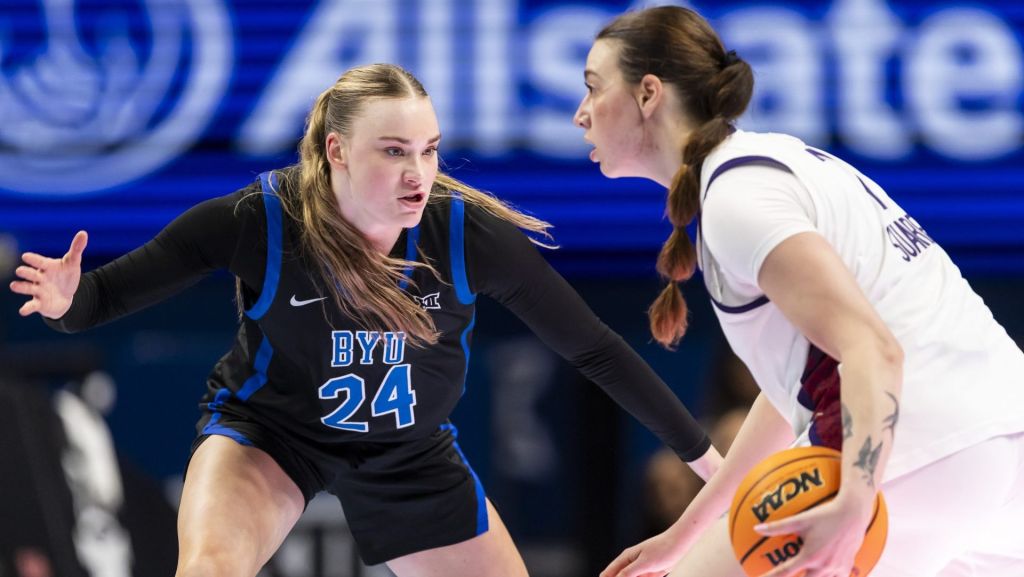
“It’s good for program recognition,” BYU head coach Lee Cummard tells Front Office Sports. The Cougars were one of the last four teams out of this year’s women’s tournament. “The athletes on our team have unbelievable stories that they need to share with the world, and visibility allows them to share those stories.”
Historically, the women’s basketball tournament has been less deep than the men’s: In the last three years, the lower seed won only 8 women’s first-round games compared with 24 on the men’s side.
The prospect of new opportunities from expansion especially excites mid-major coaches who spoke to FOS. Fairleigh Dickinson’s Stephanie Gaitley explains that sports are the “porch” of a university and where a smaller school can get major exposure.
Tournament expansion includes more play-in games: Four 15-seeds and eight 16-seeds will play in one pod, while the final 12 at-large qualifiers will play each other in another pod with four 11-seeds and eight 12-seeds. This year, No. 15 Fairleigh Dickinson fell to No. 2 Iowa by 10 in the first round, but Gaitley believes the Knights would have been more competitive with a play-in game that gave them more confidence on the tournament stage (Fairleigh Dickinson’s only D-I tournament appearances were in 2025 and 2026).
“To say we won a game in the NCAA tournament really goes a long way,” Gaitley says.
However, much of this optimism hinges on whether the NCAA selection committee favors middle-of-the-pack power conference teams or highly successful mid-majors that fall just short of an automatic bid when picking at-larges—a big debate on the men’s side as well.
While North Dakota State University was one of the first four out in this year’s tournament, the other three schools, as well as three of the next four out (per NET rankings), were Power Four schools. Coaches like North Dakota State’s Jory Collins and recently-retired Middle Tennessee coach Rick Insell worry this trend won’t change anytime soon, even if they hope it does.
“The reason for expansion is more money, more TV, all the things that come with lengthening the tournament,” says Collins, who agrees with Auriemma’s sentiment that expansion is a “money grab” for P4 schools. “It gets masked a little bit [like], ‘Hey, we’re giving people more opportunities.’”
Collins added, “It’s going to come down to, what is the committee doing with these extra spots?”
Notably, the NCAA, through its corporate sponsorship deal with men’s tournament broadcasters CBS and TNT, will receive $50 million in annual revenue.
Collins can see the selection committee favoring more mid-majors on the men’s side compared to the women’s, with the men’s tournament having more parity and upsets. He also worries that an expanded NCAA Tournament dilutes its prestige, but believes that the brand name of the event is enough to overcome that.
Ultimately, some coaches think expansion was decided mostly with the men’s game in mind, while the women were included in the name of equality—but expanding only the men’s game could have brought its own issues.
“My true answer [is] they probably were afraid of a lawsuit,” Insell said of why he thinks the NCAA expanded the women’s tournament alongside the men’s. “But expanding our women’s game is going to help our game.”
Collins and Gaitley admit that they would have been upset if the tournament had only expanded on the men’s side. Meghan McKeown, a women’s basketball analyst for Big Ten Network and daughter of former Northwestern coach Joe McKeown, tells FOS she believes the women’s tournament can have financial value in expansion as well with its increasing viewership.
But with 10 months until the next, bigger, Big Dance, there is no concrete evidence of how the women’s landscape will change with tournament expansion.
“At the mid-major level, I don’t know what that exactly means for us,” Collins said. “So we’re kind of in wait-and-see mode.”
Download the FOS App
The business of sports, in your pocket.



Scan the QR code to get the app now.