White Sox Co-Owner Mat Ishbia Endorses MLB Salary Cap—and Floor
Want more from Front Office Sports
in your search results?
Retailers that import goods from China to the U.S. are breathing a sigh of relief.
U.S. and Chinese officials announced Monday they reached a deal for a 90-day pause on the most recent tariff hikes while working to resolve their trade disputes. The agreement means that “reciprocal” tariffs between the countries will be cut from 145% to 30%.
President Donald Trump’s other tariffs—including those imposed on more than 75 countries—were also paused for 90 days on April 9, and could be just as consequential for businesses that have shifted much of their sourcing from China to other Asian countries in the past several years. There are still 10% baseline tariffs on imports from all other countries.
The Footwear Distributors and Retailers of America (FDRA), along with more than 80 companies, including Adidas, Nike, Puma, and Under Armour, sent a letter to President Trump on April 29 urging him to exempt footwear from the new tariffs. And following Monday’s tariff announcement, the FDRA said it’s “encouraged by President Trump and his administration’s progress,” but also that “we’re not across the finish line yet.”
Apparel and footwear companies are particularly vulnerable as so many rely on countries including Vietnam, Indonesia, and Cambodia for manufacturing their products.
But amid all the tariff twists and turns, running shoes have remained a bright spot.
U.S. footwear sales overall declined 4% in the first quarter of this year versus 2024, totaling $19.3 billion. Sales of running shoes, meanwhile, grew 7%, according to Circana, which tracks the retail industry.
The performance category outperformed the total market, with dollar sales up 4%. What Circana labels as “activewear” is also outshining sales of broader apparel: For the 12 months that ended in March, sales of total apparel were down 2% vs. the prior year, but activewear grew 3% during that time.
The COVID-19 shutdowns led to a casual running boom, which has not yet slowed as participation in running continues to grow. Strava’s annual trend report found a 59% increase in running club participation globally in 2024.
Much of the growth in the running market is a result of pricing power, says Beth Goldstein, footwear analyst at Circana. “This market is very competitive, which is driving innovation,” she tells Front Office Sports.
As companies wrestle with uncertainty around tariffs, they also face the question of how to handle any new costs. (There’s a universal 10% tariff on most imports.) Do they pass on higher prices to consumers, negotiate with suppliers, absorb the costs, or some combination of all three?
Certain running brands—especially those with a dedicated and well-heeled customer—have a layer of insulation: consumers are willing to pay up for fashionable running gear.
On Holdings is one example. According to Bernstein, On is better equipped than competitors to perform well amid higher tariffs and potential pullback in consumer spending. In part because of the Swiss company’s low U.S. market share and strong demand in both wholesale and direct-to-consumer channels, “On should be much more protected from a broader slowdown in demand than its larger incumbent competitors,” Bernstein wrote in an April note.
What’s more, its premium pricing—the new Cloudmonster 2 men’s running shoe clocks in at around $180—”indicates strong pricing power, which should allow them to pass on some of the potential cost impact from tariffs and protect margins.”
When asked about the prospect of U.S. tariffs in March, On cofounder David Allemann told FOS it wasn’t a concern because of the brand’s premium status. “So for everything we do, we have a very premium positioning and that also gives us the ability to drive premium margins,” he said.
“In niche sports and hobbies where people are truly committed to the lifestyle, they can stay with the brand in spite of price increases,” NYU marketing professor Thomaï Serdari tells FOS.
Niche Brands, Running Boom
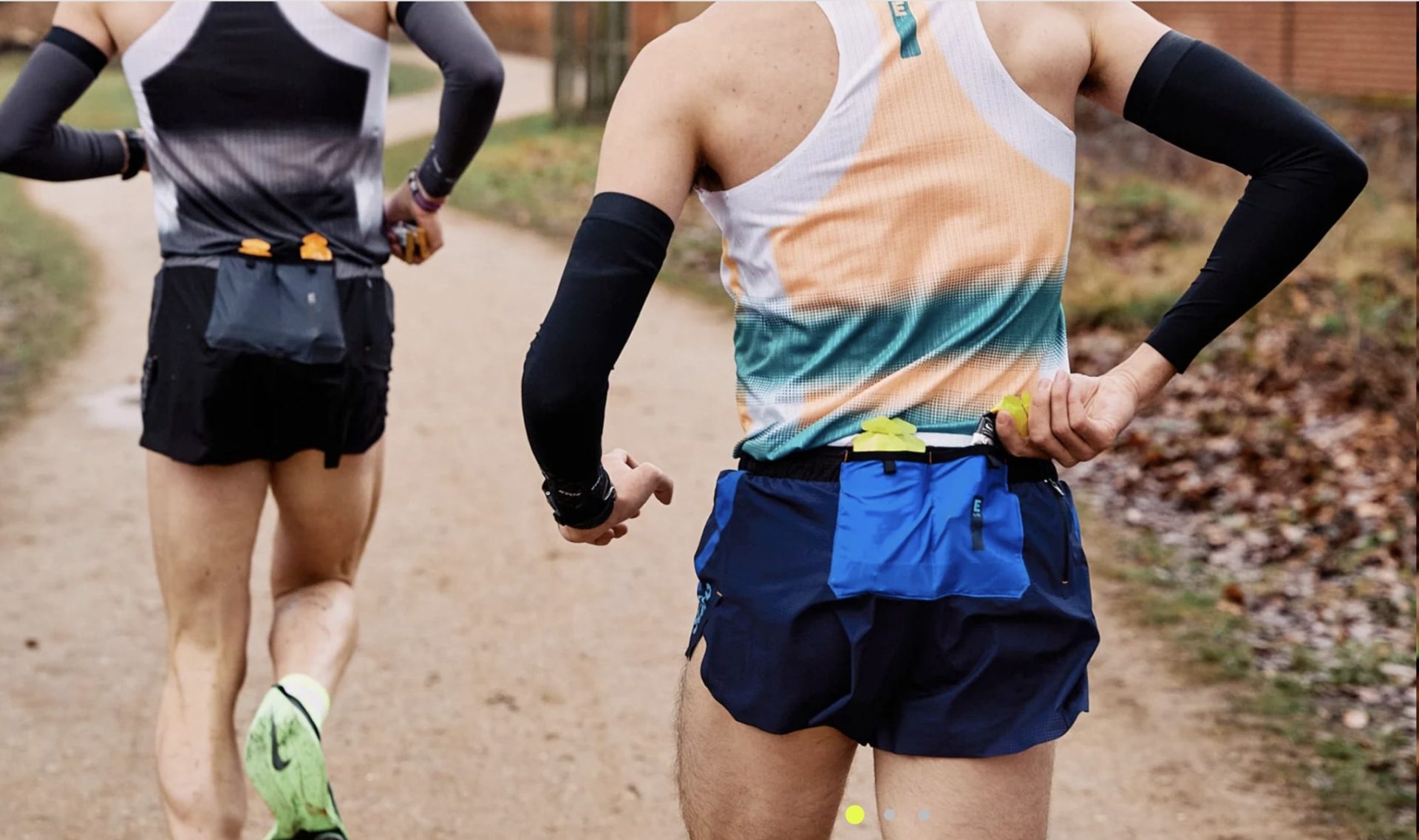
A slew of small independent brands have popped up in the last few years targeting both casual and serious runners. Their running gear touts a modern aesthetic combined with high-tech performance fabrics that are “tested and engineered alongside top athletes,” as Bandit Running describes its $118 running tights. Prices reflect those bells and whistles.
Tracksmith sells a $280 carbon-plated running shoe. Satisfy, based in France, sells its signature MothTech T-shirt “with strategically placed holes for ventilation and cooling” for $140. Soar has a $545 Nano rain shell with “technical raglan sleeves [that] enable fluid motion.”
Ben Morrow, founder of Miler Running, which sells direct-to-consumer running gear, isn’t so concerned about consumer pullback. His company is one of the few that manufactures its products locally in New York City, while all materials (predominantly performance fabric) are imported from Europe.
“I’m already used to paying a tariff,” Morrow tells FOS. U.S. imports of certain fabrics faced tariffs before Trump’s second term; Morrow has been paying between 10% and 15% on fabric from Japan, Italy, France, Switzerland, and Portugal.
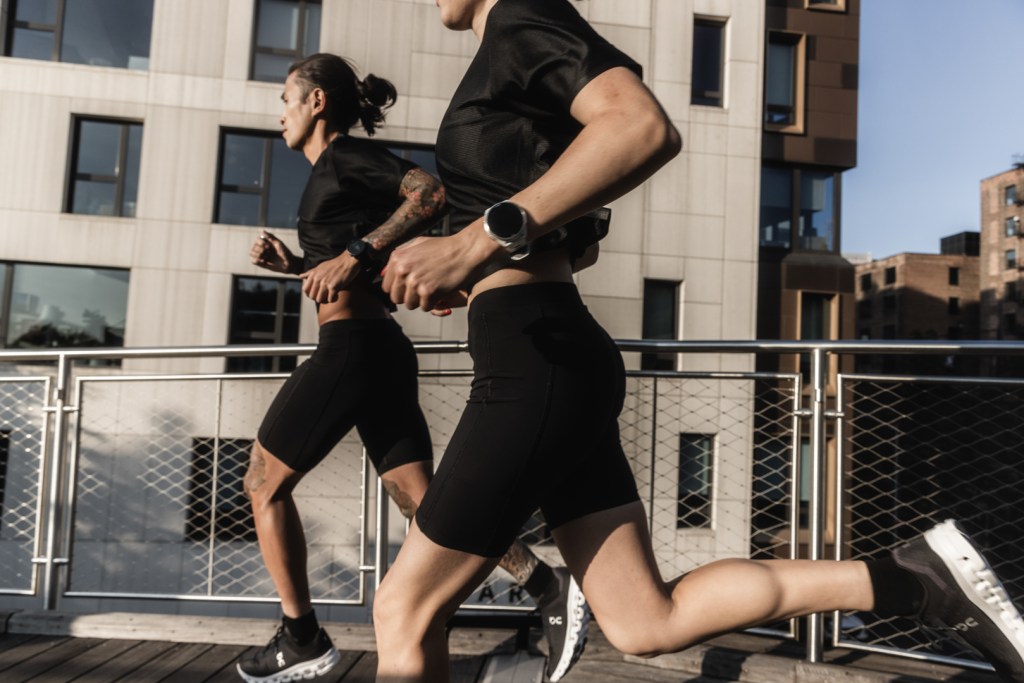
An additional baseline tariff of 10% on almost all imports to the U.S. kicked in April 5. Miler Running hasn’t raised its prices since it launched in 2019, but it will finally have to now. “We will pass along some of the increase. I can’t say how much,” he says.
Morrow isn’t worried about consumers cutting back. “All of these boutique running brands are relatively protected because I think in times of economic crisis, running is still an activity that provides a lot of value to people. It’s low cost compared to tennis or golf.” Miler’s sales have at least doubled each year since it launched.
Goodbye to the De Minimis Exemption
Some brands are still being more cautious given the ongoing uncertainty.
U.K.-based Soar sells most of its running gear directly to consumers, with the U.S. being its second-biggest market at 20% to 25% of sales. Most of its products are made in Europe, and around 20% are manufactured in China.
As of May 2, the U.S. ended the de minimis exemption for low-value imports from China, which means that goods from China, previously eligible for duty-free entry under the $800 threshold, will now be subject to tariffs. (In 2023, these imports totaled $54.5 billion over 1 billion shipments, up from $50 million over 110 million shipments in 2012.) The administration’s pause on China’s tariffs announced Monday does not address the de minimis exemption.
“The vast majority of our basket sizes fall under the [$800] limit,” Soar CMO Rob Wilson tells FOS. But since the China tariff cut doesn’t negate the removal of the de minimis exemption, there’s still “a considerable uptick in the status quo we had before the [Trump] tariffs. … We are going to pause fulfillment of Chinese-origin goods into the U.S. while we figure out what to do.”
Norda, a Canadian company that sells trail-running shoes for up to $325, took a similar approach. It recently posted a message on its website, saying: “We have made the difficult decision to temporarily pause all shipping to the United States. The current tariff situation, that comes into effect May 2, would force us to increase our prices to a point we do not feel is right to pass onto you at this time.”
While it’s likely wealthier consumers will continue to spend, “there is a breaking point after which no customer is willing to pay extravagant prices for merchandise for which there are substitutes,” NYU professor Serdari says.
Renegade Running, which has locations in Los Angeles and Oakland, Calif., sells a range of brands, including District Vision ($210 trail shorts) and Hoka ($140 to $225 running shoes).
Renegade owner Victor Diaz tells FOS that while his typical customer is on the wealthier side, at a certain elevated price, “there’s no level of affluence” that is immune. “If a $300 shoe is now $450, yes, that would suffocate the consumer.”
Download the FOS App
The business of sports, in your pocket.



Scan the QR code to get the app now.