Want more from Front Office Sports
in your search results?
Adidas followed its big win at the London Marathon on Sunday with another stellar performance Wednesday, reporting 14% sales growth to $7.72 billion in the first quarter. Analysts estimated a 9% increase in sales to about $6.33 billion.
Notably, Q1 2026 was the first quarter since the Yeezy partnership termination in October 2022 without any residual impact from rapper Kanye West’s collaboration with the brand. The German sportswear brand no longer has remaining headwinds from discontinued Yeezy sales or leftover inventory.
“The general retail environment is currently very volatile and heavily discounted in many markets, especially in lifestyle footwear. The discipline of not overselling into retailers is therefore currently crucial,” Adidas CEO Bjørn Gulden said in the earnings release. “We do, of course, hope the environment stabilizes and that discounts will normalize, but this is unfortunately not in our control.”
Growth was broad-based across regions, including 12% growth in North America, 17% in China, 26% in Latin America, and 6% in Europe. Apparel remained the key driver, up 31% given new products and World Cup jerseys, while footwear rose 4%.
Gross margin was 51.1%, with underlying improvement more than offset by headwinds from currencies and tariffs, Gulden said.
On the earnings call, Gulden gave a nod to the brand’s most recent product innovation—Adizero Adios Pro Evo 3—worn by London Marathon winners Sabastian Sawe and Yomif Kejelcha, both of whom broke the sub-2-hour record on Sunday. (On its earnings call, Adidas showed a trailer for a documentary set to be released Thursday about the story behind sub-2-hour feat.)
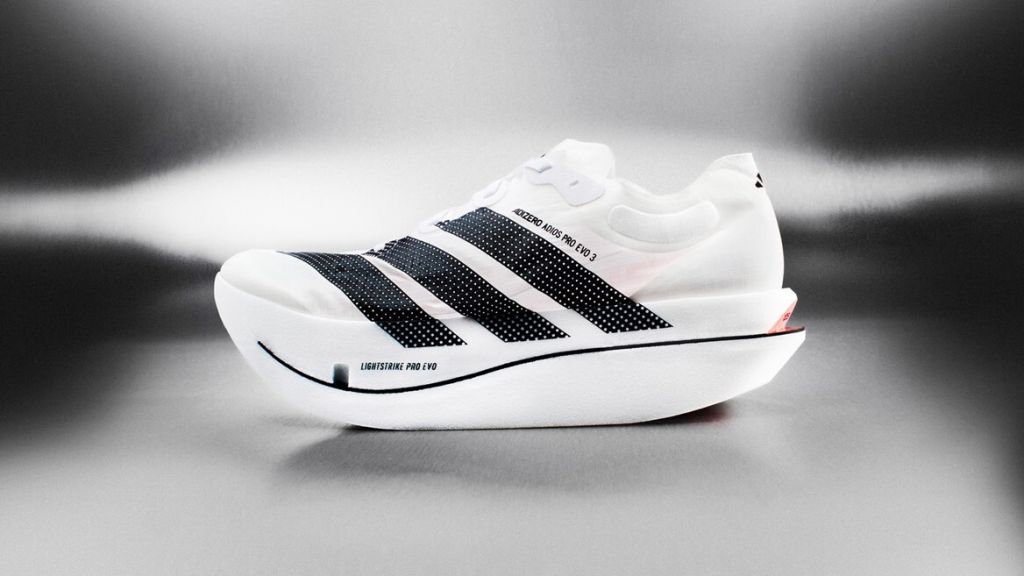
Adidas’s Q1 growth was fueled in part by its performance category, a different narrative than in quarters past when lifestyle shoes like the Samba and Gazelle dominated sales. Performance grew 29% in the quarter (vs. 27% in Q4), led by double-digit percentage growth in football (soccer), running (28% growth), and training. The basketball segment decreased by 20%. Gulden said the company’s priority segments are football, running, training, and basketball.
“Now having such growth in performance is great feedback for us,” Gulden said on the call.
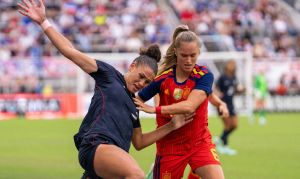
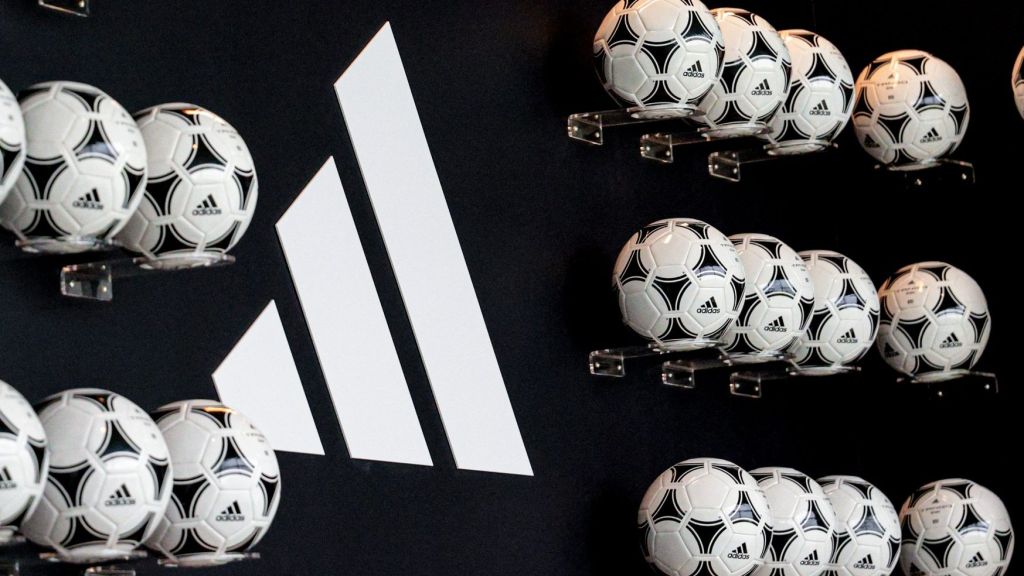
Momentum increased in Football “on the back of the successful FIFA World Cup 2026 away jersey launch in March, next to continued strong demand for the event’s home kits and the official match ball Trionda,” the company said.
Gulden noted one area the brand has been weaker in is comfort, and specifically walking, which he said “no one is really talking about,” adding that Adidas will make sure walking becomes a category.
Eyes on 2026 World Cup
Gulden said the company is “now ready for the World Cup. Despite many supply and transportation issues, we have most of the product in the markets and look forward to a fantastic event that will be great for us. But there is, of course, more to it. The world needs these sports events, where people from all over the world with all possible backgrounds come together to celebrate.”
Gulden had previously projected $1.1 billion (€1 billion) in sales tied to the World Cup, but he’s also cautioned that World Cup-related sales may take sales from other areas. For example, if Adidas sells more Argentina, Italy, or Germany national team jerseys, it may sell fewer jerseys of the professional clubs that it sponsors, says Morningstar analyst David Swartz.
Still Adidas is likely the biggest product winner from the World Cup, given its strong push into product and marketing since Q4, and sponsorship of the event overall, a Bernstein analyst wrote in a note this month about Adidas’s and Nike’s World Cup marketing push. For instance, Adidas said that the 2024 Euro cup led to almost 3 million jersey sales and the 2024 Copa America tournament led to almost 2 million jersey sales.
Shares soared more than 12% in early morning trading.
Jefferies analyst James Grzinic said in a note the strong earnings report “could help shift the investor debate a little more constructively despite skeptics presumably attributing part of the strong Q1 delivery to a temporary World Cup sell-in benefit.”
Download the FOS App
The business of sports, in your pocket.



Scan the QR code to get the app now.