ORLANDO—The House v. NCAA settlement was approved June 6, just a few days before thousands of athletic directors and administrators from around the country descended upon Orlando for their annual National Association of Collegiate Directors of Athletics convention.
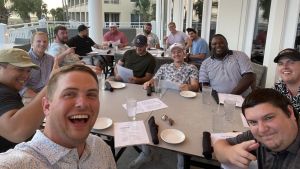
The settlement, which will allow all schools in D-I to pay players for the first time in history, was, of course, the hottest topic. NACDA and affiliate organizations hosted close to two dozen sessions on the specific terms of the landmark settlement, and how schools should handle them. Members of the settlement implementation committee, made up of power conference athletic directors, hosted a talk Tuesday morning in a ballroom with hundreds of people. Deloitte sent employees to give a step-by-step presentation on “NIL Go,” the new NIL clearinghouse. As administrators gathered at the overflowing hotel bar, they joked about the settlement and shared their plans with each other over beers, cocktails, and sushi.
Throughout the conference, power conference administrators, at least publicly, trumpeted the settlement as a major solution to college sports—specifically one that would curb the unrestricted NIL market—and promised to commit to the new rules and regulations.
But non-power conference administrators exhibited less faith. They still have lists of questions that haven’t gotten answered. And it’s not just a lack of information—many sounded skeptical about the settlement’s ability to “stabilize” college sports and enforce the new rules effectively.
“They’re not that complicated,” Ohio State athletic director Ross Bjork said of the new rules. But not everyone agrees.
‘Where’s Our Answer Now?’
The House v. NCAA settlement offers $2.8 billion in back-damages to athletes who couldn’t earn money from their name, image, and likeness before 2021. It allows revenue-sharing with players—up to a cap that will start at $20.5 million next year. But it also sets up new restrictions: a “clearinghouse” will vet NIL collective and booster deals to ensure they’re offering “fair-market value,” and not pay-for-play. It eliminates limits on scholarships, but puts new roster limits in its place.
Power conference schools are required to opt in. The rest of D-I are allowed to opt into the terms if they want. But because the former Power 5 were the only conference defendants in the lawsuit, they’re the only schools with any say in the settlement terms or implementation process: They created the College Sports Commission, the new group tasked with enforcing all the House settlement rules. (The NCAA, the other major defendant, is not participating in enforcement.)
But because the settlement itself wasn’t fully approved until last week, the Commission didn’t launch until Friday night—and many of the details remain a mystery to non-power conference administrators. Those questions range from how schools implement certain aspects of the settlement to how enforcement will work.
During the settlement implementation session at the NACDA conference, for example, a University of North Dakota administrator asked power conference athletic directors when he might expect more communication about how implementation of the new rules will work. “We have until Sunday to decide whether we’re opting in,” he said. “I think many of us are having these conversations on our campus with a lack of information. So, do you happen to know when some of that information might come out?”
Washington athletic director Pat Chun said a 51-page FAQ was being prepared, but that lawyers had to look it over, causing a publication delay. Then, NCAA representative Dave Schnase, who had been watching in the audience, came to the microphone and said the FAQ would be available soon. In other words, no one knew exactly when more information would be available.
Another FBS administrator, who declined not to be named to speak freely, told Front Office Sports that their athletic department has been preparing for the House settlement for a year, but still has questions about NCAA rule changes.
“I think everyone’s kind of relieved that we no longer have to wait on, is it going to pass or not,” the administrator said. “But also, now, there’s a lot of impatience…we’ve been asking these questions for months. You guys have had months to answer them.”
In some cases, the answers to these questions don’t exist yet. Conference commissioners told reporters Monday that they haven’t settled on punishments for violating NIL clearinghouse rules. And they haven’t explained how they’ll enforce some of these rules—or how schools can enforce them, which is especially pertinent given that schools will be punished if their athletes violate rules (like refusing to enter deals into the clearinghouse).
Addressing the power conferences and NCAA, the FBS administrator said: “You said, ‘Wait till the House settlement is approved or not approved.’ So where’s our answer now?”
Return of ‘Brown Paper Bags’
Others have concerns specifically over whether the rules will actually ensure that schools won’t use NIL—or even just under-the-table payments that aren’t considered NIL at all—to usurp the new revenue sharing cap. They also worry about a flurry of new lawsuits that may come to to challenge the settlement’s terms.
Boise State athletic director Jeramiah Dickey tells FOS he thinks the clearinghouse will help prohibit some NIL deals from being overinflated, but expressed concern that those deals disguised as pay-for-play will show up in other forms. “I believe the brown paper bags are going to come back,” he says.
Former ESPN NBA insider Adrian Wojnarowski, the new GM of St. Bonaventure basketball, said during a panel he was concerned non-power conference athletes would be targeted for punishments because the power conferences wouldn’t want to punish their own players.
The athletic directors on the House implementation committee, meanwhile, were confident all D-I schools would commit to following the rules they’ve asked for. “We are literally going to sign a piece of paper” to commit to them, Bjork said, referencing a memo barring schools from suing to challenge the settlement’s terms. They did, however, acknowledge the shortage of information; the College Sports Commission announced Wednesday it extended the opt-in deadline from June 15 to June 30.
Added Clemson athletic director Graham Neff: “We’ve got to commit and adapt to this change—and be all in it together..”