Want more from Front Office Sports
in your search results?
Grand Slam Track is coming out of bankruptcy.
What comes next for the track startup is still unclear.
Chief Judge Karen B. Owens of Delaware Bankruptcy Court approved Grand Slam’s plan to get out of bankruptcy on Thursday. The move allows Olympian Michael Johnson’s league to begin to pay back some of the millions of dollars it owes to athletes and vendors from its 2025 season and move forward as a company out of bankruptcy.
Grand Slam will pay about $4.9 million to athletes and $1.8 million to vendors. It owes those groups about $7 million and $13 million, respectively. Athletes are getting about 70% back, while vendors are getting about 14%.
The plan is funded by Winners Alliance and Johnson. Winners Alliance is the commercial arm of the Professional Tennis Players Association, chaired by billionaire Bill Ackman.
Winners was originally a minority investor in Grand Slam and later backed the league through bankruptcy. Johnson agreed to hand back a $500,000 payment he sent himself in June 2025, paying the debtors with that money while denying any wrongdoing.
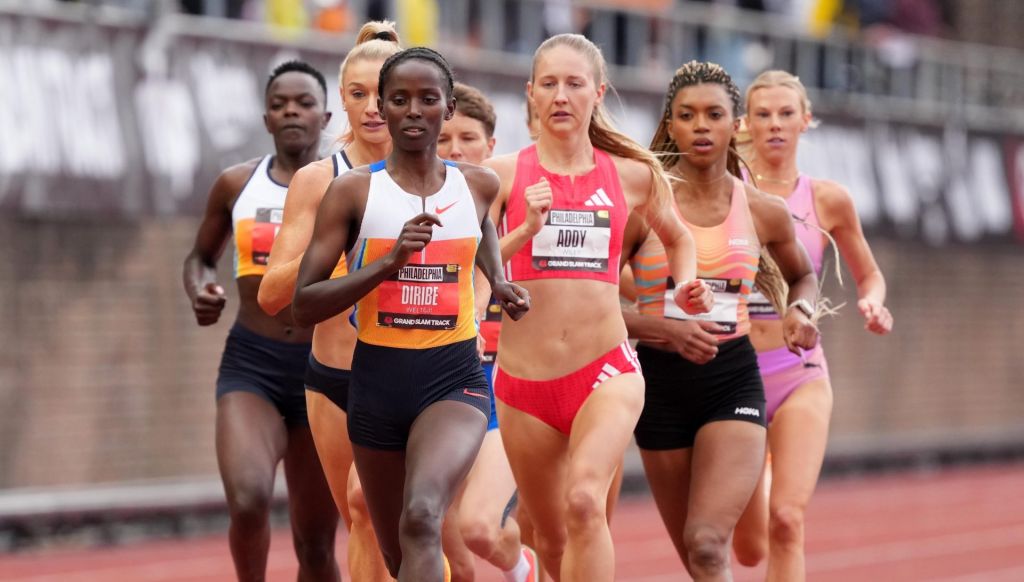
Grand Slam staged three events in Kingston, Miami, and Philadelphia last spring before canceling its L.A. Slam in June. While the league briefly raised the bar in track for athlete pay, it also racked up more than $40 million in debts while earning less than $2 million in revenue. After paying athletes back half of what they were owed in October, the league declared bankruptcy in December.
The bankruptcy process was contentious. Grand Slam originally proposed a plan that would pay athletes back 85% of their remaining debts, but split only $200,000 amongst vendors—just 1.5% of what they were owed.
Grand Slam’s vendors include media, production, marketing, communications, track resurfacing, cable and wireless, and events companies, as well as some of the race venues themselves.
The vendors rejected this proposal, claiming Grand Slam was illegally favoring the athletes, and asked for court approval to sue. The two sides reached a settlement last month that agreed to the current split.
Since the settlement, the different groups of creditors voted on the plan, and it overwhelmingly passed. Thursday’s hearing was largely procedural.
“It should be a quick hearing, I think,” Owens said to open the half-hour session.
Steve Gera, Grand Slam’s COO, declined to comment on behalf of the league. Gera and Johnson will both maintain control of Grand Slam moving forward.
An attorney representing the creditors declined to comment on Thursday’s hearing, but pointed to a March letter in which they advised the creditors to vote to accept the plan. “In the Committee’s view, the Plan provides unsecured creditors with the greatest potential recovery under the difficult circumstances presented in this case and is in the best interest of general unsecured creditors,” the letter says.
Many of the vendors will lose substantial amounts of money. At the top of the list is the production company that broadcast all of Grand Slam’s events, Momentum Broadcast and Carr Hughes Productions, which will recover about $425,000 of the more than $3 million it is owed. The league’s technology partner, PMY, will not see most of its roughly $1.3 million, nor will graphics company Girraphic, owed about $690,000. Track media company Citius Mag is owed $272,915.80 and will recover about $38,000.
Athletes will come back closer to neutral, recovering thousands of dollars they have been owed for months. Though they won’t be fully repaid. Sydney McLaughlin-Levrone, who has the highest claim among athletes at more than $355,000, will still be out more than $100,000, and the next-highest claimant, Gabby Thomas, will be down about $75,000 of the $250,000 she’s owed.
Winners Alliance said in a statement: “Today, a judge approved Grand Slam Track’s Chapter 11 reorganization plan. It marks the end of a difficult chapter for athletes, the organization, investors, and everyone involved. The process reflected real capital and operational challenges that required restructuring to stabilize the business.”
Grand Slam’s collapse was hastened when a prospective investor backed out. Winners Alliance says that in contrast, it “met its funding commitments and went beyond them multiple times, not out of obligation, but because athletes were counting on it.” The company described the Grand Slam ordeal as one that applied “extraordinary pressure.”
Athletes Nearly Lose Out
The majority of the hearing was devoted to a last-minute issue that could’ve seen more than a dozen athletes lose out on tens of thousands of dollars.
During the voting process that preceded the hearing, athletes had an option to check a box that would move them from the athlete tier to the vendor tier, meaning they would have received 14% of what they were owed, not 70%, and the difference would be returned to the vendors.
On Thursday morning, attorneys for Grand Slam and Winners Alliance told the judge they learned late Wednesday that “many of the athletes incorrectly” filled out their ballots, pinning some of the errors on a language barrier. They explained that all parties agreed the athletes could amend their ballots, and 13 of the 17 athletes who checked the box had done so before the hearing. Judge Owens and the lawyers said they had never seen this happen.
Canadian Marco Arop is one of the athletes who originally checked the box but later amended his selection. He is owed $168,750 from Grand Slam, and his roughly $118,125 payout would’ve fallen to about $23,625.
Several of them, including Arop, are international athletes represented by agent Ramon Clay and John Regis of Astra Partners.
“Unfortunately, there was a clerical error from our side in our clients’ vote,” Regis, president and founder of Astra Partners, tells FOS. “This has now been rectified. All our clients voted, as all the other athletes have voted. An incorrect ticked box caused the issue.”
The agents whose athletes had checked the box were alerted on Wednesday following inquiries from Front Office Sports, a source confirmed.
Judge Owens said she has a “broader problem” with reaching out to the remaining four athletes to ask if they meant to check the box, but said she can weigh in if they do reach out indicating an error. Three of the athletes are Belgian hurdler Michael Obasuyi, U.S. distance runner Cooper Teare, and Dutch hurdler Cathelijn Peeters, who are collectively owed more than $50,000 from Grand Slam.
What’s Next For Grand Slam Track?
From the beginning of the bankruptcy process, Grand Slam has said it wants to stage a comeback.
Bankruptcy filings have made it clear that the league has no money in the bank other than the funds it will get from Winners Alliance. The group is set to provide operational funding for Grand Slam through the end of the year, but a source tells FOS that Winners Alliance isn’t planning heavy involvement in the future, and won’t have any seats on Grand Slam’s board moving forward.
In March, Melissa Jefferson-Wooden, Kenny Bednarek, and Freddie Crittenden III filed letters to the court saying they would be interested in competing for Grand Slam if the league got back on its feet. Some agents and athletes have floated the idea of putting prize and appearance money in escrow before the competitions to know athletes won’t get burned again.
Even after losing Chelsea, Lakers, and Dodgers owner Todd Boehly’s Eldridge Capital last spring, Johnson said in August that his vision was drawing interest from “excited investors.”
Now it’s up to Johnson to see if anyone would take a chance on him again.
Download the FOS App
The business of sports, in your pocket.



Scan the QR code to get the app now.