Want more from Front Office Sports
in your search results?
MLB players and owners generally agree there is a glaring issue of revenue disparity in the sport, despite historic increases in attendance and viewership. Beyond that, though, there is no consensus about how best to address the problem, setting up what will be a long and almost certainly arduous set of labor negotiations.
Management and the union this week each made their initial proposals as collective bargaining begins in earnest, and basically talked past each other in what is the start of a process that could run at least another nine months.
The players are seeking a soft floor on player spending, as well as a hefty increase in minimum salaries, a meaningful expansion of free agency and arbitration provisions, and a retooled version of MLB’s revenue sharing system. The league responded that the proposal “would lead to even more payroll disparity than exists today.”
The owners are seeking a hard salary cap and floor, with a proposed top spending limit of $245.3 million per team, including player benefits. Additionally, management wants to pool all local media revenues, a massive departure from the market-based structure that helped create the revenue disparity that now exists. The union, however, responded that revival of a cap proposal “will suffocate competition by offering owners an all-purpose excuse for inaction and mediocrity.”
There was certainly no expectation going into these opening salvos that there would be immediate unanimity or any sort of accelerated path to an agreement. The specificity of each proposal, and their vastly different approaches, however, show just how far apart the two sides are. In particular, owners have not formally sought a salary cap in more than 30 years, and the previous attempt helped lead to the cancellation of the 1994 World Series.
“Billionaire owners are not seeking to cap their profits or asset values, only player salaries,” said MLBPA interim executive director Bruce Meyer. “This isn’t out of generosity or a desire to protect the game’s well-being. It’s a play to control costs, increase profits, and maximize franchise values—all at the expense of players past, present, and future.”
Calendar Watching
Though the current labor agreement runs to Dec. 1, and the 2026 season will be played in full, there are several notable calendar-related factors in the labor talks. Among them:
- Compared to the 2021–2022 labor cycle, the two sides are actually somewhat ahead of schedule. While the players made their initial economic proposal during that prior cycle in May 2021, it wasn’t until nearly three months later that owners made their opening salvo. The potential economic changes on the table now, however, are much more dramatic than those under discussion five years ago.
- If there is not a new labor agreement in place by Dec. 1, owners are expected to impose a lockout, just as they did for 99 days in the prior cycle. A formal decision to do so is still likely months away.
- The most serious negotiations might not happen until early next year. In that prior round of talks, the most impactful work on the eventual deal didn’t happen until late February and early March of 2022, when the prospect of missed games that season became truly palpable. That dynamic might very well repeat in early 2027, meaning much of this calendar year could still be prelude to the ultimate outcome, and significant changes from this week’s proposals are all but certain.
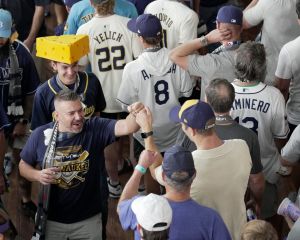
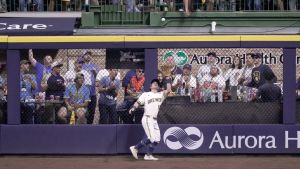
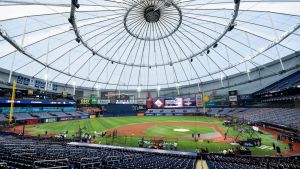
Further complicating the issue is the fact that the Brewers, Rays, and Guardians—the Nos. 21, 28, and 29 payroll spenders in MLB—are currently leading their divisions while the No. 2 Mets are languishing in last place, with those performances set to further stoke the debate around salary caps and revenue disparity.
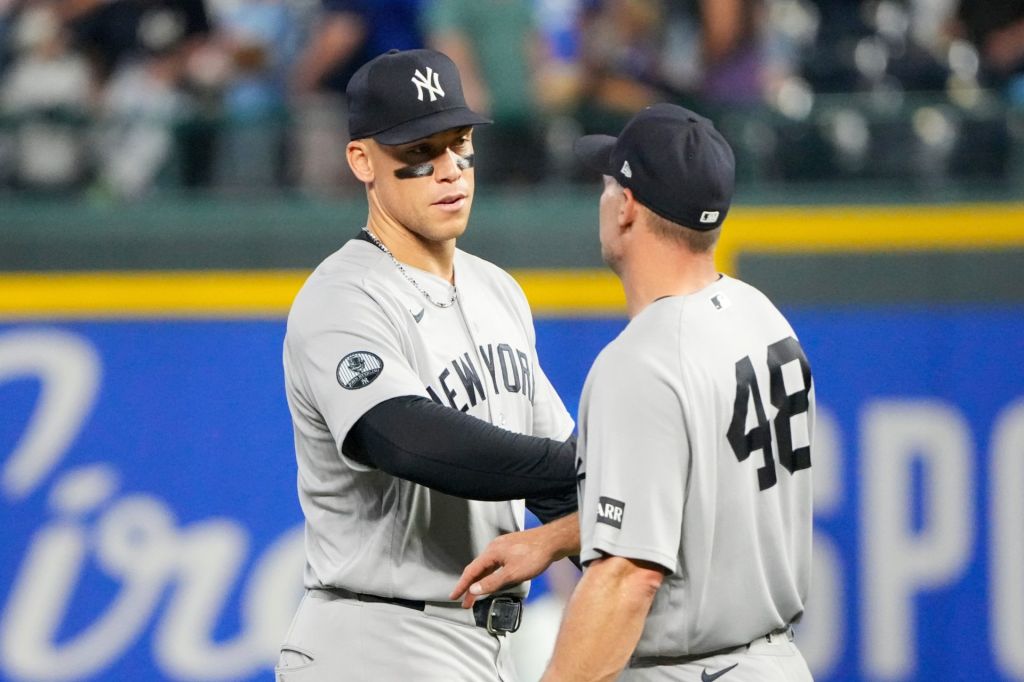
In the meantime, MLB continues to enjoy robust levels of viewership and attendance, buoyed by a series of factors including a collection of generational talents such as Shohei Ohtani and Aaron Judge, and rising fan interest internationally.
“Baseball has gotten stronger because we listened to the fans and made necessary changes on the field, like the pitch clock, to quicken the game and ABS Challenge to get the most important calls right. The biggest issue we need to solve next to continue to grow the game off the field is fixing the payroll disparity unseen in any other major U.S. sport,” MLB spokesperson Glen Caplin said.
Download the FOS App
The business of sports, in your pocket.



Scan the QR code to get the app now.