Want more from Front Office Sports
in your search results?
MLB team owners have formally proposed implementing a salary cap in baseball, an expected move as labor negotiations with the MLB Players Association intensify but one rife with complications.
After the union made its initial bargaining proposal Wednesday, management presented its opening offer Thursday, looking to impose a hard cap on team spending. The proposal from the owners included a $171.2 million salary floor for each team beginning in 2027, a top-end cap of $245.3 million, and an even split of industry revenue between owners and players.
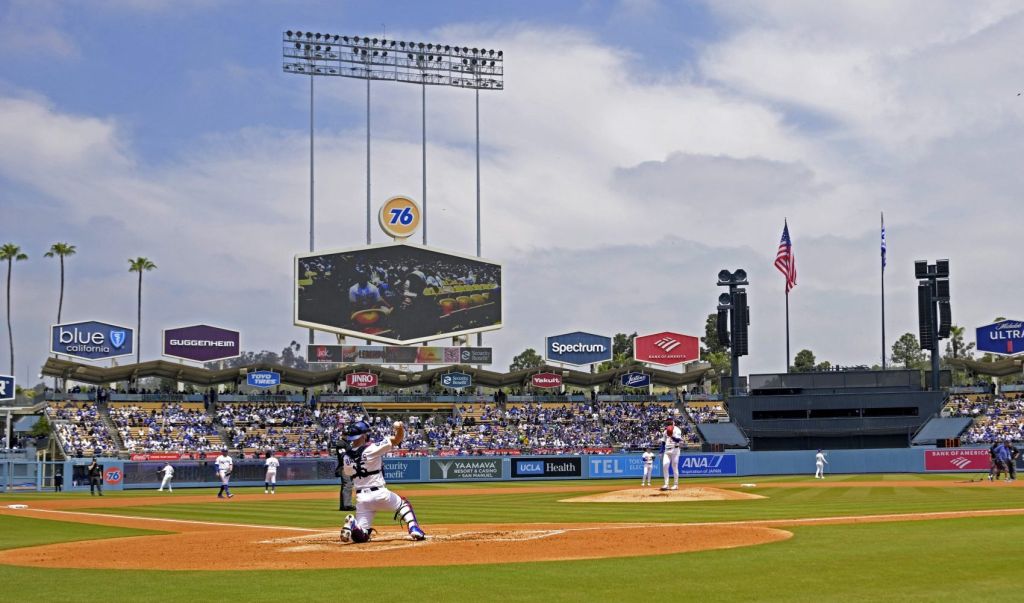
Under this structure, 12 teams would need to raise their payroll spending, based on their 2026 outlays, while eight others would need to make cuts. Foremost among that latter group, of course, is the two-time defending champion Dodgers, who have an MLB-record luxury tax payroll of $420.1 million this year.
“Baseball has gotten stronger because we listened to the fans and made necessary changes on the field, like the pitch clock, to quicken the game and ABS Challenge to get the most important calls right. The biggest issue we need to solve next to continue to grow the game off the field is fixing the payroll disparity unseen in any other major U.S. sport,” MLB spokesperson Glen Caplin said. “Fans overwhelmingly support a salary cap and floor.”
Management’s proposal contemplates a seven-year deal running through the 2033 season, an escrow mechanism to help ensure the revenue split, a continuation of guaranteed player contracts, and a potential phase-in system to help teams like the Dodgers comply with the cap.
Tough History
There is a long and tortured history around the salary cap, as players have resisted one for nearly their entire six-decade existence. Battles over a proposed cap helped lead to the cancellation of the 1994 World Series, still one of baseball’s darkest periods.
Management, however, believes circumstances have changed dramatically in recent years, as the Dodgers’ payroll this year is more than five times the comparable figure for the league’s No. 30 spender, the Marlins. MLB is the only major pro league based in the U.S. that does not use a salary cap.
“It’s not a fair fight,” MLB commissioner Rob Manfred said Wednesday on The Pat McAfee Show about the sport’s competitive balance. “The numbers really bear out that it’s not a fair fight. If you have a high payroll, you’re much more likely to make the playoffs and if you have a high payroll your chances of going to each of the successive [postseason] rounds are massively higher than a low-payroll club. Fans want competition. That’s what it’s about at the end of the day, and we need to get that one fixed.”
The cost certainty in a salary-cap system, meanwhile, has helped produce greater levels of franchise value growth in other leagues such as the NFL, NBA, and NHL.
Owners also presented a plan to centralize all local media revenue and share it equally, a massive change from the currently disparate situation that has played a central role in creating the existing economic disparity.
“By sharing media revenue equally as part of our proposal, we can address another top fan concern of local TV blackouts,” Caplin said.
Bargaining Gap
The MLBPA, not surprisingly, blasted the owners’ proposal, and cited that history around prior attempts to impose a salary cap.
“The last time the owners made such an explicit push for a cap—more than 30 years ago—it led to the longest work stoppage in MLB history,” said MLBPA interim executive director Bruce Meyer. “For generations, our members have fought against cap systems because they harm players at all levels, erode or eliminate contractual guarantees, pit player against player, lead to more work stoppages, not less, and get worse for players over time. Caps don’t lower ticket prices for fans, eliminate tanking, or ensure teams are run with equal competence. They suffocate competition by offering owners an all-purpose excuse for inaction and mediocrity.”
The players’ proposals instead seek to boost eligibility for free agency and arbitration, and dramatically raise the minimum salary.
Caplin, however, said the union’s initial proposal “does not address, and in fact exacerbates, the competitive balance problem our fans are telling us we must address. The MLBPA’s proposal would reduce the amount transferred to lower-revenue clubs, weaken the competitive balance tax, and lead to even more payroll disparity than exists today.”
The current labor deal expires Dec. 1, meaning there are still many months to go before a firm decision must be made on whether a work stoppage happens. Still, the upcoming talks are expected to be fractious, something reconfirmed this week with the massive division between the two competing proposals.
Download the FOS App
The business of sports, in your pocket.



Scan the QR code to get the app now.