Want more from Front Office Sports
in your search results?
Just in time for the move to Las Vegas, the Athletics are adding Mark Cuban and Falcons minority owner Rashaun Williams to their ownership group in what represents the first deal for Harbinger Sports Partners, the sports-focused private-equity firm launched last May.
The size of the minority stake, price paid, and team valuation were not disclosed. The A’s have reportedly been trying to sell a minority stake since 2024. Forbes values the A’s at $2 billion, placing them 18th out of 30 MLB teams.
In addition to Cuban and Williams, Harbinger is led by former MLB CFO and EVP Jonathan Mariner and Steve Cannon, who previously served as vice chairman and CEO of Falcons parent company AMBSE.
When Harbinger announced its launch last May, the firm said it was looking to raise $750 million for its first fund, and that it would target minority stake investments in North American sports franchises.
The firm—which intends to make 10 to 12 investments out of its first fund—is actively in talks with other teams and expects to have more announcements in the near term. But starting with the A’s was a deliberate choice, Williams says.
“We specifically reached out to the A’s because we wanted to be their partners,” he tells Front Office Sports.
Longtime MLB exec Mariner, who led the transaction, gives Harbinger “almost an unfair advantage” in negotiating MLB deals, Williams says, thanks to his decades of relationships across baseball and deep understanding of team dynamics.
Cuban credits Williams and Mariner as the drivers of the deal, but tells FOS, “I’m excited about it. We really like the management and ownership team.”
A representative for the A’s tells FOS the team is “very pleased” to add Harbinger as an investor. “The experience of their principals across sports, media, and entertainment, combined with their long-term perspective, makes them a valuable addition to our ownership group as we work to build the future of the franchise in Las Vegas.”
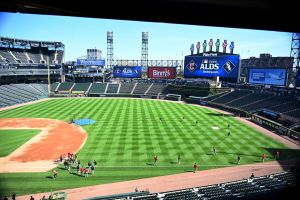
The A’s, owned by John Fisher, are playing most of their home games at Sutter Health Park in Sacramento this season, although six games last month were played at Las Vegas Ballpark (the team is currently second to last in the American League West division with a record of 43–59). The A’s are in last place in attendance this year, although that makes sense because the minor league Sutter Health Park’s 14,014-seat capacity is much lower than typical MLB ballparks. The team said goodbye to Oakland in 2024.
The A’s plan to start playing full-time in Las Vegas beginning in 2028, in a 33,000-capacity stadium on the Strip that was originally expected to cost about $1.5 billion. The cost has since risen, first to $1.75 billion and now to roughly $2 billion. The new costs are entirely Fisher’s responsibility as the public-sector contribution toward the project is capped at $380 million.
Williams says their investment isn’t being made to help get construction costs across the finish line. “All of the money required to build the stadium has already been committed two years ago,” he says. “Fisher definitely doesn’t need our money. We’re not coming to bail anyone out by any means.”
Meanwhile, he says that once the new stadium is finished, “it’s going to be the best ballpark ever built in the history of Major League Baseball.” He also says it’s “in the best location you can build a ballpark,” referencing the fact that Las Vegas annually welcomes between 30 million and 40 million tourists each year.
Although the team is relocating, it will not use the Las Vegas A’s, at least to start, in part because of an ongoing trademark issue. Through the 2027 season, and for the entirety of its interim stay in Sacramento, the team is not using a geographic signifier.
Not Going in Blind
Harbinger is not concerned about whether there will be enough demand, even with the increasingly crowded field for pro sports teams in the city. Las Vegas is already home to an NFL franchise (Raiders), an NHL franchise (Golden Knights), and a WNBA franchise (Aces). Plus, there’s the specter of a potential NBA expansion team.
In fact, Williams says the A’s ownership group, MLB, and Harbinger have all done “a significant amount of research to substantiate that demand.”
“I can assure you that no one’s going blindly into a market without evidence that it can support the type of stadium, the scheduling, and all the live events they’ll probably do at the ballpark,” Williams tells FOS.
He’s also cognizant of the fact that MLB is actively negotiating a new collective bargaining agreement with the Major League Baseball Players Association, and that to date, those talks have been marked by tension. The current CBA expires at the end of this year, and the idea of a strike that could result in missed games next season isn’t out of the question—the league hasn’t missed games due to labor issues since the 1994–95 round of bargaining that led to the cancellation of the 1994 World Series.
“Even if there’s a player strike or a lockout, this ballpark isn’t even done until 2028,” Williams says. “The uninformed may see this as a risk. Insiders may see it as an opportunity.”
Williams says there are a number of “structural tailwinds” that made MLB the obvious choice for Harbinger’s first investment, including the potential for there to be a salary cap once the labor issues are sorted out, which could result in more parity throughout the league, as well as the nationalization of media contracts.
Last summer, Fisher put the San Jose Earthquakes of Major League Soccer up for sale. A person familiar with the matter told FOS at the time that the planned sale was completely unrelated to the situation with the A’s. The Earthquakes remain on the market.