Want more from Front Office Sports
in your search results?
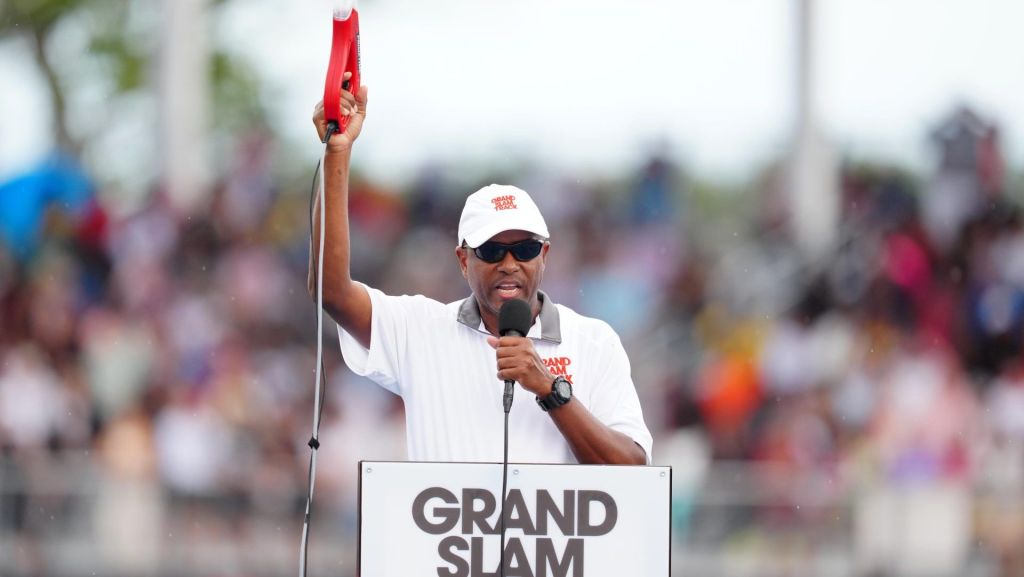
Grand Slam Track filed its plan for getting out of bankruptcy Monday, a key legal document that details how the league fell into financial ruin and how it wants to restabilize.
The embattled track league founded by Olympian Michael Johnson has proposed paying athletes back $6 million, roughly 85% of what they are still due, but splitting less than $300,000 between the vendors, who are collectively owed about $13 million. The vast majority of vendors would get only 1.5% of what they are owed back under the plan.
The document, called the Combined Disclosure Statement and Chapter 11 Plan of Reorganization, is merely a first proposal that can be negotiated between parties and needs to be ultimately approved by a judge.
The vendors will most likely object to this version of the plan. Some are owed six or seven figures, and they rejected Grand Slam’s more generous settlement offer in the fall. Last month, vendors lawyered up through an official creditors committee. (A judge can still approve a plan without all creditors on board, but Grand Slam is months away from that hearing.) Attorneys for the creditors committee did not immediately respond to a request for comment.
Grand Slam staged three track meets last spring in Kingston, Miami, and Philadelphia featuring some of the biggest athletes in the sport, whom it promised to pay both appearance fees and prize money. But the league had major cash shortfalls, operating on promises of funding that never materialized and burning through cash it didn’t have. The league canceled its fourth event in L.A., admitted it was struggling to pay back its athletes, and filed for bankruptcy in December with plans for a 2026 comeback.
The filing does not include any plan for future track events. A previous version of the budget had proposed setting aside more than $1 million for new athlete contracts, consultants, and marketing. Grand Slam took this out of its recovery process after protest from the creditors committee, agents, and World Athletics.
Grand Slam is being kept afloat by Winners Alliance, the for-profit arm of the Professional Tennis Players Association chaired by billionaire Bill Ackman, which led an early funding round and has since become the league’s largest creditor. A judge in Delaware court last week gave final approval for Winners Alliance to provide debtor-in-possession (DIP) financing, which is a loan that helps fund companies through the bankruptcy process.
The new filing says that Winners Alliance would “provide all or part of the exit financing” for the proposed Chapter 11 plan. It’s not clear how Grand Slam determined how much it would pay each class of creditors back, other than saying the athletes and certain vendors are “essential” for future operations. Representatives for Grand Slam and Winners Alliance did not immediately respond to questions.
The proposed Chapter 11 plan would not cover all of Grand Slam’s debts. The league revealed last month that it owes more than $40 million, and made less than $2 million in revenue in 2025.
Looking Back
The 64-page document tells a version of Grand Slam’s fall, revealing some key details while eliding others. It is not mentioned that Grand Slam publicly announced it had $30 million despite never having those funds in its hands, nor does it mention the league’s avowed refusal to do sponsorship deals with shoe companies.
Grand Slam’s events commenced without all of its promised funding in its coffers. The new filing claims the league operated “based on good-faith and reasonable expectations of additional funding from multiple sources, including extensive diligence and repeated positive indications from potential investors that were fully informed of the Company’s liquidity position,” the filing says.
The document heavily blames Eldridge Capital, the investor who backed out of a nonbinding term sheet for an eight-figure investment. According to the new filing, representatives of Eldridge gave “positive feedback” after attending the first Slam in Kingston, but pulled out shortly after. The firm pulling out left Grand Slam “without a committed institutional capital source early in its first season,” the document says. Eldridge is run by Chelsea FC chairman Todd Boehly, who also is a co-owner of the Lakers, Dodgers, and Chelsea, among other major sports holdings.
After Eldridge backed out, Grand Slam kept putting on events to keep up its reputation and commitments made to athletes and vendors, the filing says. The league did raise “several million” additional dollars, according to the document, but in reality, Grand Slam’s “financing needs outpaced its available resources.”
The filing says Grand Slam sold nearly 65,000 tickets for its first three events and sold out merchandise at each Slam. The document also says the league “achieved an average of 7 million global viewers” in its first season, though it’s unclear where that figure came from. One of its media partners, The CW, told Front Office Sports last year that the first two Slams totaled between 241,000 and 250,000 viewers per day.
Looking Forward
In the proposed vision for Grand Slam, the business would form a new entity, but Johnson and Steve Gera would remain on as CEO and president, respectively.
The creditors are broken into different classes based on their priority in getting paid. The $5 million of secured claims go first, all of which are owed to Winners Alliance. But it’s not clear how much money Winners Alliance would actually get back. The firm “has agreed to waive any right” to getting any money from the New Value Contribution, but it left the door open to being paid back later at a “substantially reduced amount,” the filing says.
The league owes about $34,000 in taxes to Florida and Philadelphia, which the plan says would be paid in full.
Next would come the “critical” creditors—athletes and a small number of vendors—who Grand Slam deems most important to future operations, and says therefore should be paid back about 85% of what they are owed. The athletes are slated for $6 million of the $7 million they are owed. Grand Slam previously sent athletes roughly $5.5 million in October, which was believed to be half of what they were owed. Athletes like Sydney McLaughlin-Levrone, Gabby Thomas, Kenny Bednarek, Josh Kerr, and Marileidy Paulino are some of the league’s biggest creditors; each of those names are owed more than $200,000. An extra $82,000 is proposed for “critical” vendors, who are not specified but a source close to the league tells FOS includes governing body World Athletics, which is owed $25,000.
The vast majority of the debts addressed in the plan, estimated to be $12.9 million, are for the remaining vendors. Each creditor would receive a proportional share of $200,000. An athlete who votes against the plan would get moved into this group, or they can also do so voluntarily.
The creditors have been clear that they want their money back. In Grand Slam’s latest bankruptcy hearing on Feb. 4, when it received final approval for the DIP financing from Winners Alliance, the creditors committee said it has 33 members. This fall, vendors rejected Grand Slam’s offer to bring them up to half of what the league had ever owed them (a smaller amount than half of outstanding invoices). Grand Slam has also claimed it was pushed into bankruptcy after a “written threat” from creditors.
Now that Grand Slam has made the first move, it will negotiate with creditors until it’s time to present the plan to the judge. If the plan is not accepted, the filing says, Grand Slam’s case can turn into a Chapter 7 process, which would liquidate the business.
Download the FOS App
The business of sports, in your pocket.



Scan the QR code to get the app now.