Want more from Front Office Sports
in your search results?
The NCAA and power conferences just notched a major win over NIL enforcement.
On Thursday, Northern District of California judge Nathanael Cousins, the “special master” appointed to hear disputes related to the House v. NCAA settlement, ruled the College Sports Commission could continue to treat certain NIL deals with the same level of strict scrutiny as collective and booster deals to protect the revenue-sharing cap.
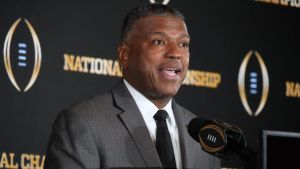
“This ruling affirms that the CSC has been correctly applying the language of the settlement as written,” CSC CEO Bryan Seeley said in a statement. “Our enforcement of the rules has been, and will continue to be, fact-based and consistent with the settlement that Plaintiffs’ lawyers negotiated and was agreed to by all parties.”
Cousins’s decision means the CSC can continue reviewing NIL deals with the same level of scrutiny as before—though already, schools across the country are going above the revenue-sharing cap by tens of millions of dollars. At the very least, Cousins’s ruling prevents even more above-the-cap activity.
The dispute arose over the past few months, as the CSC, which reviews all Division I NIL deals over $600 submitted to the NIL Go system, has been classifying deals procured through multimedia rightsholders (or MMR companies) and with school sponsors as those procured through “associated entities.”
This classification was created to delineate deals procured or offered by organizations with the express purpose of securing more income for players—that could be considered as a way to get around the rev-share cap. For example, deals offered by boosters and NIL collectives would be considered part of this category.
However, the CSC began treating MMR partners and school sponsors as associated entities. MMR partners, like Learfield and Playfly, have begun helping schools source NIL deals for players. School sponsors—like apparel companies Nike and Adidas—have similarly begun offering players deals as part of their contracts with schools.
In April, House plaintiff attorneys Jeff Kessler and Steve Berman filed a motion asking the court to prohibit this classification. The motion was technically directed at the NCAA and power conferences, the defendants in the case, but the result would inform how the CSC would operate in the future.
The attorneys argued the CSC’s conduct did not comport with the settlement terms, which created the “associated entities” classification strictly for boosters and NIL collectives—or organizations specifically created to procure deals for players, and therefore circumvent the revenue-sharing cap. They argued that the classification, which requires stricter scrutiny of deals, has slowed the overall approval process to the detriment of athletes. (While the CSC did not agree with this exact characterization, Seeley did say earlier this year he did not believe the system was set up to be able to scrutinize this many associated entity deals.)
In his brief six-page decision, Cousins ruled that both deals gotten through MMR partners and deals offered by school sponsors could fall under the definition of associated entities. As such, he could not approve a motion to unilaterally prohibit the classification.
The plaintiffs can appeal the decision to Judge Claudia Wilken, who oversaw the House case and settlement negotiations. Plaintiff attorneys did not immediately respond to a request for comment.
Download the FOS App
The business of sports, in your pocket.



Scan the QR code to get the app now.