Want more from Front Office Sports
in your search results?
The trend of athletes purchasing ownership stakes in pro sports teams is showing no signs of slowing down.
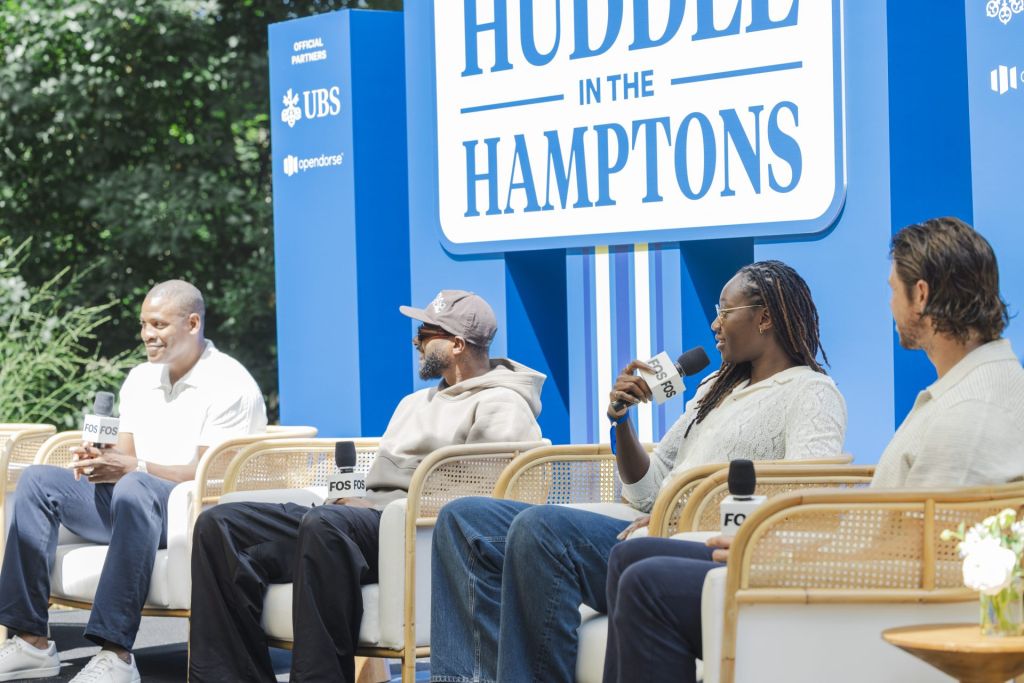
“Every week I get a call from my investment bank that there’s a potential buyer of a certain team that wants to have inclusion of an athlete in their deal,” 11-year NFL defensive end turned UBS executive Wale Ogunleye told Front Office Sports at the third annual Huddle in the Hamptons.
High-profile names like LeBron James, Tom Brady, and Patrick Mahomes are a few of the many athletes with investments in multiple sports properties. Travis Kelce recently joined the list, pairing his investment in the Alpina Formula 1 team with a minority stake in the Cleveland Guardians, which he acquired in May.
“Everybody wants to be in that country club of ownership and I’m seeing the interest grow, not just only from the athletes side of it, but the investors and the billionaires, they want to be connected to the athletes,” Ogunleye said.
Ogunleye, who is the head of sports and entertainment at UBS, says that investors and billionaire owners target players with the goal of benefiting from the relationships they have with their local communities. He notes that a certain athlete’s involvement with a team can serve as a source of validation, with fans having more trust in the ownership group due to how the athlete has given back to the community.
“It’s not necessarily that they want the athletes’ capital,” he said. “It’s more about their reputation and the things the athletes have built, which sometimes you can’t buy.”
Acquiring ownership stakes aligns with many athletes’ long-term goals, which according to Oguneleye, is to be known as entrepreneurs and not just as athletes. Tina Charles, 2012 WNBA MVP and 78 Brewing Co. founder, spoke alongside Oguneleye and echoed this sentiment, saying that ownership in a sports team or business is a great way for athletes to own the narrative about them.
“When you get into ownership, you get to be a part of creating the asset, making the decisions, and taking the risk,” she said. “In order to change how we’re viewed or how we want to be viewed, we have to be in these rooms.”