Want more from Front Office Sports
in your search results?
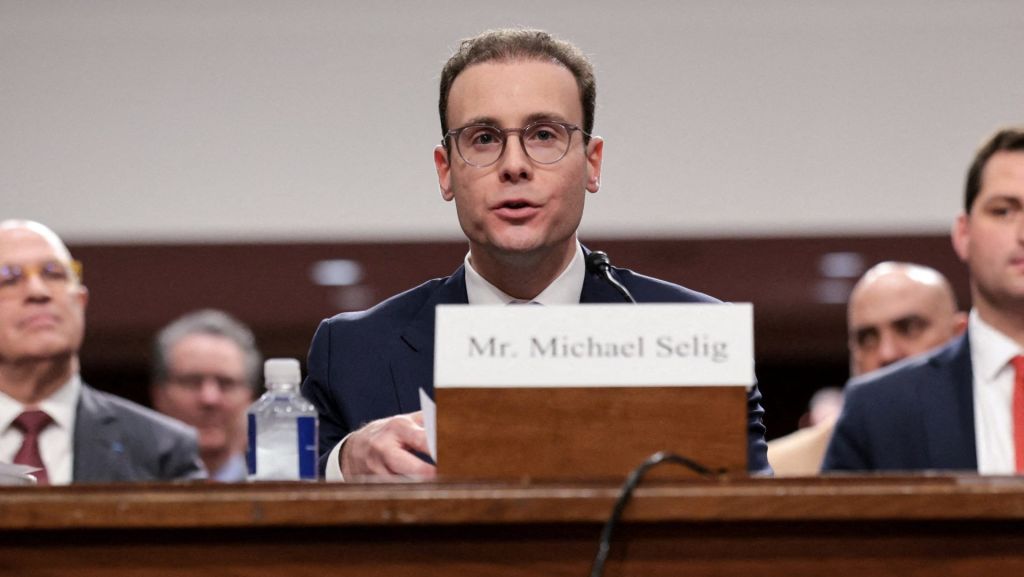
Before becoming CFTC chairman, Michael Selig was a securities lawyer focused mostly on cryptocurrency. Today, he’s leading the federal regulatory agency charged with policing a prediction-market industry that has shaken the sports world.
“Of course I did not expect to be overseeing derivatives on sports, but here we are,” Selig told Front Office Sports in an interview last week at the Washington, D.C., headquarters of the Commodity Futures Trading Commission.
Selig described himself as a “big Philly sports fan” who loves the Eagles and cares “deeply about the integrity of sports.” He has been “aggressively” working on new regulations for the prediction-market industry since being confirmed as CFTC chairman in December.
The regulator is working on establishing new rules to govern prediction markets and will “move pretty aggressively to get proposals out there,” Selig said. The CFTC “might not do it all in one rulemaking,” with Selig noting the agency could choose to enact rules around “certain discreet pieces.”
“We need to act quickly to put rules in place to make sure we’ve got integrity in these markets,” he told FOS.
‘Nothing’s Changed’
The primary controversy over sports event contracts is whether they should be allowed at all. State gambling regulators, Native American tribes, and Congressional lawmakers argue they are illegal sports betting dressed up as derivatives. The U.S. Supreme Court is expected to eventually weigh in.
In November, before he was confirmed, Selig told lawmakers he would defer to the courts on the question of sports event contracts. Since his confirmation, the CFTC has been anything but passive. On April 2, the CFTC sued Arizona, Connecticut, and Illinois for attempting to prohibit prediction-market platforms from offering sports-event contracts in those states. The regulator has since sued New York and Wisconsin, and has weighed in on other lawsuits via amicus briefs.
Critics say he changed his tune, but as Selig sees it, “nothing’s changed.”
“I do find this talking point to be quite absurd,” he told FOS. “As a lawyer myself, of course we are going to follow the courts. We will always follow the law.”
According to Selig, it’s his job to support platforms that have properly registered with the CFTC.
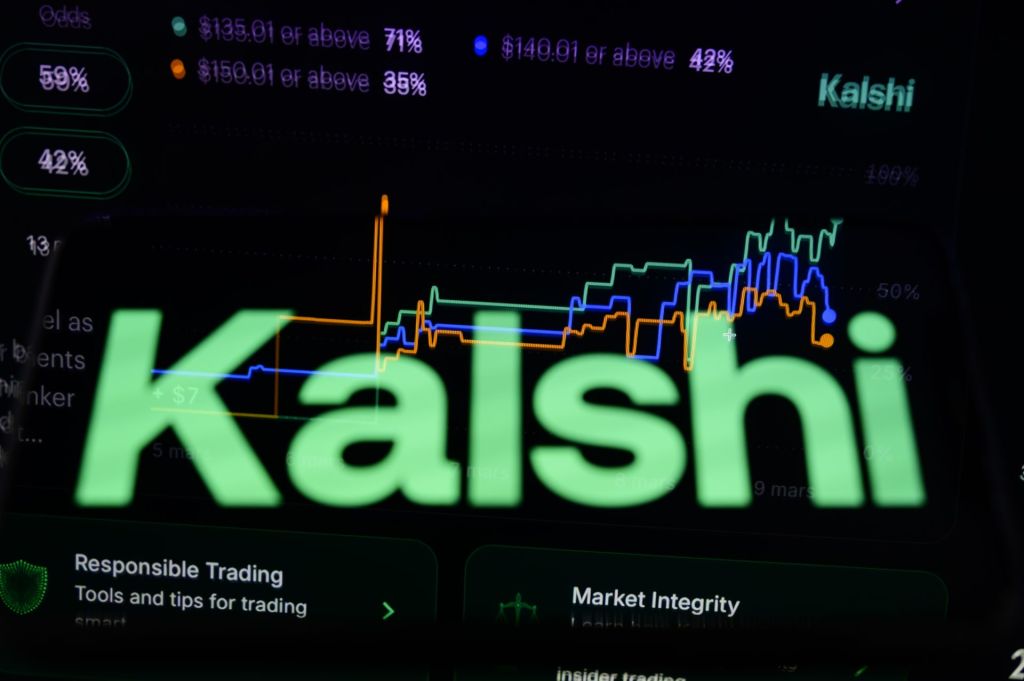
“When I came into this office just over 100 days ago, I soon discovered that all of our registrants who were seeking to comply with federal law were being sued by state governments [and] state gambling commissions, and we had to get involved in that litigation,” he said, referring to the many lawsuits over sports event contracts against companies including Kalshi, Polymarket, Robinhood, and more. “It doesn’t mean I won’t respect any judicial decision. We will always follow the law. We will always look to the courts.”
Insider Trading, Prop Bets, and Parlays
Two specific areas that have caused the most controversy in prediction markets are insider trading and sports event contracts that mirror prop bets and parlays. Prop bets are wagers on in-game events like whether a player will score more than 20 points, while parlays are combined bets that link multiple outcomes together, requiring all of them to hit for a payout.
The most visible insider trading scandal in prediction markets came last week, when a U.S. Army sergeant was indicted for allegedly using Polymarket’s unregulated international platform to trade on the U.S. military operation that led to the capture of Venezuelan president Maduro. The sergeant, 38-year-old Gannon Ken Van Dyke, pleaded not guilty on Tuesday.
The Maduro incident didn’t involve sports, but there is precedent for insider trading issues tied to traditional sports betting. Just ask Jontay Porter, who is banned from the NBA for life over sports betting issues, or Terry Rozier, who faces federal charges related to gambling, has not played all season, and was waived by the Heat earlier this month.
Several leagues have done prediction-market deals. The NHL reached deals with Kalshi and Polymarket in October, MLS partnered with Polymarket in January, and MLB announced an agreement with Polymarket in March. Front Office Sports reported this month that the NBA is in talks with Kalshi and Polymarket. The NFL has remained resistant because of questions about integrity.
Selig made a point early in his tenure to say he would be holding discussions with pro leagues, and that has borne out. The CFTC reached an agreement with MLB as part of its Polymarket deal, and sources told FOS the CFTC’s engagement has played a big role in it opening the door to prediction markets. Bookies.com reported earlier this week the NHL is also now holding discussions with the CFTC (its prediction-market deals came before Selig was confirmed).
Selig declined to specifically answer whether his agency has been in talks with the NFL, but told FOS the CFTC has been in talks with “all the major sports leagues.”
“The biggest issue that comes up is manipulation and insider trading in these markets,” he said.
Selig said that while the CFTC is a “one-stop shop” that can coordinate with leagues to ensure particularly problematic contracts are not listed, prediction-market platforms are “self-regulatory organizations, meaning they have quasi-governmental authority,” and can “police their own markets.”
“They do have a responsibility to evaluate those contracts for not being readily susceptible to manipulation, and we as the agency that oversees the markets can reject contracts, and can police fraud and manipulation. But exchanges are the first line of defense.”
Still, he didn’t rule out the possibility that prop bets and parlays could be restricted, or even prohibited, once final rules are implemented.
“This is precisely why we have the advance notice of proposed rulemaking and want to set clear rules,” he told FOS. “Because to the extent there are products that look more like a casino product, we might consider different rules for that, or decide not to allow those products. It’s really a process of taking that feedback.
Selig says a federal law called the Commodity Exchange Act gives his agency both “broad authority” to regulate the industry and exclusive jurisdiction over it, including with regard to sports event contracts. The truth of the matter is that “you can structure a derivatives contract on virtually anything, and that puts it within our regulatory authority, so a lot of this is legal activity,” he told FOS.
Download the FOS App
The business of sports, in your pocket.



Scan the QR code to get the app now.