Want more from Front Office Sports
in your search results?
California tribal leader James Siva says sports prediction markets are an existential threat to Native American sovereignty over gaming in parts of the U.S., and he’s rallying tribes nationwide to stop them.
Siva, chairman of the California Nations Indian Gaming Association (CNIGA) and vice chairman for the Morongo Band of Mission Indians in Cabazon, Calif., has emerged as one of the most outspoken tribal leaders opposing the rapid rise of these platforms—which for over a year have been offering products practically indistinguishable from traditional sports betting.
There are multiple ongoing lawsuits from tribes challenging prediction markets, including one in California and another in Wisconsin—both of which name Kalshi and Robinhood as defendants.
Separately, Siva’s organization was one of 60 federally recognized tribes that weighed in on a lawsuit Kalshi filed against New Jersey regulators. Their June amicus brief said Kalshi’s “unlawful and unfair entrance into the gaming market has adversely impacted tribal gaming revenue and the benefit of tribes’ bargained-for compacts.” Earlier this month, Kalshi landed a significant victory in the New Jersey suit, with an appeals court ruling regulators cannot block the company from offering sports event contracts in the state while the case plays out.
The scale of the money that’s at stake is staggering. Over the summer, the National Indian Gaming Commission reported gross gaming revenues of $43.9 billion for fiscal year 2024, a $2 billion increase over the prior year. The tribes noted in their amicus brief that gaming revenue provides funding for “essential government services, tribal programs, and economic development needed to reach the goals of self-governance and self-sufficiency.”
In February, Siva—who grew up on the Morongo reservation—told a gathering of more than 600 tribal leaders, regulators, and others that prediction markets represent “the largest existential crisis our industry has ever faced.”
“This is purely gaming,” he told Front Office Sports, referring to sports event contracts offered by companies like Kalshi and Polymarket.
“Here in California, we’ve been looking at online betting for seven years, and all of the sudden we wake up and there’s online sports betting in every single city and on every single reservation in California,” he said.
Siva spoke about the state of the fight between states, tribes, and prediction-market companies, what he thinks about DraftKings and FanDuel launching their own platforms, and more.
—-
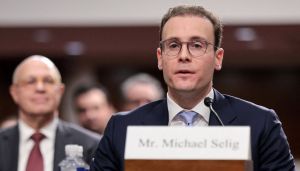
Front Office Sports: What do you think about the claim from prediction-market platforms that they fall under the exclusive jurisdiction of the CFTC? The regulator’s chairman, Michael Selig, has made clear he supports that idea.
Siva: They fully believe it. I had a Zoom call with Selig, and he told me that verbatim. He was very careful to use the term ‘exclusive authority’ several times. I thought the Republican party was the party of the states. But in this instance, they’re like ‘oh no, the states have no role here and they need to stay out of the way.’
FOS: Gaming is one of the last remaining areas that Native Americans still have sovereignty over in the U.S., although it seems like prediction markets are encroaching on that. How much coordination is there from tribes across the country?
Siva: We’re working together in a way that hasn’t been seen in a long time. Coming together in an emergency is probably the thing we’re best at.
FOS: Politicians on both sides of the aisle have recently taken increased notice of prediction markets, and there are all sorts of bills being introduced. What do you think of all that?
Siva: We’re trying to get lawmakers to understand that the only bill we want is the bill that kills this completely. We don’t want to waste effort by putting forth a bill that has good intentions but actually causes further consequences.
FOS: Some people think the outcome of all this could be that prediction markets continue to exist and proliferate, but they’ll lose sports. Is that the outcome you want?
Siva: I would take that outcome every day of the week. And in fact, I think that’s actually the play here from this administration, which wants cryptocurrency to be regulated, but not by the [U.S. Securities and Exchange Commission]. They want it regulated under the CFTC. They want their crypto bill. I don’t think the administration actually cares about sports event contracts.
FOS: FanDuel and DraftKings launched their own prediction-market platforms. Their focus has been in states where sports betting still isn’t legal, like California. Do you have a relationship with those companies? And what do you think about how they’ve handled this?
Siva: We do have relationships with them, and we continue to have conversations with them because we have been looking at sports betting in California.
But I will say that, last October, during the G2E conference in Las Vegas, we had meetings with the CEOs from both of those companies. They said their intent was to probably move into prediction markets by the end of the year, which they did. We let them know we weren’t happy about it.
[FanDuel CEO] Amy Howe’s response was that they didn’t necessarily want to do it, but everybody else was moving into it so they felt kind of forced. She said they were not going to put marketing dollars behind it, and that they’d be the last ones in. Those things are mostly true. When we met with [DraftKings CEO] Jason Robins, it was much different. They were more aggressive about their stance and pushed us on why we would be upset that they would do this.
Overall, everyone is aware of which online sports betting operators have moved into prediction markets and which ones haven’t. We’re keeping track of that. One who hasn’t is BetMGM. As we move forward and figure out what online sports betting can look like in California, our three main principles are tribally led, tribally driven, and tribally owned.
FOS: Deep down, what do you think is going to happen here? Are you confident? Are you concerned?
Siva: I’m confident we’re going to win this issue, because we have the truth on our side. Because the law is on our side. Despite this administration’s blatant rejection of the law at times, in this instance I just don’t think we’re going to lose. We’ve had many threats and challenges to our sovereignty over the years, but I’ll leave you on this note, which is something I’ve also said to our coalition: we might lose, but it’s not going to be on this issue and it’s not going to be on this day. We aren’t going to lose to this money grab.
Download the FOS App
The business of sports, in your pocket.



Scan the QR code to get the app now.