White Sox Co-Owner Mat Ishbia Endorses MLB Salary Cap—and Floor
Want more from Front Office Sports
in your search results?
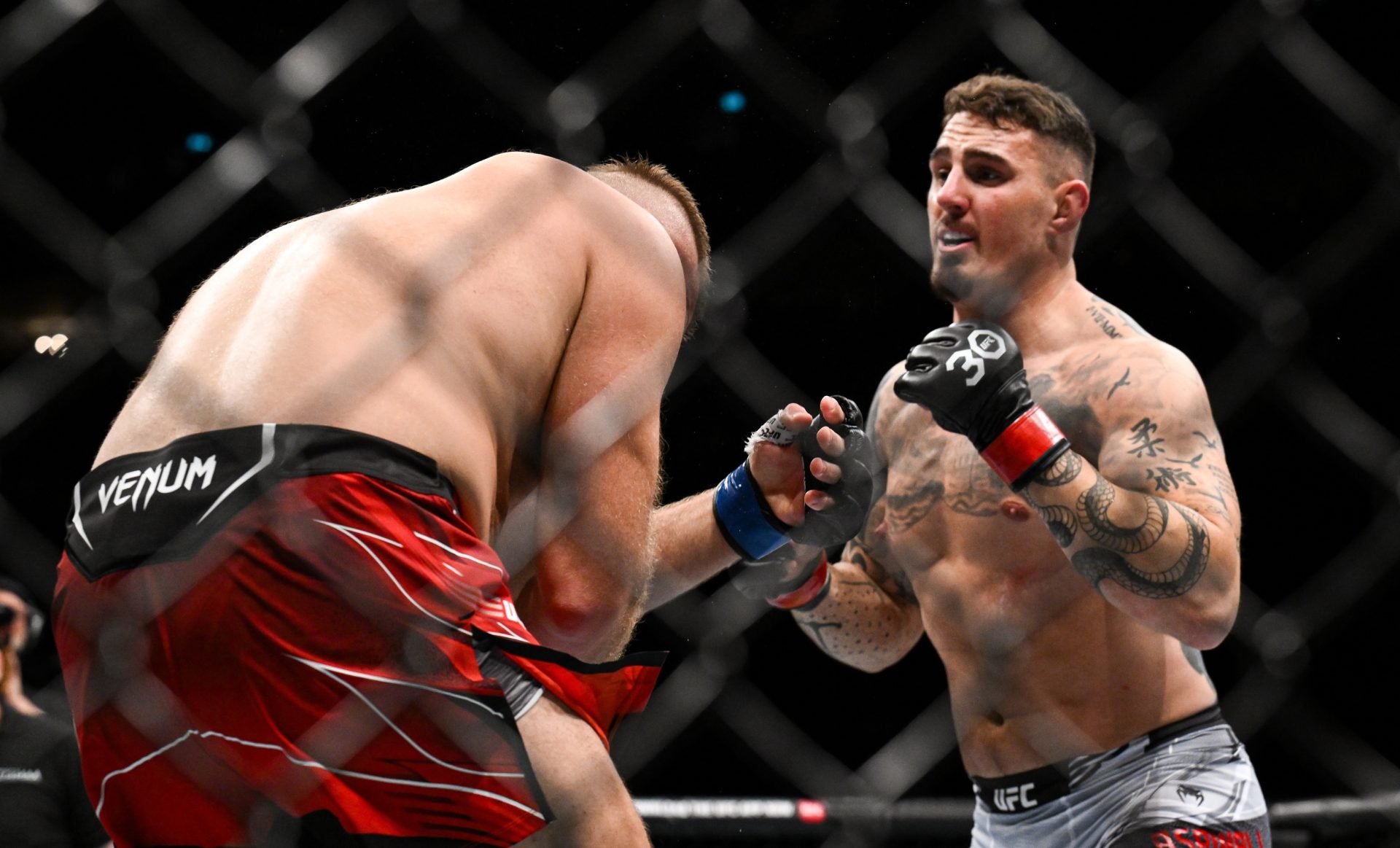
UFC’s seven-year, $7.7 billion media-rights agreement with Paramount will be transformative for mixed martial arts. Valued at $1.1 billion per year, the deal will double UFC’s current annual revenue from its ESPN contract and redefine fan access to UFC fights. The deal is a clear win for viewers and UFC’s bottom line, but questions linger about whether fighters will see a proportional share of the windfall.
The most immediate beneficiaries of the Paramount deal are UFC fans. Currently, under UFC’s ESPN+ arrangement, hardcore fans face steep costs: a $79.99 pay-per-view (PPV) fee per numbered event plus a monthly subscription, totaling more than $1,200 annually for roughly 13 numbered cards. The new Paramount+ structure will mostly eliminate individual PPV fees, offering all UFC events—numbered cards and Fight Nights—for a subscription fee of $7.99 per month with ads or $12.99 ad-free. At the premium rate, this will drop the annual cost to under $156—a savings of more than $1,000 for dedicated fans.
Even if Paramount+ raises subscription rates, as analysts anticipate, the cost will remain a fraction of the previous model. In addition to serious savings for diehards, the lower barrier and occasional CBS simulcast should significantly expand UFC’s audience by attracting casual fans.
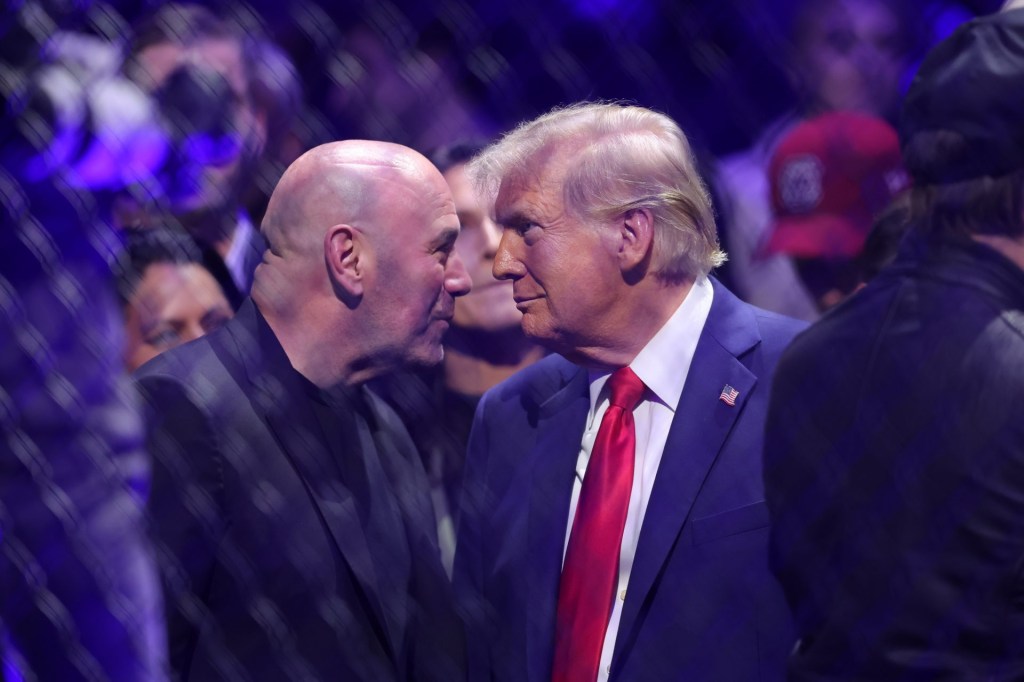
Fresh off its merger with Skydance Media, Paramount wasted no time in striking a landmark deal with UFC—a move possibly set in motion during April and June 2025 UFC events, where Skydance CEO David Ellison was spotted sitting with TKO executives and President Donald Trump. The agreement was finalized just 48 hours after the merger received the green light.
The current ESPN contract, covering broadcast and PPV rights, has an average valuation of approximately $550 million per year. The new agreement will double that to $1.1 billion annually. With production, advertising, and administrative costs remaining largely fixed, the additional $550 million per year will represent a substantial profit increase. The only variable costs are fighter payouts, which are at UFC’s discretion. This financial structure positions TKO and UFC to reap significant rewards, but it raises the issue of how much revenue will trickle down to athletes.
UFC president Dana White has hailed the deal as a win for all stakeholders, promising “millions” in additional fighter bonuses. Since 2013, Fight Night and Performance of the Night bonuses have been fixed at $50,000 each. White has not disclosed the exact amount of the bonus increases, but even a modest raise to $75,000—slightly above the 40% inflation rate over the past 12 years—would boost annual fighter payouts by more than $2 million. Likewise, increasing the entry-level contract from $10,000 to show/$10,000 to win to $14,000/$14,000, to align with inflation, would add $9 million annually to costs, based on a 2015 internal UFC analysis disclosed in the Le v. Zuffa antitrust case.
While a modest inflation-adjusted performance bonus and higher minimum purse would be meaningful for the lowest-earning fighters, it would also represent only 2% of the increased revenues from the new media-rights deal. These fighters would still be grossing—not net, since they are responsible for many of their own costs—either $14,000 or $28,000 (if they win) while competing in events that were earning the company tens of millions of dollars.
And these modest adjustments would do little for higher-ranked fighters, whose star power drives much of the revenue.
UFC’s Walled Garden
Court documents from the Le v. Zuffa antitrust case reveal that UFC fighters have historically received less than 20% of total revenue, with current estimates pegging that figure at around 17%. This is significantly lower than revenue splits in some major U.S. sports, like the NBA, NFL, and NHL, where players are guaranteed about half of league revenue through collective bargaining agreements, but about double that of the WNBA, where players are paid roughly 10% of league revenue. Perhaps the most salient comparison is boxing, where, according to court documents, boxers receive about two-thirds of revenue generated from their events. The disparity stems from UFC’s near-monopoly over the MMA market, where it controls an estimated 90% of both industry revenue and top-tier talent. Unlike boxing, where multiple promoters compete for fighters, or team sports, where franchises vie for players, UFC operates as a walled garden, largely insulated from competitive market pressures.
The lack of competition in MMA underscores calls for fighter unionization to secure a larger share of revenue. However, unionizing UFC fighters would face significant hurdles. Only about 6% of private-sector workers in the U.S. are unionized, despite a majority of workers expressing interest in being represented by one, and UFC fighters face even greater obstacles than the typical worker. Classified as independent contractors rather than employees, fighters lack protections under the National Labor Relations Act. They also operate individually, not as part of teams, and their careers are short, with the average career being just a few fights. Any career interruption, such as a labor dispute, would cost fighters their prime earning years and thus be a likely nonstarter for the supermajority support unions typically seek for a work stoppage.
In other sports, unions leverage competition between teams and the antitrust exemptions leagues need to operate to negotiate fair revenue splits. UFC’s single-entity structure renders this tactic ineffective, as there is no collusion necessary nor teams competing for talent within the league driving up wages.
A small group of high-profile fighters—champions or major draws with PPV bonuses in their contracts—might use the Paramount deal to negotiate better terms, arguing it constitutes a material contract change. However, only a handful have the star power to leverage opportunities outside of UFC, and even fewer may be willing to take the risk.
What’s Next?
Fighters’ best options for increasing leverage might rest with third-party intervention. One possibility is through the courts, with several potential class-action antitrust lawsuits looming. These cases seek injunctive relief—for instance, the Davis v. Zuffa case argues UFC contracts should be limited to one year to foster greater competition for fighters. Another possibility is extending the federal Muhammad Ali Boxing Reform Act (Ali Act)—enacted in 2000 to protect boxers from what was widely seen as anticompetitive behavior from promoters—to MMA, which would separate rank and title from promoters and prevent coercive long-term contracts, giving fighters more negotiating power.
However, recent actions by UFC’s parent company, TKO Group Holdings, which also owns WWE, may foreclose these options. TKO is eyeing expansion into boxing, supported by partners in Saudi Arabia, and advocating for the Muhammad Ali American Boxing Revival Act (MAABRA). This would create a Unified Boxing Organization (UBO) operating as both promoter and sanctioning body, exempt from key Ali Act provisions. Critics warn this structure mirrors the UFC model and could enable TKO to monopolize boxing, further consolidating its influence in combat sports. With Dana White and TKO CEO Ari Emanuel’s relationship with President Trump and the endorsement of the Board of Directors of the Association of Boxing Commissions—but not the support of the full ABC—TKO executives have expressed confidence that the bill will become law in the “relatively near future.”
For UFC fighters, this bill’s passage could have significant repercussions. The Davis v. Zuffa lawsuit cites the Ali Act’s legislative history as evidence of non-competitive practices banned in boxing. If the new law removes the separation between titles and promoter and the use of coercive contracts, UFC lawyers could argue they are not engaging in behavior deemed anticompetitive in boxing but instead merely following federally sanctioned practices. Moreover, if these actions are now allowed in boxing, the rationale for extending Ali Act protections to MMA fighters is no longer valid.
The Paramount deal is unquestionably good for fans, fantastic for UFC’s bottom line, and a strong strategic move for TKO shareholders. For fighters, though, it likely means more of the same. UFC could boost fighter pay by 25% next year and still see fighter share of UFC revenue drop as its coffers swell with new revenue. That says everything about where the balance of power sits—and how little the Paramount windfall changes the sport’s fundamental economics.
RedBird Capital, a stakeholder in Paramount Skydance, is also an investor in Front Office Sports through RedBird IMI.
Download the FOS App
The business of sports, in your pocket.



Scan the QR code to get the app now.