Want more from Front Office Sports
in your search results?
On Monday, in a conference room in Los Angeles, a National Labor Relations Board trial will resume, with the goal of resolving whether college athletes should be considered employees—the existential question of NCAA sports.
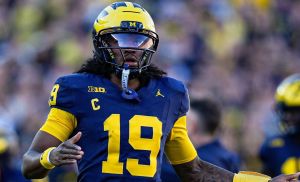
The trial is one of the many places where the debate over the future of amateurism is playing out across the country. Pressure to label collegiate athletes professionals is mounting through other National Labor Relations Board (NLRB) cases and multiple federal cases. The NCAA, meanwhile, is battling in Congress (most recently in a hearing on Thursday) to pass a law preventing those athletes from attaining employee status. The collegiate governing body is even facing criticism from some of its most high-profile constituents, like Michigan head coach Jim Harbaugh, who argued after winning the national championship that athletes should get a share of revenue and the right to unionize. Ohio State’s new athletic director, Ross Bjork, echoed some of Harbaugh’s comments on Wednesday.
Amid all the noise, NCAA President Charlie Baker is trying to appease all sides with a new athlete-pay proposal. But it may not be enough to stop momentum toward an employment model.
“It’s [athletes’] voices that are often sidelined in conversations about the future,” Rep. Lori Trahan (D., Mass.) said during Thursday’s hearing in Congress. But “athletes have more power today than ever before.”
A Mountain of Litigation
Over the past five years, the NCAA has faced several lawsuits over athlete employment, including multiple cases at the NLRB.
The case that’s resuming on Monday centers around USC football and basketball players. The National College Players Association filed an “unfair labor practice” charge in 2022, claiming that USC, the Pac-12, and the NCAA have illegally misclassified football and basketball players as amateurs, rather than employees. The NLRB agreed to take up the case on the NCPA’s behalf and began in-person prosecution in December at the NLRB’s regional office in L.A. At the time, NCPA executive director Ramogi Huma told Front Office Sports he believed the initial days of the trial “couldn’t have gone better.”
That prosecution resumes on Jan. 22 and will continue for two weeks, with the potential for another session at the end of February, if needed. It will take months for the NLRB to hand down a decision.
On the other side of the country, Dartmouth men’s basketball players filed a different type of case with the NLRB: a unionization petition similar to the case filed by Northwestern football players in 2014 (which ultimately failed). A hearing was carried out via Zoom in October, but a regional judge has yet to hand down a ruling. Even though those players are pursuing a slightly different legal avenue than in the USC case, a win would ultimately result in the same outcome: If athletes are allowed to unionize, they’d automatically be professionals.
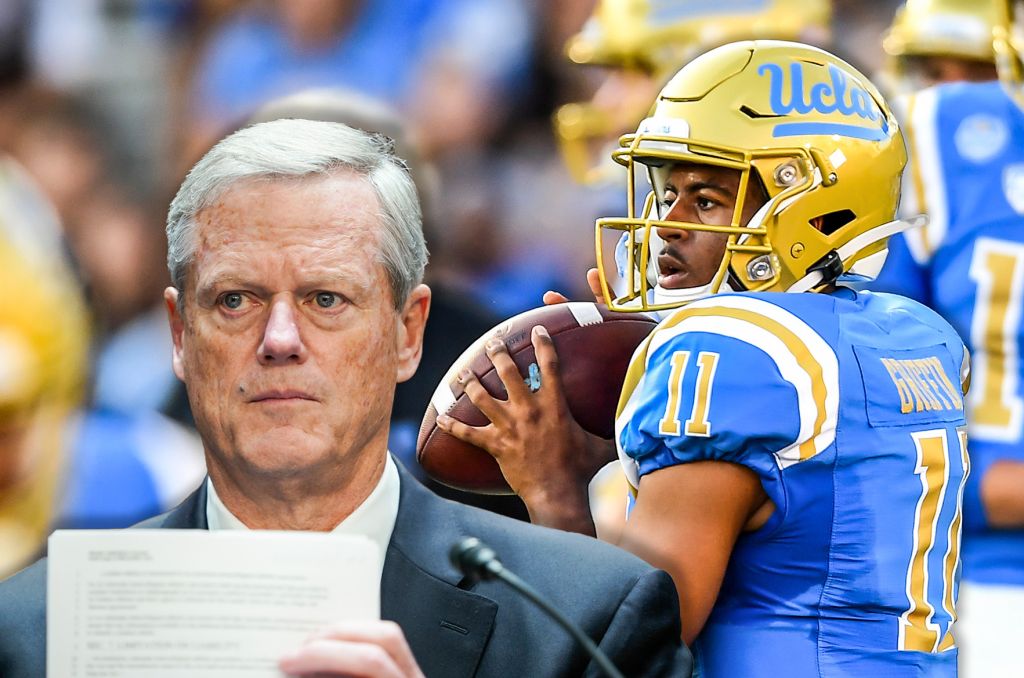
Employment status is “not really up to athletes,” UCLA quarterback Chase Griffin said during Thursday’s Congressional NIL hearing. “That’s up to the NLRB. But I do think it’s important to note that currently—based on the number of time, effort, and hours—we operate as employees.” (The NLRB’s general counsel, Jennifer Abruzzo, does believe many athletes should be considered employees.)
The NLRB isn’t the only entity hearing cases on this matter. The furthest along is Johnson v. NCAA, in which Villanova football player Trey Johnson and several other plaintiffs argued that all Division I athletes should be employees and get paid minimum wage. That case is currently awaiting a decision from the Third Circuit Court of Appeals to determine whether professionalism for collegiate athletes is even plausible under the law, let alone whether it’s the correct designation. Athletes have filed other cases with similar premises.
Of all the cases facing the NCAA, none are calling for all athletes at all levels to be considered employees. But that hasn’t stopped President Baker and other anti-employee advocates from making arguments about the horrors that would befall college sports if all athletes, at all levels, are deemed employees.
It looks increasingly unlikely that the NCAA will bat 1.000 on all these legal attacks, experts agree. But a federal law overriding these court decisions would be the governing body’s ace in the hole.
Illusion of Reform
The NCAA is now trying to convince Congress to pass an anti-employee status law under the guise of “reform.” In December, Baker introduced “Project DI,” a short, broad proposal for how schools could begin to pay athletes in a way that satisfies not only their demands, but also those of public opinion. The proposal has three main suggestions: 1) Allow schools to “share NIL revenue” with athletes. 2) Eliminate restrictions on educational benefits. And 3) Require a group of the richest schools to put money into an educational trust for athletes.
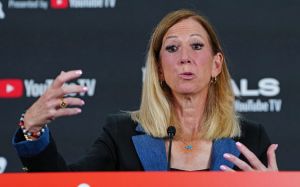
NCAA members are “glad we’re finally talking about the elephant in the room,” Baker said during his annual State of College Sports address at the 2024 NCAA Convention in Phoenix. He also noted during the Congressional hearing that the proposal could help increase gender equity in NIL by allowing athletes to sign deals alongside schools—and therefore be subject to Title IX. (Ironically, the project has already been cited by NLRB lawyers as an admission that athletes should be employees.)
But the proposal is less radical than some initially believed. While it tries to placate reformers by offering athletes increased pay, it stops short of giving them employee status. That’s by design.
Baker has said on multiple occasions that in order for the proposal to work, Congress must pass legislation declaring collegiate athletes to be amateurs once and for all. He’s requesting “special status” that allows those athletes to get paid, but not to be considered employees. That way, athletes could get some extra cash, but the NCAA’s business model would remain intact. (He has also said that the proposal is an attempt to demonstrate to Congress that the NCAA is doing its part to fix its own problems—so Congress should step in to fix the rest.)
“There is this sort of … desperation here,” College Football Players Association executive director Jason Stahl tells Front Office Sports. “ ‘We need you to rescue us.’ … Because, yeah, I do believe the NCAA knows that they are going to lose all these cases.”
But there’s another way for the NCAA to maintain control that it continues to openly reject: unionization and collective bargaining. Stahl and Athletes.org founder Jim Cavale, both of whom spoke with Front Office Sports, agree that this solution is the best way forward for the NCAA. “There’s a desire to continue trying to unilaterally impose comp restrictions on athletes,” Cavale says. “The real solution is not to do that. The real solution is to collectively bargain all of these terms with the respective athletes who create this value.”
Everyone has an opinion on the NCAA’s existential question. But ultimately, it doesn’t matter what athletes, schools, reformers, or even the NCAA president want. A judge will make the final decision over the future of amateurism—not based on the welfare of college sports, but based on the law.
Download the FOS App
The business of sports, in your pocket.



Scan the QR code to get the app now.