Want more from Front Office Sports
in your search results?
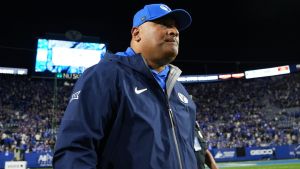
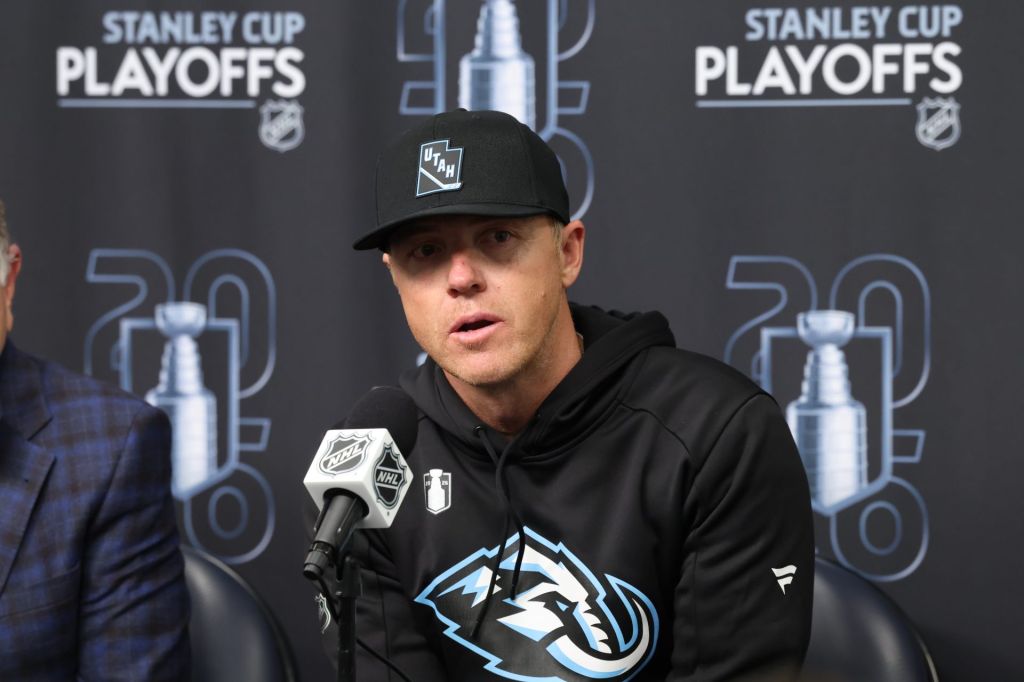
Jazz and Mammoth owner Ryan Smith, a major donor to alma mater BYU, said the school will receive a sizable portion of his estate when he passes away.
“When I’m no longer here, they’re going to get a big chunk of whatever I’ve got,” Smith told Front Office Sports on the latest episode of Portfolio Players. “But that’s the right thing to do, because that’s where it all started. It’d be really weird if they didn’t. You gotta remember where you came from, and I came from there.”
Smith has built a rapidly expanding sports portfolio in Utah, buying the Jazz in 2020, securing rights to an expansion NHL franchise in Salt Lake City that became the Mammoth in 2024, and recently telling FOS that he is “aggressively” pursuing an expansion MLB franchise in Utah.
But he also expressed caution about contributing to BYU’s present-day NIL budget, citing the deep bench of alumni already at the university’s disposal.
“As far as putting your thumb on the scale and really helping, the fortunate thing about BYU is, people don’t know this but we have one of the largest alumni that’s out there,” Smith told FOS’s Dan Roberts. “The roster is deep … it’s not just me.”
The school’s other major backers include Paul Liljenquist, the CEO of call center provider Focus Services, and Jason McGowan, CEO of cookie chain Crumbl. In 2023, BYU’s NIL collective announced a plan to pay all 123 players on its football roster.
BYU’s website clarifies that the Church of Jesus Christ of Latter-Day Saints, which funds various university operations, does not contribute to NIL efforts.
Smith played a role in bringing eventual No. 1 overall 2026 NBA Draft pick AJ Dybantsa to Provo, meeting twice with Dybantsa’s father before he committed to BYU in December 2024. He did not contribute financially to Dybantsa’s $7 million NIL (name, image, and likeness) package, however.
“Outside of buying tickets to BYU games, I didn’t give any money to bring AJ to BYU, and BYU never asked me to anyway,” Smith told ESPN at the time.
Smith also said that his interactions with both major professional sports leagues and college athletics have opened his eyes to the full-scale professionalization of college sports.
“Coming from the world I’m in every day to college sports, let’s just make no mistake about it, it is professional sports,” Smith said. “The only difference is, in professional sports we have rules, and if you violate the rules, there’s strong penalties. They don’t have rules, no one knows what’s going on, and it’s a little hard for them to put this genie back in the bottle.”
The university’s major athletic programs are enjoying a renaissance four years into power conference life, after joining the Big 12 in 2023.
BYU’s football team finished last season ranked No. 11 in the AP poll, its joint-highest end-of-season mark since 1996. Men’s basketball began last season ranked No. 8, the team’s highest ever preseason ranking, but struggled to build around Dybantsa and lost in the NCAA Tournament first round.
Smith said he grew up on BYU’s campus, with his father working as a marketing research professor. He also met his wife as an undergraduate student there, before leaving during his junior year to focus on Qualtrics, the experience management company he co-founded with his father.
He later returned to finish his degree in 2016.
“My tie to BYU is not just, ‘Hey I’m a sports fan, I’m alumni,’” Smith said. “It’s kind of where I grew up.”
Download the FOS App
The business of sports, in your pocket.



Scan the QR code to get the app now.