Want more from Front Office Sports
in your search results?
On a Friday afternoon in June, Clemson wide receiver Tristan Smith awoke from a post-practice nap to the email that changed everything. Without even reading the whole thing, he saw the word “winners” and knew: Smith had won an injunction against the NCAA allowing him one more year to play college football.
“It felt like a second chance at life—for real,” Smith told Front Office Sports.
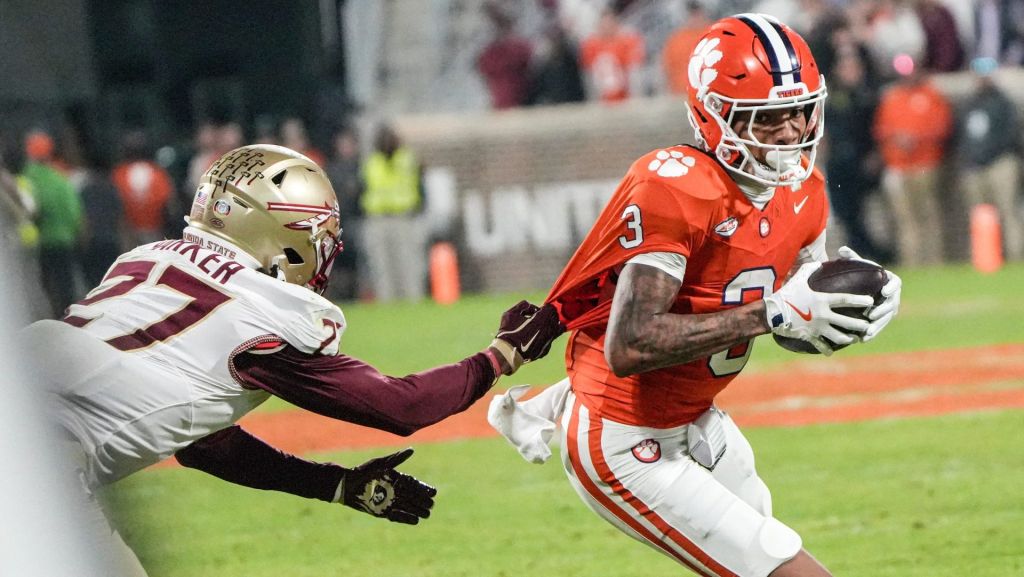
Smith started playing football in eighth grade—later than most—and began his college playing career with two years at Hutchinson Community College. For the 2024 season, he secured a spot at Southeast Missouri State University; last year, he transferred to Clemson. Thanks to the ruling, Smith will be able to play for the Tigers in their highly anticipated matchup against LSU this Saturday.
He’s one of hundreds of college players across multiple sports who has sued the NCAA for another year of eligibility. His case isn’t one of those challenging the NCAA’s new “age-based” eligibility policy—instead, it follows one of the earlier eligibility questions challenging the NCAA’s handling of junior college. But all these cases have one thing in common: the emotional turmoil players experience as they wait for a ruling, and the indescribable joy when they get it.
Living in Limbo
Even before the 2025 season kicked off, Clemson head coach Dabo Swinney told Smith that he might have to petition the NCAA if he wanted to play a second year—but there was a pathway.
As was the case with many waivers at the time, Smith’s was denied by the NCAA in November, while he was still competing during the 2025-26 season. So in January, he filed a lawsuit in Pickens County, South Carolina. The NCAA’s rules said years played at junior college counted toward NCAA eligibility (though junior college sports are governed separately from the NCAA). But the year prior, the organization had granted a blanket one-year waiver for former JUCO athletes, giving them an extra season of NCAA eligibility, after a federal judge granted a waiver to former JUCO athlete and then-Vanderbilt quarterback Diego Pavia.
Smith’s case argued that his situation was no different than the players before him who got that extra year.
The case, one of many state lawsuits at the time, argued the NCAA had committed a breach of contract against its players for arbitrarily enforcing its eligibility policies, thus depriving players of another year of scholarships, education, NIL (name, image, and likeness) earnings, and the opportunity to improve their draft stock and go pro. Smith, in his suit, was asking for an injunction that would allow him to play for the duration of the 2026-27 season.
The case dragged on for months. Smith stayed at Clemson, working out with the Tigers with the hope that he could return for another year. In case he didn’t win an injunction, he would be prepared to enter the NFL Draft, or perhaps apply for the NFL Supplemental Draft in the summer.
“One thing that I think that gets lost in a lot of these things is the emotional toll that it takes on players, particularly in the absence of a decision and a waiting game,” Darren Heitner, one of Smith’s attorneys, told FOS.
Smith, in describing the final week leading up to the decision, said, “I wouldn’t say I was scared, but I was more anxious,” he said. “I’m just trying to go ahead and know what’s going on. Like, will I be able to play or not? So that whole week was pretty stressful.”
When he got that email from his lawyers on Friday, June 12, however, all those feelings disappeared. Smith spoke with his mother and his legal team, including on a FaceTime with Heitner, who recalled “tears of joy.” Smith celebrated in phone calls not just with his family, but with every single member of the Clemson coaching staff, who he said called one by one to congratulate him.
“We’re always waiting on pins and needles for the court to make a determination in these cases,” Heitner said. “The elation when you open up the PDF and see the win—it’s hard to describe.”
The NCAA’s request to appeal the decision was denied in mid-August, fully paving the way for Smith to play this year.
A Life-Changing Opportunity
When asked what matters to him most about his next opportunity, Smith immediately pointed to another year at power conference football—which he hopes will help propel him into a career in the NFL.
In the meantime, he’ll gain two valuable advantages.
He’ll earn between $300,000 and $600,000 in NIL money, according to court documents. While the paycheck is significant, it’s nowhere near the millions that other football players can command—and Smith said it wasn’t his focus in this lawsuit. “That was really a non-factor as to me wanting to get this year,” he said.
He’ll also get what is supposed to be the main benefit of being a college athlete: a degree. Because Smith has transferred twice, some of his credits didn’t count toward his bachelor’s degree in sports communication at Clemson, meaning he’d need to complete an extra semester. With another year of college football, he now gets a chance to finish those credits, and is now looking ahead to graduation, slated for this winter.
“This is just a game-changer for Smith to be able to continue to play and put some film on tape and put some good play on tape,” Tigers head coach Swinney told reporters at ACC media days this summer. “I’m really happy for him.” Swinney added that, if Smith hadn’t won the injunction, the team would have kept him on as a student coach and allowed him to continue training—but this is a best-case scenario.
“I just feel like a student-athlete, you know, over again.” Smith said. “I get to play with my team one last year, and I graduate in December.”
Smith is aware there’s been plenty of criticism of him, as well as other players who have sued the NCAA as the organization struggles to enforce basic eligibility policies. The NCAA has claimed these players take away roster spots for incoming freshmen and playing time from underclassmen. In a statement to FOS, the NCAA said in part: “Courts across the country granting relief to ineligible athletes who already had every opportunity to compete in college—sometimes without even having a hearing—are failing to appreciate the destabilizing effect their rulings are having on college sports.”
Smith, however, countered that when he entered college in 2022 he was on the other end of that argument. He was competing against older, stronger players who had gotten an additional year thanks to the blanket waiver granted due to COVID. “Everybody’s situation is different,” he said, noting he tries to ignore any negative comments he receives.
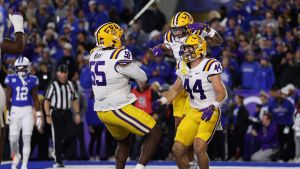
He’ll suit up against LSU in Baton Rouge—the epicenter of another NCAA eligibility battle—on Saturday night. “I just thank god every single day,” Smith said. “I get a second chance at playing for Clemson, man.”
Download the FOS App
The business of sports, in your pocket.



Scan the QR code to get the app now.