White Sox Co-Owner Mat Ishbia Endorses MLB Salary Cap—and Floor
Want more from Front Office Sports
in your search results?
The legal landscape for college athletes has never been more labyrinthine.
As rules change, the top players have a chance to earn big through new revenue-sharing and NIL deals. But the landscape is tough to navigate, and they have only a few years to capitalize on their commercial potential. One lawyer is making sure they can play where they want—and cash in.
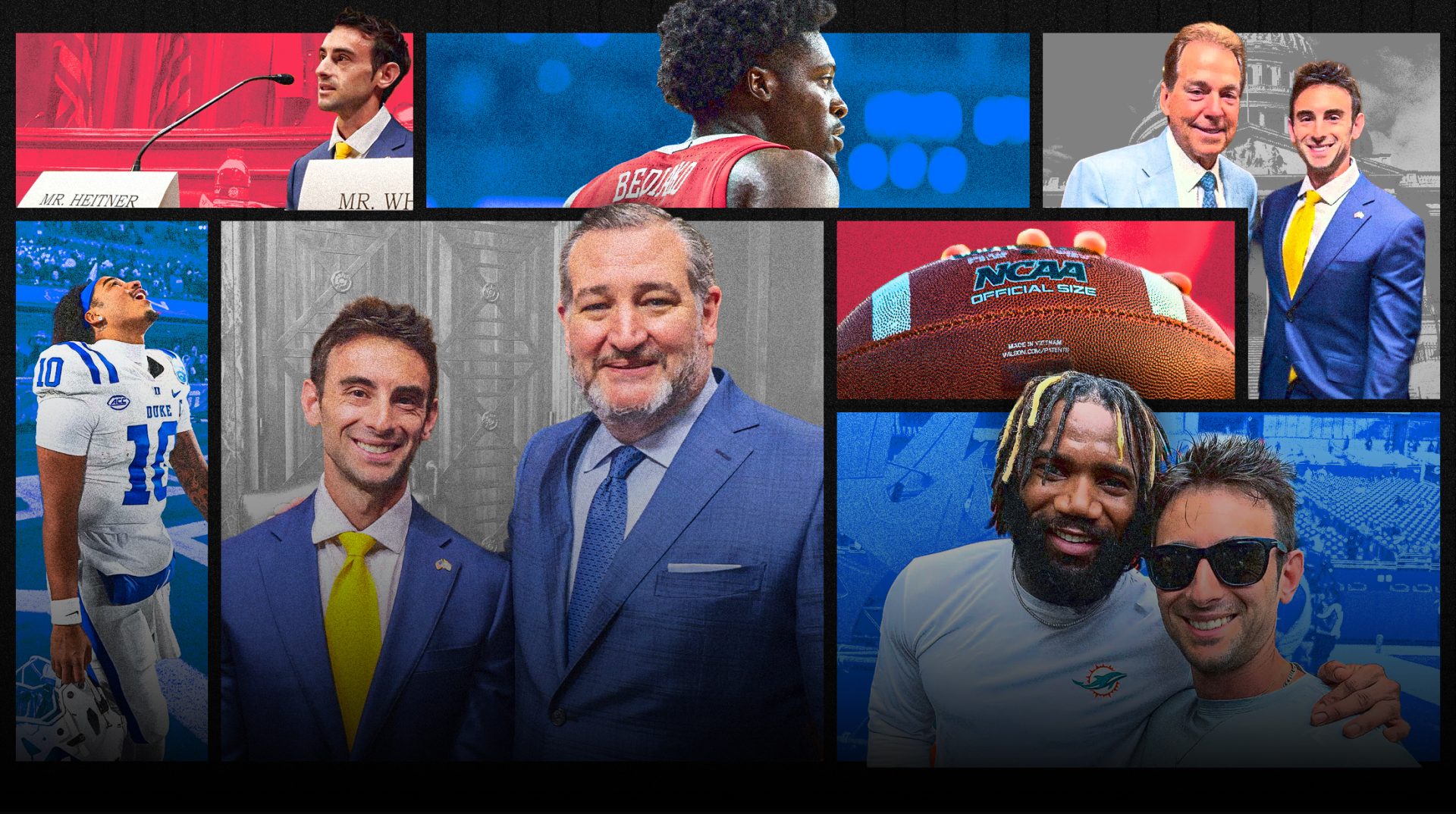
Darren Heitner has been practicing sports law for more than 15 years. But the 41-year-old has shot to prominence in the wake of the House v. NCAA settlement, which allowed schools to directly pay players for the first time. His fingerprints are everywhere in college sports.
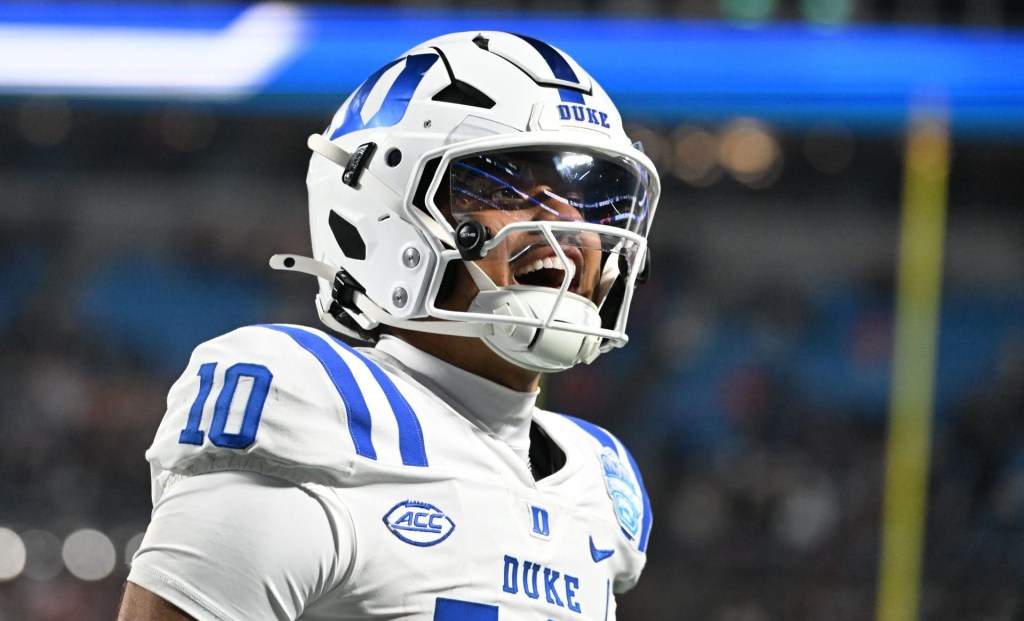
When Duke sued quarterback Darian Mensah after he revealed his intention to transfer schools, Heitner served as lead counsel to Mensah. The suit focused on a $4 million NIL agreement Mensah had signed with Duke that gave it exclusive rights over his name, image, and likeness through 2026. The school cited the deal to prohibit him from transferring schools. Roughly a week after the school filed suit, the parties settled, allowing Mensah to transfer to Miami.
He also represented an unidentified Virginia Tech football player who claimed the school unfairly revoked scholarships and stopped providing revenue-sharing payments because he redshirted to preserve his eligibility. That matter, he says, is resolved. Currently, he’s representing a group of former Florida State men’s basketball players in an ongoing lawsuit against their former coach, Leonard Hamilton, over $250,000 NIL payments they allege the coach promised but never paid.
Heitner’s practice is broad—he also handles trademark filings and disputes, contracts for professional athletes and sports agencies, arbitration matters, and more. He has represented high-profile clients, including Draymond Green, JuJu Smith-Schuster, Manny Ramírez, former college star Johnny Manziel, and St. John’s men’s basketball coach Rick Pitino.
Since 2010, he’s served as legal counsel in at least 219 cases in U.S. federal court, as well as in at least 60 state court cases in Broward County, Fla., where he lives in Fort Lauderdale with his family.
If time is money, Heitner treats every minute like billable hours. He spoke to Front Office Sports while taking a walk to get sunshine and steps in. He’ll take calls on headphones while he’s coaching his son’s baseball team and bring his laptop to get some work done when his kids have karate. Heitner even bought a tray for his treadmill so he can write while walking on an incline at a brisk 3.5 miles per hour.
“There’s no such thing as standard hours in my practice,” Heitner tells Front Office Sports. “I start working the moment I wake up. And I stop working roughly around when I go to sleep.”
Rocking the Foundation of College Sports
Heitner tells FOS the question of whether athletes should be considered employees is one of multiple “significant questions” still facing college sports. Athlete eligibility is another issue Heitner is watching and working on.
He recently advised former Alabama basketball player Charles Bediako, who left college with two years of eligibility remaining, to enter the NBA draft. Bediako went undrafted, signed a two-way contract with the Spurs, and played 28 games in the G League before attempting to return to Alabama. The NCAA declared him ineligible; he sued and briefly won a temporary restraining order allowing him to play, but a judge later blocked him again.
A University of Miami Law Review analysis described the Bediako case as part of a “broader shift” in college sports, saying “eligibility disputes that once remained inside the NCAA are now being decided outside in courtrooms.” While the court ultimately ruled against Heitner’s client, the case “shows that the NCAA no longer has the final word on eligibility.”
For nearly all of Heitner’s career, he has worked on legal issues with Miami-based sports agency Rosenhaus Sports Representation, which has negotiated more than 1,100 contracts worth upward of $8 billion total. Jason Rosenhaus, who runs the agency with his brother Drew, says that Heitner has been a “tremendous source of guidance” as he and his brother navigate the ever-evolving NIL landscape in college sports.
“We don’t make a move with NIL unless Darren green-lights it,” Rosenhaus says.
Law As a Calling
There was almost a world where Heitner wasn’t a lawyer at all. He originally set out to be a sports agent like the Rosenhaus brothers. In 2007, after getting his degree in political science from Florida, he formed Dynasty Athlete Representation at age 22.
“I believed that was my true path,” Heitner says.
As he built that firm, Heitner attended law school at Florida’s Levin College of Law. Following his 2010 graduation, Heitner spent one year as an associate at Koch & Trushin PA. It was during that time he realized his heart was in the practice of law. He helped launch a law firm called Wolfe Law Miami PA and became a partner within two years.
“That decision dramatically changed my professional life,” Heitner tells FOS. By 2014, he had founded his own firm, Heitner Legal PLLC.
The “inflection point,” as Heitner calls it, of his career came in 2019 when he was contacted by an aide for Chip LaMarca, a member of the Florida House of Representatives.
LaMarca had noticed California was considering legislation that would circumvent the NCAA’s prohibition on athletes earning money from endorsements, and he wanted to know whether Heitner would help do something similar in Florida (California’s bill was signed into law in September of that year; Florida legislation was signed into law in 2020).
“He had a very significant, direct role in making that happen publicly and privately,” says Rosenhaus. “He pushed for it publicly and worked effectively behind the scenes. NIL has revolutionized the sports agency business. It’s a godsend and blessing for college players.”
That “set the stage for me when everything in the business of college sports went crazy,” Heitner tells FOS.
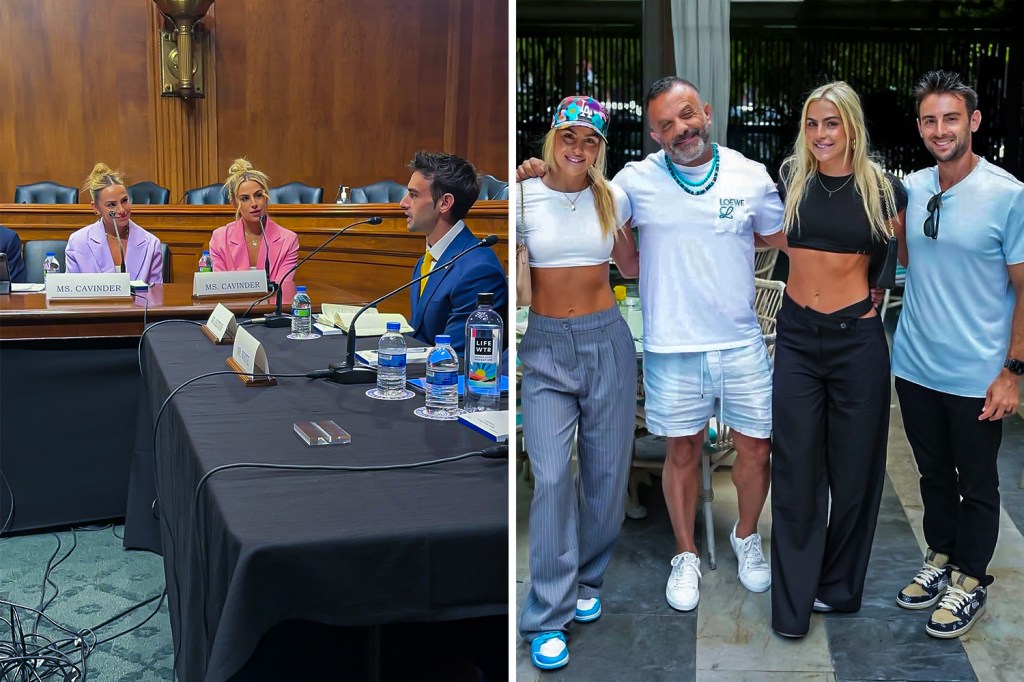
Heitner’s profile continued to rise after he helped with the Florida bill. In July 2021, following the NCAA changing its rules to allow athletes to capitalize on their NILs, he started working with Haley and Hanna Cavinder—twins who played basketball for Fresno State and also had massive social media followings. He helped them land endorsement deals with Six Star Pro Nutrition and Boost Mobile.
It’s Not About the Money
Heitner is already prolific, but his work is only just beginning as the landscape of college sports remains untamed. Rules around earning and eligibility are a moving target; the NCAA is changing the guidelines, and the law is still unsettled.
Other areas Heitner points to as pressing issues in college sports are contracts—including NIL license agreements provided by schools, multimedia-rights deals from third parties, and collective agreements—and intellectual property.
Heitner is sensitive to the fact that some outsiders could be wary of his representation of the University of Miami’s official NIL collective, Canes Connection. That group pools money from boosters and directs it into NIL deals with Miami athletes. Heitner, as both an advocate for individual athletes in disputes with schools and an attorney for a school’s collective, could raise perceived conflicts.
“It’s rare that I’ve had an athlete come to me to represent them in negotiations with Canes Connection, but it has occurred before,” Heitner tells FOS. In those cases, he says he is “very cautious and careful” to ensure that both the athlete and Canes Connection understand what they are entering into, and if both sides want to proceed, they sign waivers of conflicts.
“I think it’s important for the parties to be aware of the potential for conflict,” he says. “At the end of the day, if they still want me to be involved, then I will be.”
Heitner is always on his toes—and his treadmill—and yet every case matters to him. He’s always just a call away from the stakeholders he works with. “I know Darren has lots of other clients and other cases, and other agents are rushing to use him, but he still treats us like we’re his only clients,” Rosenhaus says.
“People say I’m in it for the money; I’m really not,” Heitner says. “I care more to be a thought leader, to lead change for the better, and to make sports equitable for athletes.”
Download the FOS App
The business of sports, in your pocket.



Scan the QR code to get the app now.