Want more from Front Office Sports
in your search results?
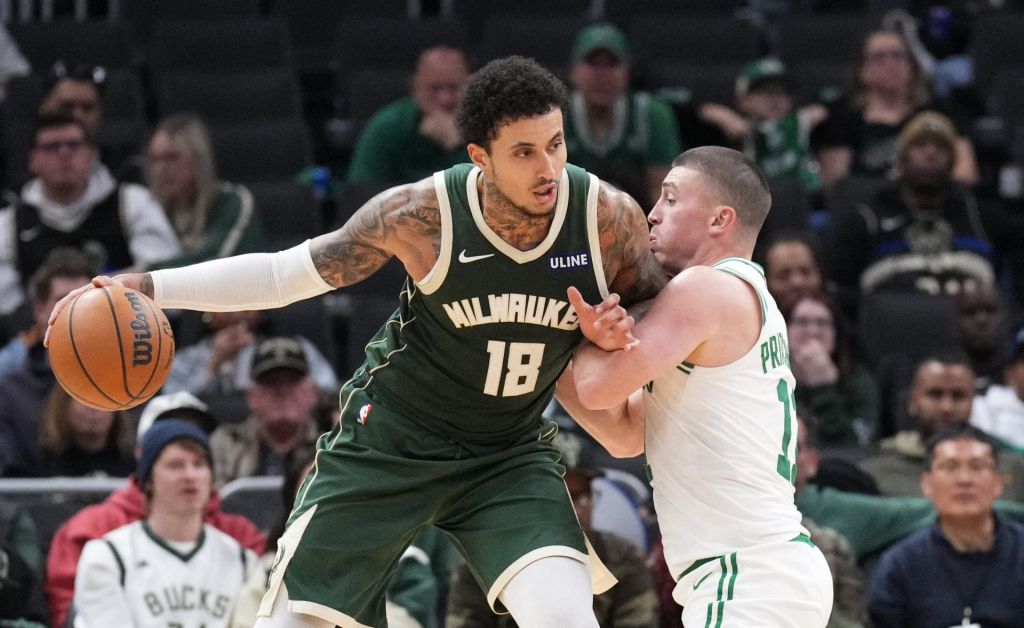
The NFL should not have forced Eagles running back Saquon Barkley to sell his Polymarket stake, NBA veteran and Kalshi investor Kyle Kuzma told Front Office Sports.
“I think it’s BS,” the Bucks forward said during a wide-ranging interview that touched on everything from his new podcast about investing, tech, and AI, Read The Room, to why so many NBA players are getting injured early in the season.
FOS reported last month that Barkley was told to divest his stake at some point over the last year, after a profile last September revealed he owned a stake in Polymarket. Under league rules, NFL players are not allowed to invest in or endorse gambling or prediction-market companies. “I am not allowed to be in that,” Barkley told FOS.
“For the NFL to say that about Saquon, so unfortunate, truly,” said Kuzma, who is averaging 11 points, 5 rebounds, and 2.5 assists in his 10th NBA season (the Bucks have struggled out of the gate with a 1-13 record heading into Wednesday night’s matchup against the Heat).
The NBA’s rules are less restrictive. While players cannot trade on NBA event contracts, there is no prohibition on them investing in prediction-market platforms.
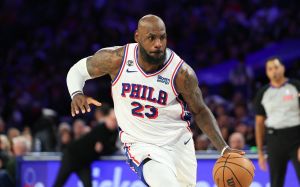
Kuzma invested in Kalshi late last year when it was valued at around $11 billion, a source familiar with the matter tells FOS. Today, Kalshi is reportedly raising capital at a $65 billion valuation. Giannis Antetokounmpo invested in Kalshi in February, and a few months later a several other athletes quietly invested in Kalshi, including two-time WNBA MVP Breanna Stewart and former NFL stars Marshawn Lynch and Richard Sherman. LeBron James isn’t an investor in Polymarket, but has an endorsement deal with the company that FOS reported pays him $15 million per year.
“You should be able to invest in whatever you possibly can,” Kuzma, 31, said.
He pointed to the fact that the average career for NBA and NFL players only lasts a handful of years, meaning pro athletes have very little time to earn money using their athletic abilities.
“You shouldn’t pigeonhole us or dock us for whatever relationships we have outside of the game to be able to invest,” he said.
‘States Being Greedy’
In addition to Kalshi, Kuzma has touted that his investment portfolio includes Elon Musk’s SpaceX and military tech company Anduril. In April, he became co-owner of Sierra Racing Club, a team in electric boat racing league E1, and last year he invested in men’s skincare brand Margin, which was founded in 2020.
Kalshi is perhaps the most controversial business he has invested in; the company is fighting dozens of lawsuits across the country, and experts expect the issue of sports-event contracts will reach the U.S. Supreme Court as soon as next year.
Kalshi holds a dominant position in the industry with a significantly greater market share than Polymarket; in the third quarter alone, Kalshi was responsible for 73% of total prediction-market volume, according to a recent report from Predicted.
Kuzma invested in Kalshi after meeting cofounders Tarek Mansour and Luana Lopes, who he called “amazing people.”
Despite the legal fight, Kuzma believes prediction markets are here to stay. “I saw something that has the potential to be a massive, massive thing in our world and society,” he said, adding that the fight over who gets to regulate the industry ultimately comes down to “greedy” states wanting a share of the tax revenue.
“I think what it boils down to is states being greedy,” Kuzma told FOS. “It’s a bunch of states that want their licensing and tax revenue to come in.”
Kuzma’s podcast, which comes out every Thursday, features prominent players in the world of investment and AI; he’s already had on Justin Cyrus, founder and CEO of Lunar Outpost, which builds rovers and robots that do work on the moon, as well as venture capital investor Bryce Johnson. He said he hopes to “eventually” have Kalshi’s cofounders on the podcast.
“They’re very busy,” Kuzma told FOS. “I know Tarek is one of the hardest working men I’ve ever met. Just look at their growth as a company.”