Want more from Front Office Sports
in your search results?
The 2026 World Series between the Rays and Brewers showcases not only their season-long excellence but a financial discipline that enabled their rise for this season and potentially sets them up for future success.
The matchup between Milwaukee, MLB’s No. 19 spender with a $154.7 luxury-tax payroll, and Tampa Bay, the No. 27 spender at $113.2 million, brings together two teams that have not won a World Series and will give the league its first small-market champion since the 2015 Royals.
While the clash wasn’t widely predicted in preseason forecasts, the Brewers and Rays have been division leaders since mid-May, were the first two teams to clinch postseason berths, play a relentless style of baseball, and strongly affirmed their respective No. 1 playoff seeds with a combined 14–3 record this month.
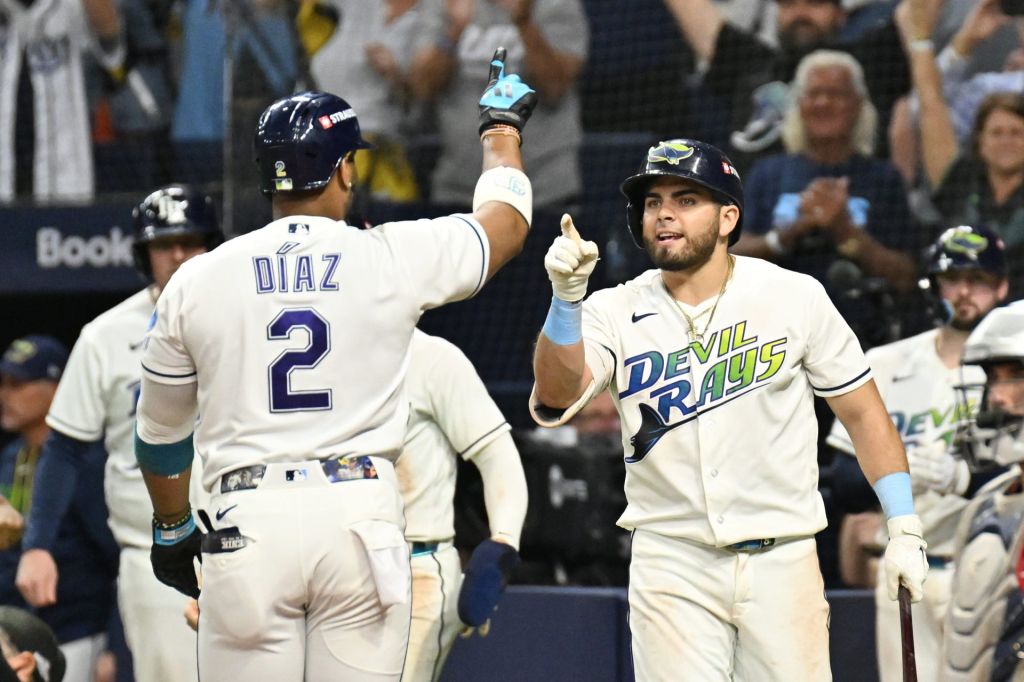
Enabling that rise have been a series of critical factors in their roster development. The Brewers and Rays have not been hamstrung by a lengthy and expensive series of long-term veteran player contracts. Tampa Bay’s longest deal among current roster players has been a three-year pact with designated hitter Yandy Díaz, a contract that included an option for 2027 that vested earlier this year. The Brewers’ largest deal is a nine-year, $215 million contract with outfielder Christian Yelich that has two years and an option season remaining—and it’s an outlier from the rest of the club’s roster.
Along similar lines, both the Brewers and Rays have very little dead money being paid to players not currently on the roster or playing key on-field roles. Among the biggest absences among high-dollar players is Brewers pitcher Brandon Woodruff, out since July with an arm injury and earning $22 million this season. Woodruff is making an effort, though, to make the Brewers’ World Series roster.
Like many lower-revenue clubs, the Brewers and Rays have benefited greatly from younger stars performing far in excess of their current salaries, and aren’t yet eligible for free agency. Milwaukee pitcher Jacob Misiorowski, the likely National League Cy Young Award winner this year, earned $788,300 this season, barely higher than the $780,000 league minimum salary. Misiorowski won’t be eligible for arbitration until after the 2028 season, and he won’t be a free agent until late 2031. Similarly, Rays star and American League MVP candidate Junior Caminero doesn’t become a free agent until after the 2030 season and he earned $794,800 this season.
The Brewers have signed several young stars and top prospects to team-friendly, long-term deals, including with shortstop Cooper Pratt and outfielders Jackson Chourio and Luis Lara. That approach has been used by several other clubs such as the Braves, and will likely save Milwaukee hundreds of millions of dollars over the long term.
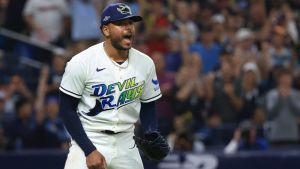
A series of savvy midseason moves helped lift both clubs. In particular, the Rays acquired pitcher Freddy Peralta, the American League Championship Series MVP, at the August trade deadline in a deal with the Mets, with “Fastball Freddy” quickly anchoring the Tampa Bay rotation. The Brewers acquired pitchers Dustin May and JoJo Romero in a trade deadline deal with the Cardinals, and those players have had meaningful roles late in the regular season and in the playoffs. Somewhat ironically, though, the Brewers traded Peralta to the Mets last offseason for two prospects, and will now face him in the World Series.
Effective drafting and scouting has been critical to the Brewers and Rays, with stars such as Misiorowski, Chourio, and Tampa Bay first baseman Jonathan Aranda acquired through the amateur draft or as international free agents.
“I’ve never seen a group come together like this one with so many ways to beat an opponent on a given night, so many ways to play the scoreboard,” Rays president of baseball operations Erik Neander said about his club. “They don’t bludgeon people. They just find ways to win and a lot of different ways to do it.”
The Brewers are making their first World Series appearance in 44 years, and the Rays are in their first in a non-pandemic season since 2008. Both teams, however, have been regular contenders, as Milwaukee has been in the playoffs eight of the last nine seasons, and Tampa Bay has earned postseason berths in six of the last eight years.
Labor Themes
Despite their ongoing success, the two teams will become another flashpoint in the ongoing labor negotiations between MLB and the MLB Players Association.
Management has contended that teams such as the Brewers and Rays cannot contend consistently in the current system, and have proposed dramatic measures to address that, including a hard salary cap, significant restrictions to free agency, and an overhaul of the MLB draft. The union vehemently opposes those offers, particularly the salary cap, and is looking to retain the core of the sport’s current, market-based economic system.
Team owners are expected to impose a lockout when the current deal expires in December, making the upcoming World Series potentially the last MLB games for some time.
Download the FOS App
The business of sports, in your pocket.



Scan the QR code to get the app now.