Want more from Front Office Sports
in your search results?
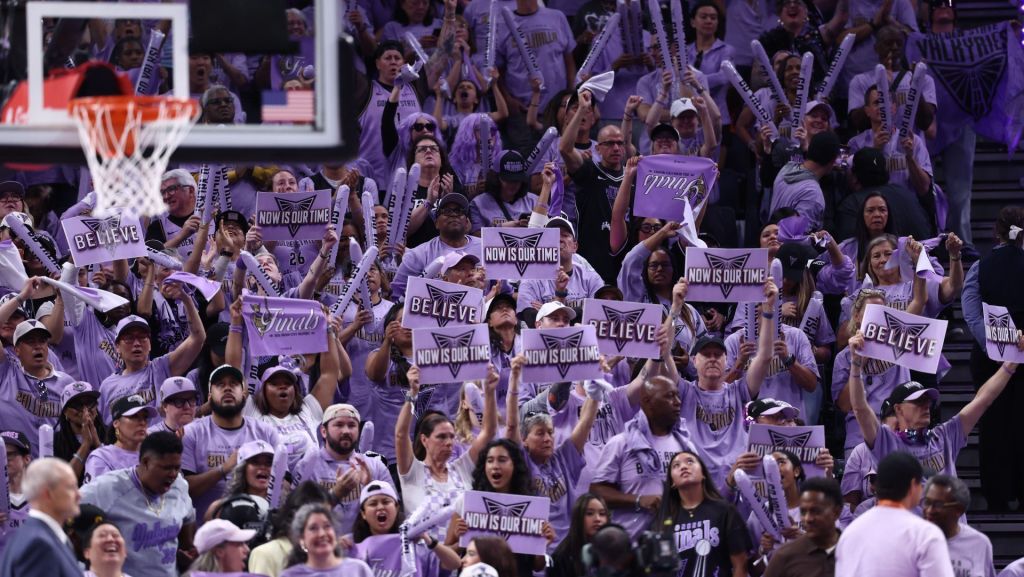
SAN FRANCISCO — With the Golden State Valkyries trailing by seven early in the fourth quarter of Game 1, the Chase Center crowd started to sing.
“I said hey! What’s going on?” the crowd at Ballhalla, the Valkyries’ nickname for their home arena, responded as the 1993 hit “What’s Up?” rang out.
It’s not uncommon for a crowd to perform karaoke classics midgame. It might be less so to sing and do the wave at the same time.
The moment, which came right before Golden State outscored the Atlanta Dream 17–6 to escape with Game 1, was a glimpse into the atmosphere at Ballhalla. The arena has turned into the best atmosphere in the WNBA—and perhaps all of sports.
Even NFL stars have noticed.
“Probably the best basketball game I’ve ever been to, honestly,” 49ers wide receiver Mike Evans said after attending Game 2 of the Valkyries semifinal against the Las Vegas Aces. “I’ve been to the Finals games. I’m a huge Rockets fan. I lived in Houston, so I guess I’m a Rockets fan. Went to a lot of games, and it’s hard to beat that atmosphere.”
It’s an open secret around the league that Ballhalla provides the league’s best home court advantage. The team finished the regular-season with a league-best 17–5 record at Chase Center, and they have yet to drop a home game in the playoffs.
The arena is always packed. Golden State has sold out every single home game since entering the WNBA last year, leading the league in total and average home attendance.
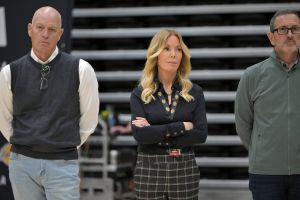
But it’s clear that the team’s owners—Joe Lacob and Peter Guber’s Golden State Group, which also own the NBA’s Warriors—have invested in all aspects of the team, from roster construction to marketing and overall fan experience, creating an environment akin to their successful NBA franchise.
Valkyries logos are plastered on billboards and trains all over the city, despite the Warriors regular-season set to tip off Tuesday. The team stores outside the arena advertise both teams equally.
The team’s early success on and off the court has turned them into the first WNBA franchise to reach $100 million in annual revenue. They’re also the first team to be worth $1 billion, according to CNBC.
“The level of investment from the jump was huge,” guard Veronica Burton said Friday. “From our ownership, to our front office, to our coaching staff, I think they’ve set us up for a position to be successful. And from the fans too. … All of that plays a role.”
And head coach Natalie Nakase is acutely aware of her team’s home advantage, calling for “hostility” from Ballhalla ahead of Game 1. She wants even more in Game 2.
“Great job!” Nakase said after the game. “But hey, level up, right? We got Game 2, it has to be better. We’re going to ask more from our players. So, I would say, check for Game 1, let’s get a better Game 2. So rest and recover, Ballhalla.”
Download the FOS App
The business of sports, in your pocket.



Scan the QR code to get the app now.