Want more from Front Office Sports
in your search results?
LSU blinked in the face of conference pressure and didn’t roster two ex-NFL players for its season opener against Clemson. But the SEC is not giving up its courtroom fight against its most controversial member.
On Tuesday, the SEC filed an amended complaint in its federal lawsuit against LSU, with the aim of establishing the legal authority to expel LSU from the conference. The amended complaint added members of the LSU Board of Supervisors as defendants as well as Louisiana attorney general Liz Murrill, who has been outspoken in defending the school.
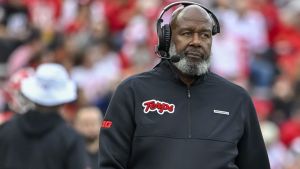
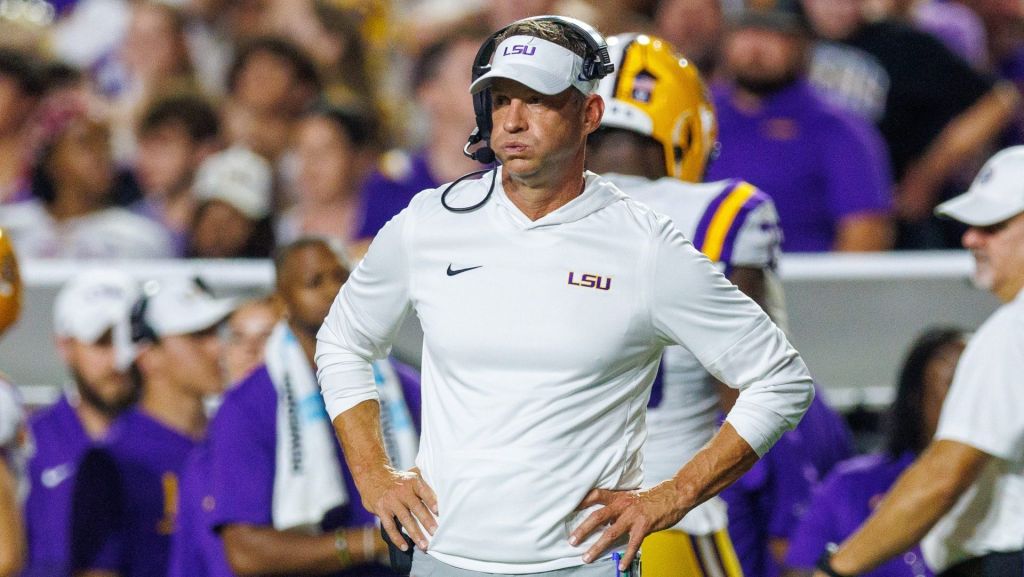
The filing signals not just a willingness for the conference to continue its legal battle against LSU and its football coach Lane Kiffin, but an escalation.
Documents in the new filing say that the SEC will meet on Thursday to vote on whether to expel LSU from the conference. The SEC bylaws require a two-thirds majority of conference “CEOs,” or university presidents, to do so. While expelling LSU from the conference is highly unlikely, SEC school officials have had discussions about doing so, sources told Front Office Sports last week.
The lawsuit is seeking a temporary restraining order to prevent LSU officials taking action “to block or interfere with the meeting scheduled for September 10th.” It is also seeking a declaratory judgement that LSU’s conduct has violated the SEC’s First Amendment rights.
In a statement to Front Office Sports, an SEC spokesperson said the court filing “is necessary to defend that right and preserve the Conference’s ability to govern competition among its members.”
“The SEC and its member universities have the right to establish, through agreed-upon governance procedures, the rules under which they voluntarily compete and to expect those rules to be followed,” the spokesperson said. “A commitment to those rules, and to the core principles of the Southeastern Conference, is an essential element of SEC membership.”
LSU declined to comment. Murrill’s office did not immediately respond to a request for comment.
The legal battle began in August, when a group of players from the freshman class of 2022 filed a lawsuit in Louisiana state court arguing they should receive a fifth year of eligibility after the NCAA changed its eligibility policy this summer. But the case made waves because several of the players had signed NFL preseason contracts and been listed on NFL rosters. LSU scooped up two of these athletes: tight end Dae’Quan Wright and defensive lineman Zxavian Harris. The SEC has alleged in court documents that Kiffin himself orchestrated the suit, though he has denied the allegation.
The SEC, as well as other conferences, then implemented policies to ban schools from rostering players who had signed NFL contracts—even if, as the players testified last week, the pro contracts were meager. The SEC’s penalties would include a 50% fine of the sport’s operating budget, a suspension of the head coach for 50% of the season, and revocation of SEC voting privileges, FOS previously confirmed. Neither the players nor LSU backed down, and the players won a preliminary injunction last week in a Baton Rouge courthouse.
At the same time, the SEC went on the offensive. On Thursday, the conference filed a federal lawsuit in Birmingham, Alabama, arguing that all of the SEC’s members opposed allowing athletes who had signed NFL contracts to come back to college—and that LSU was violating their First Amendment rights to enforce conference rules.
On Friday night, ahead of their Week 1 matchup against Clemson, Kiffin decided not to roster the players, signaling a brief detente between the school and conference for game day.
It didn’t last.
The SEC’s amended complaint filed Tuesday says the school “waged a deliberate, coordinated, and public campaign to recruit professional athletes to play football for LSU during the 2026–27 season, including players who had signed National Football League contracts with, or appeared on the NFL rosters of, the Cleveland Browns, Philadelphia Eagles, New Orleans Saints, and Tampa Bay Buccaneers.”
Wright and Harris played for Kiffin at Mississippi last year and went undrafted in April’s NFL Draft. Wright signed with the Eagles, was cut, signed with the Browns, and was cut after a Browns preseason game. Harris, who has been dealing with a foot injury, signed with the Saints and was cut early last month.
Both players testified in court that their NFL opportunity paled in comparison to what LSU had to offer. Wright said his NFL payday consisted of a $25,000 bonus from the Eagles, while Harris said the Saints paid him $190 for gas. Both said they could earn six figures playing for LSU this fall.
The conference had multiple meetings over the past two weeks to discuss and vote on professional policies. (LSU voted in favor of a professional player ban but abstained from a vote on penalties, court documents confirmed.) But on Sept. 4, SEC officials met without LSU and affirmed that the conference should have the right to expel LSU if it played Harris or Wright, the complaint said.
The complaint then explained why Kiffin’s choice not to roster the players for the Clemson game wasn’t enough. “At least two of these professional athletes are on LSU’s campus, enrolled at LSU, and actively practicing with LSU’s football team,” the complaint said. “Defendants have indicated their intent to place those athletes on LSU’s official football roster and, after the deadline for finalizing its NCAA football roster on September 4, 2026, specifically left two roster spots open.”
Court documents also raised concerns that university officials did not appear to have any control over Kiffin and LSU football decisions. The complaint specifically noted Kiffin’s comment to ESPN’s Holly Rowe during halftime of the Clemson game, when he joked, “Imagine if we had pro players.” (In the postgame press conference, Kiffin made light of the comment, saying, “Everybody hates you. They can’t hate you that much more. There you go. You got another line.”)
In a sworn affidavit, SEC commissioner Greg Sankey said Kiffin’s comments “confirm the lack of institutional control over the athletics program at LSU.”
The SEC claims LSU’s actions infringe upon the SEC’s constitutional rights “by forcing the Conference to associate itself and its competitions with conduct and publicity that it has expressly repudiated,” as well as creating a competitive imbalance and chipping away at “public confidence in the integrity of SEC competition.”
Now, the entire college sports world will wait to see whether the SEC can successfully force LSU to back down—or follow through with its threat of expelling one of its flagship members.
Download the FOS App
The business of sports, in your pocket.



Scan the QR code to get the app now.