Want more from Front Office Sports
in your search results?
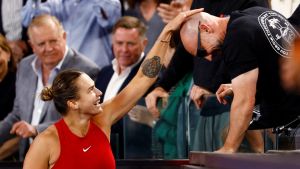
NEW YORK — After a hard fought first-round win at the US Open, Madison Keys let out a scream that resonated all over Arthur Ashe Stadium. As she walked to the net to shake hands with Alina Korneeva, the camera shifted to her player’s box, where her husband and coach Bjorn Fratangelo cheered her opening round victory.
The celebratory moment turned into a 5-second product placement for online car seller Carvana, as Fratangelo was decked out in apparel showcasing the company’s logo.
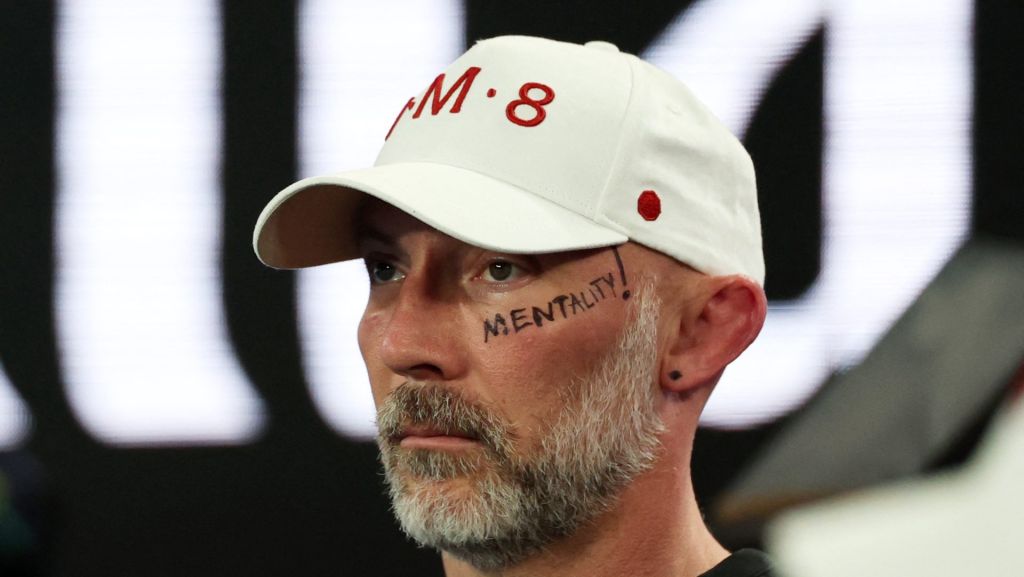
Keys’s team is far from the only one that flashed brand logos from the box at the US Open. Iva Jovic’s team has been decked out in the Carvana shirt and cap, while Ben Shelton’s team has worn just the caps; Ukrainian star Elina Svitolina’s team wears jackets with the logo of Ukrainian software brand MacPaw; and Aryna Sabalenka’s coaches have worn caps promoting health supplement brand IM8.
It’s a clear sign that coaches have turned into another avenue in tennis for advertisers, in part because tournament rules only allow for a limited number of sponsorships on players’ clothing. The Grand Slam rulebook allows for a maximum of two commercial logos displayed on a player’s kit, in addition to the logo of the apparel manufacturer.
Coaches have minimal restrictions—and are shown fairly consistently on tennis broadcasts.
“I’m in the media all the time, I’m in the box, the camera’s on me,” Sabalenka’s performance coach Jason Stacy told Front Office Sports last month at the Cincinnati Open. “There’s a lot of companies, a lot of media that’s interested.”
Flávia Araujo, co-founder of Unbox Sports, a startup functioning as a quasi-agency for tennis coaches, told FOS that coaches have always been a target of advertisers. Previously, the brands displayed on coaches’ apparel were mostly sports-related categories such as tennis equipment. In the age of social media, those opportunities have expanded.
“With that increased exposure, then you see more brands realize that it clicks for them,” Araujo said. She also said some tournaments may require coaches to give interviews in the future, which could turn into another media touchpoint.
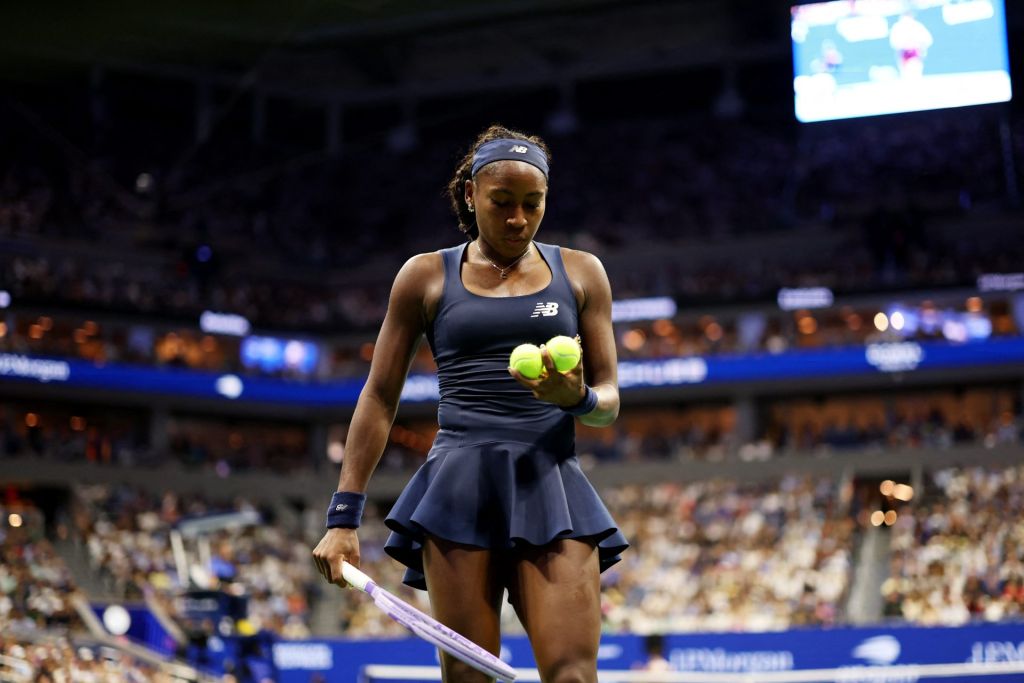
Commercial partnerships differ among teams, says Araujo, with some brands making uniform deals with the players as well as coaches. For example, Coco Gauff is a New Balance athlete and her team is often seen wearing the brand’s merchandise on the sidelines.
Others are recommended by the coaches. Sabalenka’s deal with IM8 came after Stacy recommended she try the product. Her team then reached out to IM8 and the parties announced an official deal in June 2025. (The team has also been wearing jackets to promote Stacy’s new book, The Pressure Code at this year’s tournament.)
Coaches could also have their own sponsorship deals separate from the players, especially since coaches can change teams and might be under a deal with a brand that will continue to their next player.
Unbox Sports was not involved in the Carvana partnerships at the US Open; Araujo said the company works mostly on “long-term partnerships” with their coaches. But she added that it’s “tough to judge” teams for accepting short-term deals given the notoriously challenging financial circumstances many players and coaches face.
“There’s value in that, too,” Araujo said. “It’s life-changing for some coaches.”
Carvana did not respond to a request for comment.
Stacy outlined the financial hurdles he faced as a part of Sabalenka’s team, saying he and head coach Anton Dubrov continued to share hotel rooms and look for cheap flights even when Sabalenka was ranked in the top 10 and made millions. He said securing more commercial sponsorships—which happened when Sabalenka moved to world No. 1—is what ultimately eased the financial burden.
“There were no sponsorship deals at the time. Income was purely from what she won on the tour. That was it. And that was up and down,” Stacy said.
Download the FOS App
The business of sports, in your pocket.



Scan the QR code to get the app now.