
SportsGrid Up for Sale Amid Revenue Slide
Want more from Front Office Sports
in your search results?
The Premier League continues to cast a shadow over the rest of the world’s soccer leagues.
Nine of the 20 biggest clubs by revenue belong to the English league, according to Deloitte. The Premier League makes more from its overseas broadcasting rights alone (£2.1 billion/$2.8 billion a year) than any other league makes from its total broadcast revenue; its clubs generate almost twice as much from ticket sales (£920 million/$1.2 billion) as its nearest rival, LaLiga in Spain.
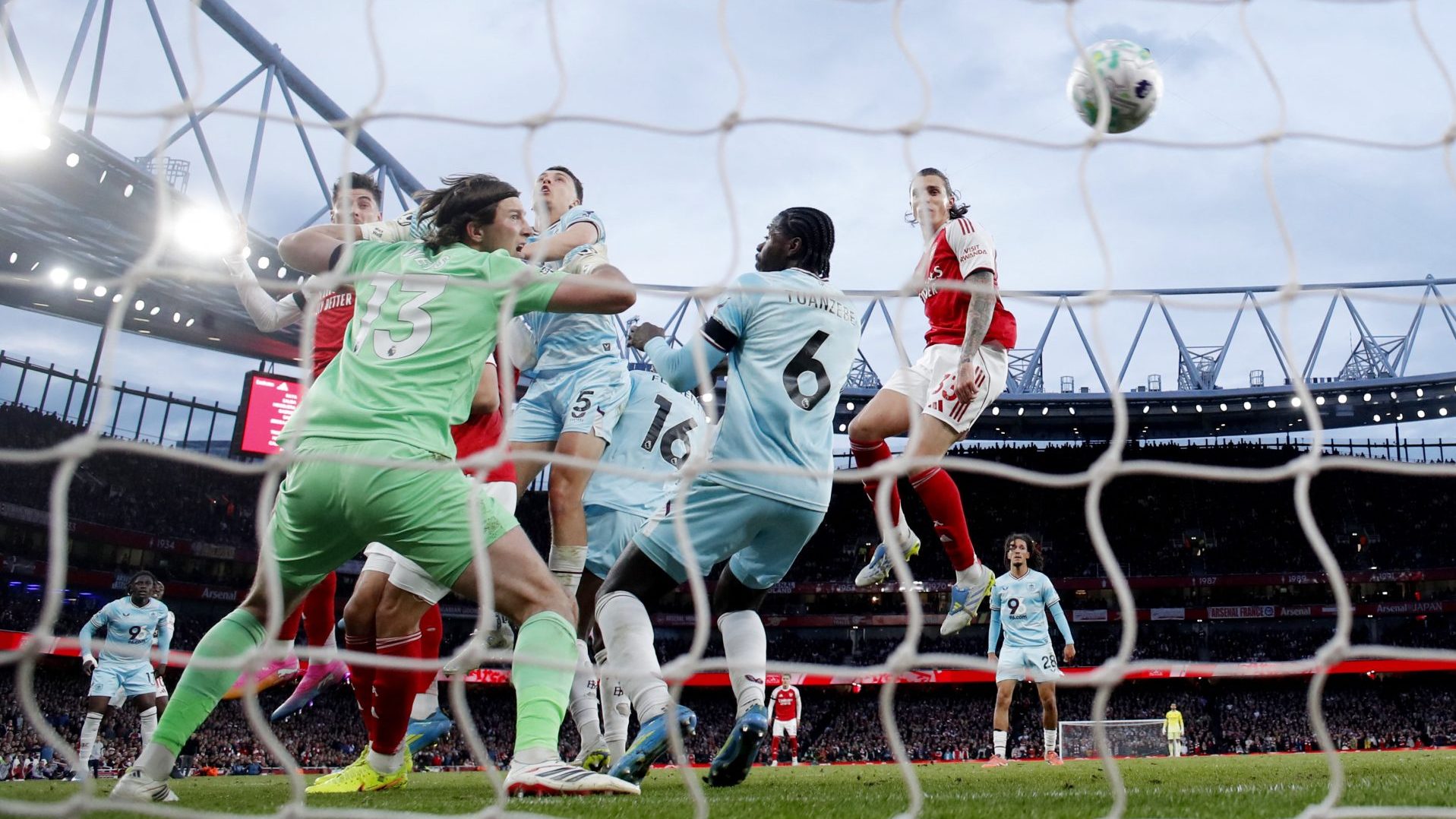
The Premier League is turning cash into trophies. Its clubs won the Europa League and the Europa Conference League last season, just as they did the previous year. Arsenal came within a penalty shootout of winning the Champions League. These victories, in turn, generate more prize money.
European soccer is now a case of the Premier League and the rest. However, there is one measure in which it is failing to pull its weight: star power.
One of the defining features of the 2026 FIFA men’s World Cup was that the sport’s biggest players came to the party. But Kylian Mbappé, Jude Bellingham, Vinícius Júnior, and Lamine Yamal all play in Spain. Harry Kane and Michael Olise are in Germany. Lionel Messi and Cristiano Ronaldo are in the U.S. and Saudi Arabia, respectively. Only one big global star, Erling Haaland, plays for an English club.
This is not a new phenomenon—nor is it an accident.
When the Premier League was first created, its clubs were light-years away from affording the biggest stars in the world. In search of a defining characteristic, the Premier League found a non-star-driven strategy that worked—and propelled it to become the most competitive league in the world.
This approach worked so well that its teams have become flush with cash, yet they remain cautious in committing exorbitant salaries to the handful of the best players on the planet.
Shooting Stars
The idea of England as the center of the soccer universe is relatively new.
At the start of the 1990s, the sport there was insular and parochial. Persistent hooliganism had given soccer a terrible reputation. Dilapidated infrastructure had caused several deadly accidents. English clubs had been banned from European competitions for years as punishment for the behavior of some fans abroad.
The Premier League was established in 1992 to revive interest among fans, sponsors, and broadcasters.
In its first season, all 22 clubs were coached by British or Irish managers, and foreigners played fewer than 8% of the league’s total minutes. Momentum built gradually, helped by a series of close title races. The league became more cosmopolitan following England’s successful hosting of the 1996 European Championships.
But the biggest names that came from abroad, such as Italian striker Gianluca Vialli and Dutch playmaker Ruud Gullit, arrived in their mid-30s. They were seeking a final payday. In terms of prestige and quality, Serie A and LaLiga remained streets ahead.
Since then, the Premier League’s most successful foreign players have tended to make their reputations within the competition before moving elsewhere.
Thierry Henry is the most debonair man in soccer, but when he arrived at Arsenal in 1999, he was a diamond in the rough whose career had failed to ignite. Ronaldo was a gawky adolescent when he moved to Manchester United in 2003. Luis Súarez had shown promise at Ajax and used his years at Liverpool as a springboard to sign with Barcelona three years later.
There is a similar trend among the best English players: David Beckham, Bellingham, Kane, and now Anthony Gordon all built their profiles in the Premier League before transferring to one of the continental giants.
Tellingly, for all the Premier League’s financial heft, the Ballon d’Or, the award for the world’s best footballer, has been given to three players contracted to Premier League clubs since 2000. Players from LaLiga have won it 16 times.
Drama and Emotion
The Premier League has been able to grow so quickly without the presence of the world’s best players through clever marketing.
“It is less about excellence and more about the drama,” former ESPN executive Murray Barnett tells Front Office Sports. “It pushes this emotional core of packed stadiums, lasting traditions, lots of derbies and the perennial potential of upsets. All of these elements come together in this idea of it being the best competition.”
The obvious parallel is with LaLiga, which for years in the mid-2010s promoted itself as the home of Messi’s Barcelona versus Ronaldo’s Real Madrid. These players sustained an impressively enduring rivalry, but their eventual departures left a bigger hole in LaLiga than the departure of any single player from the Premier League.
The Premier League has other structural advantages relative to its European rivals: It has the most helpful time zone for fans in the Americas, and benefits from English becoming the global lingua franca. But the central thrust of its promotion remains this idea of drama and competition.
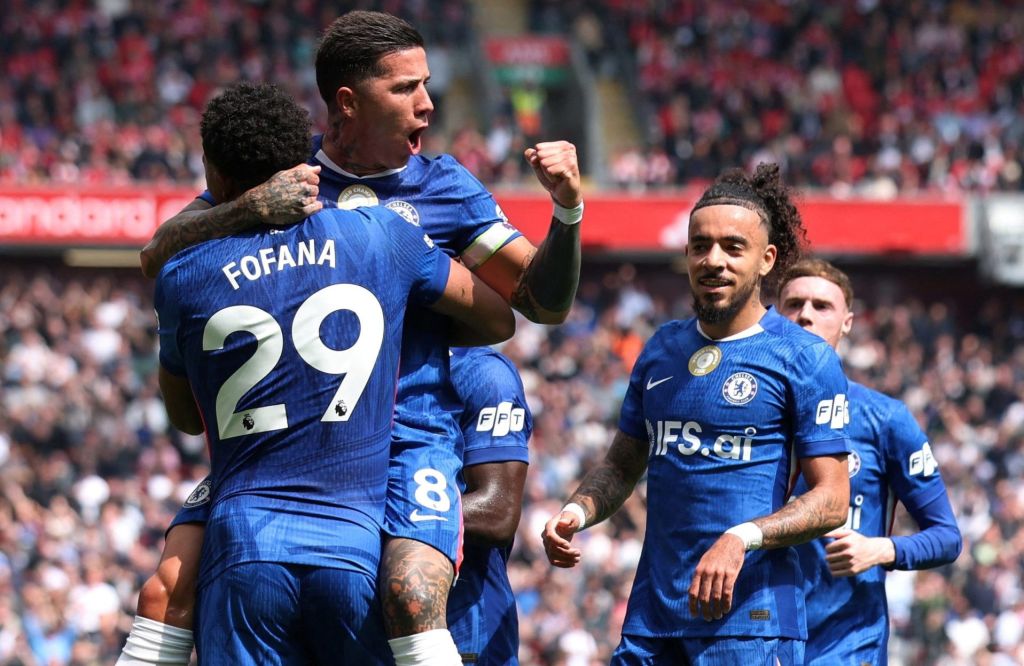
The Premier League’s brand positioning as the most competitive league in the world has become a self-fulfilling prophecy.
For years, it was a struggle to make a data-led case for the Premier League’s greater levels of competition. For years in the 2000s, the “Big Four” of Manchester United, Arsenal, Chelsea, and Liverpool led the league every year. A decade later, the rivalry between Pep Guardiola and Jürgen Klopp saw Manchester City and Liverpool routinely rack up in excess of 95 points a season by beating up all-comers.
Nevertheless, the Premier League continued to push to make this idea part of its culture, and broadcasters and sponsors have bought in, lifting the entire league on a wave of cash. Any club with multiple years of Premier League revenue can now compete with the elite in Europe for transfer fees and wages. Previously tiny clubs, such as Bournemouth and Brentford, have harnessed data analytics to recruit cleverly and close the gap to more established clubs.
The result is that the middle of the league has become significantly stronger in recent seasons. Sports consultancy Twenty First Group looked at the correlation of teams’ Premier League points totals from one season to the next. Its CEO, Omar Chaudhuri, tells FOS that the correlation has fallen steadily in the past five years. The league has become less predictable because its mid-ranking teams have improved.
Brand Power
This trend of the Premier League becoming more competitive works against the acquisition of the world’s best players in two ways, both illustrated by Arsenal’s failed attempt to buy Real Madrid’s Vinícius Júnior this summer.
Although the Premier League as an entity is the richest, its individual teams are still not as big as other leagues’ crown jewels. Arsenal’s revenue at €820 million ($957 million) is only two-thirds of Real Madrid’s at €1.2 billion ($1.4 billion)—meaning Arsenal can’t afford to spend the same amount on wages. (The financial cost controls in the Premier League and LaLiga are broadly similar in the proportion of revenue that they allow teams to direct to player wages.) And because winning the Premier League is more difficult than winning LaLiga, Arsenal has to spread those wages across a deeper squad.
And for Vinícius Júnior, playing in the Premier League just didn’t have enough appeal: Staying on a big team in a weaker domestic league gives him (and his contemporaries at Barcelona, Paris Saint-Germain, and Bundesliga’s Bayern Munich) a better chance of landing the Champions League, which remains the biggest prize in club football.
Although Arsenal came up empty-handed on this transaction, it doesn’t matter much.
One of the most often-used aphorisms around English soccer is that “no player is bigger than the club.” It is often attributed to former Manchester United manager Alex Ferguson, who had a habit of selling his biggest stars when he felt their appetite for winning was waning.
But it actually represents the philosophy of the Premier League as a whole. “The league has always presented itself in a very cohesive way,” Barnett says. “The brand identity is very strong. The Premier League has always looked very clean, very well produced, and very homogenous, with excellent storytelling.”
Building the Premier League brand on the competition rather than its players has proved to be a smart bet. From its dominant position within European soccer, it is clear the star of the Premier League is the Premier League itself.
Download the FOS App
The business of sports, in your pocket.



Scan the QR code to get the app now.