White Sox Co-Owner Mat Ishbia Endorses MLB Salary Cap—and Floor
Want more from Front Office Sports
in your search results?
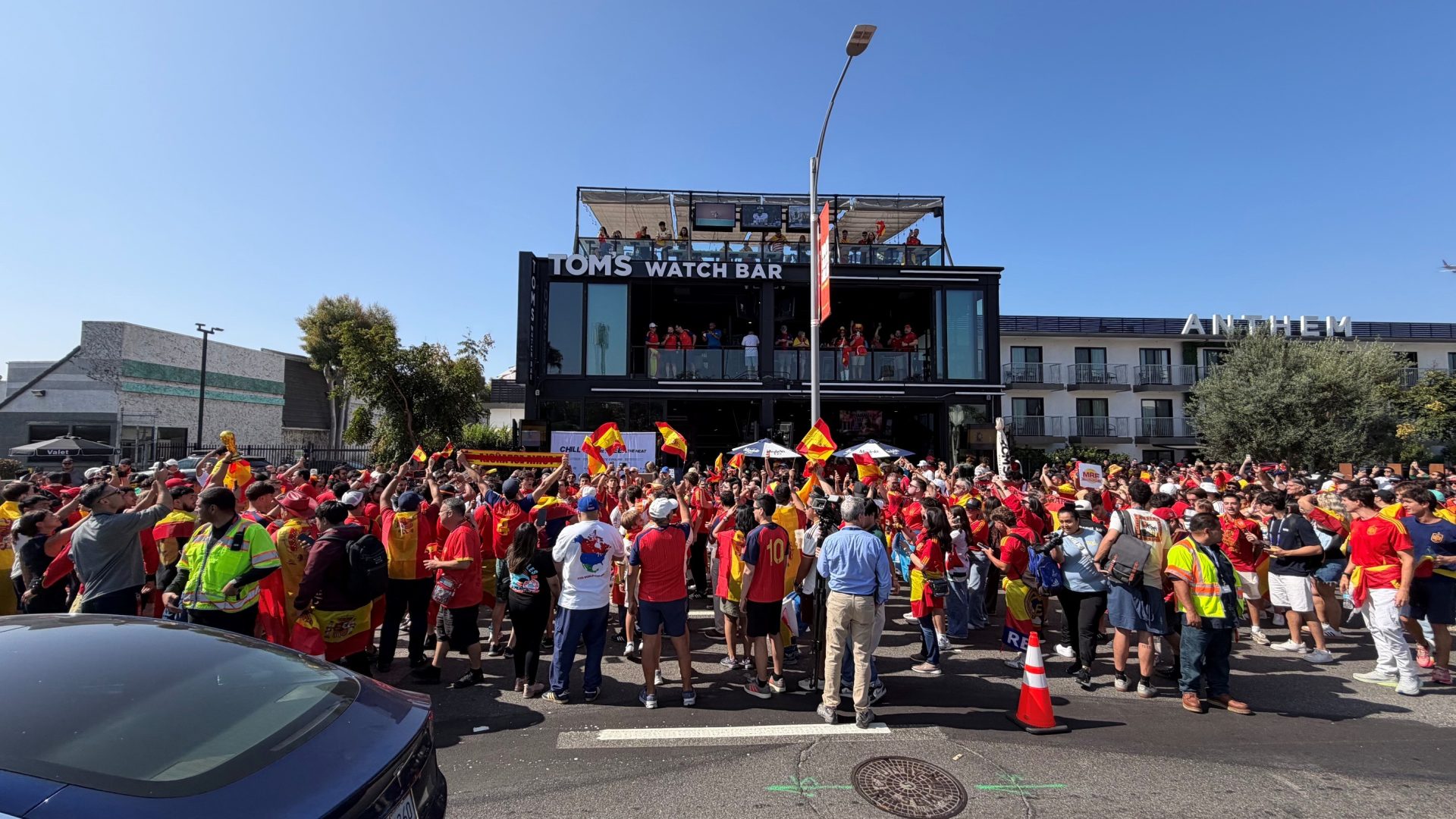
Ahead of the first World Cup matches in June, Tom’s Watch Bar Inglewood reached out to several international fan groups in the area. The 10,000-square-foot sports bar, directly across the street from Los Angeles Stadium, wanted to host an informal kickoff party on one of their behalfs.
Bosnia and Herzegovina supporters accepted the invitation, informing the bar that they expected a few hundred fans to show up. The estimate did not prove accurate.
“Three thousand people ended up coming,” says Brooks Schaden, co-CEO of Tom’s, which has 17 other large-scale locations across the country. “They were spilling into the street. Police had to come out and help contain things.”
It was an early glimpse of the month and a half to follow.
The World Cup’s first full week became the highest-grossing in the company’s 12-year existence, and business continues humming. The Inglewood location brought in more than $160,000 in a single day when the U.S. men’s national team played Australia on June 19; its flagship Denver venue “did roughly $100,000 a day, like five days in a row” later in the month, per Schaden.
Mega sports bar owners and operators across the country tell Front Office Sports a similar story: Their spaces—built to accommodate hundreds or even thousands—have spent nearly every open minute of the past six weeks at capacity, often with lines snaking out the door. They all describe the stretch as the busiest and most exhausting in their histories—but also the most rewarding and, simply, fun.
Marathon and a Sprint
“The 48-team format essentially doubled the amount of action, which made for some very long days for us—especially early on,” says Shane Higgins, GM of Brit’s Pub, a 1,600-person, indoor-outdoor spot in Minneapolis. The venue has shattered sales record after sales record during the tournament: “We’d fill up for one game and then immediately be at capacity again an hour later for the next.”
To satisfy the sustained demand, most operators have adopted some version of the following strategy: Prepare as much as possible, then improvise as needed.
Some of the adjustments are simple, like placing bulk product orders and overstaffing—Higgins says Brit’s Pub roughly tripled its head count for the occasion. But operators have gotten creative, too.
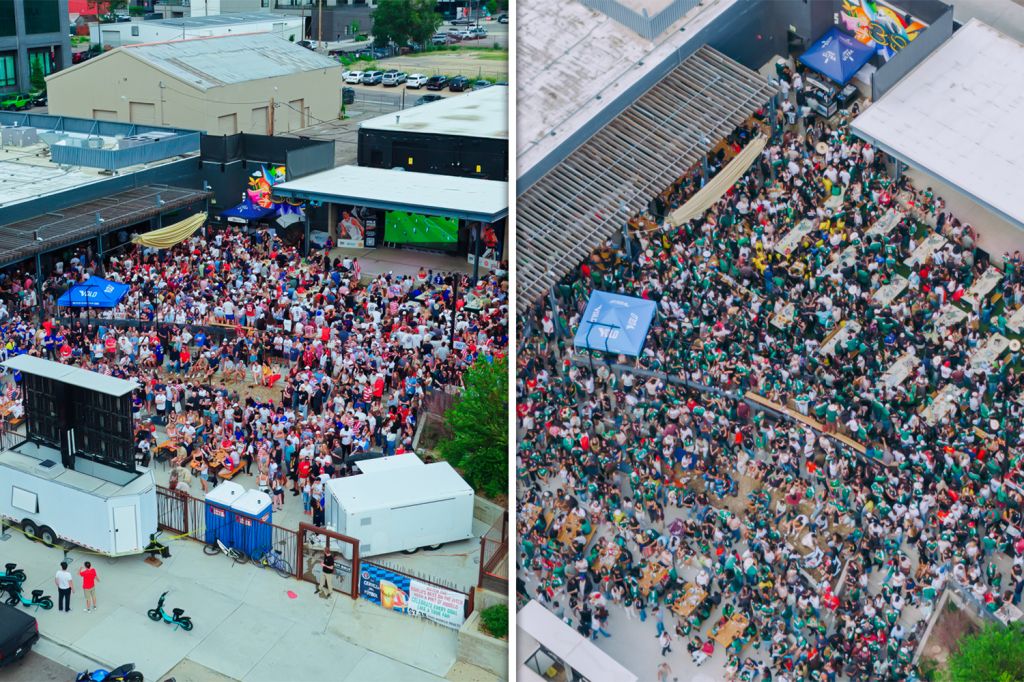
Brit’s Pub and Number Thirty Eight, another 1,000-plus-capacity, partially open-air venue in Denver, each built several temporary auxiliary bars around their properties to keep drink lines manageable. According to cofounder Spencer Fronk, Number Thirty Eight—which has been operating on a “one-in, one-out basis” most days—also hired “drink hawkers like you’d see at a baseball game” to roam its grounds, and it switched standard beer orders from drafts to cans. Both moves dramatically reduce serving time.
Each bar is ad-libbing in its own way. Some managers, like Nate Kazaitis of Franklin Hall, a 500-person watering hole in Washington, D.C., have been doing supplemental alcohol runs at spirits warehouses. (“I’ve got a ton of photos of my Jeep from the last month just loaded down with kegs and cases,” he says.) Others have rented out space at nearby storage facilities to ensure additional inventory is always close at hand.
Regardless of approach, the sprint has required near-constant contact with distributors. Fronk and Schaden tell FOS their respective bars have been placing food, beverage, and dining supply orders daily instead of the standard weekly cadence—sometimes even multiple times per day.
A Different Kind of Crowd
The extra elbow grease is yielding more than just eye-popping cash flow. The real joy, operators say, has been seeing their establishments become bastions of real-life connection.
“My bar typically attracts a lot of Brads and Chads, if you know what I mean,” Kazaitis tells FOS. “But the tournament has brought people in from all walks of life to hang out and enjoy themselves. We’ve gotten a whole lot of first-timers. They’re all bumping into each other, making eye contact, and finding common threads.” Soccer has even inspired D.C.’s power players to mingle with the general public, he adds; Franklin Hall has regularly hosted ambassadors and their embassy staff.
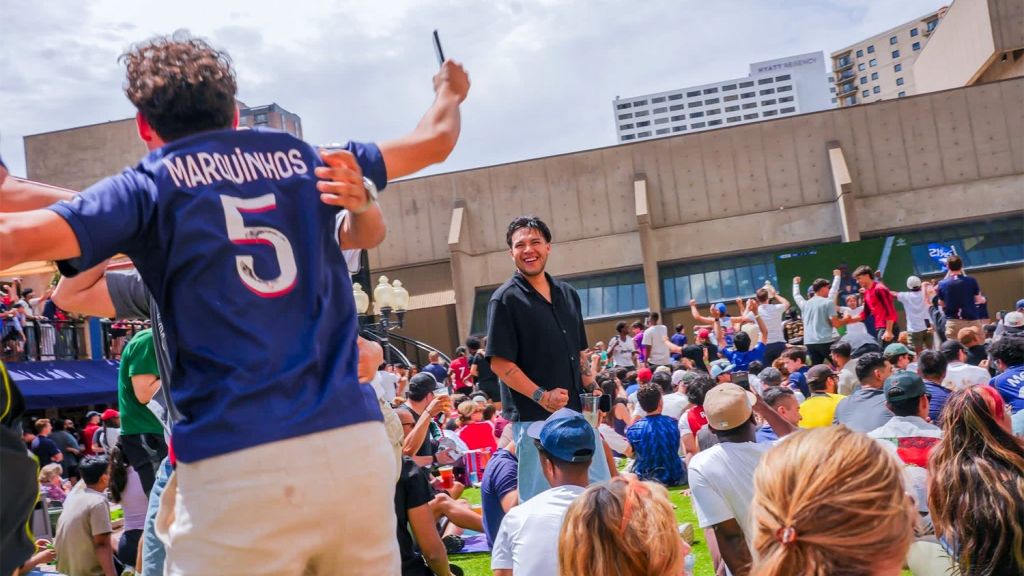
Fronk paints a nearly identical picture of his Denver bar: “Everyone is on their feet and totally engaged with the atmosphere and the games. Nobody’s face is down on their phone.”
Like with Bosnia and Herzegovina at Tom’s Watch Bar, fans of smaller countries that made first-time or otherwise rare appearances in the expanded World Cup are driving some of the largest and liveliest scenes, even well after their teams’ eliminations.
However, operators consistently call out one country’s fan base as the most fun—and spend-happy—of them all: Mexico. “They bring the energy and they really like their Modelo,” Higgins says of El Tri devotees. (They really like their gear, too. Team Mexico’s green home kit is Adidas’s best selling of the tournament by a wide margin.)
The Final Push
While this World Cup’s defining characteristic has been its ability to deliver unprecedented engagement day after day, some still stand out. Proprietors point to June 19 (USMNT-Australia), July 1 (UMSNT–Bosnia and Herzegovina), and July 5 (England-Mexico) as a few of their most demanding days.
Data provided to FOS by Lyft tells a similar story; trips to bars nationwide were roughly 50% above average on June 19, peaking between 1 p.m. and 2 p.m. E.T. just before kickoff of the USMNT-Australia match. On July 1, rides to bars were 34% higher than typical levels. Brit’s Pub, Number Thirty Eight, and Franklin Hall were all included in the rideshare company’s June trend report as some of the most-frequented bars for World Cup watching across the country.
The USMNT’s knockout on July 6 has seldom slowed crowds, which has operators optimistic that first-timers and casual fans will keep coming back after the tournament ends.
The more immediate concern, though, is simply catching their breath. July 8 was the first day without World Cup matches since the tournament began June 11, and it became an unofficial recess of sorts across the hospitality industry, with several venues saying they closed early—or entirely.
Sunday’s final between heavyweights Argentina and Spain is the last hurdle before a true respite. The breather is still temporary, though: College football and the NFL’s return in late August will again bring big crowds and big revenue.
But for all the exhaustion, the stretch has also been invigorating. “We opened up in October 2020 during the height of COVID,” says Fronk of Number Thirty Eight. “To see our vision—a place for large groups of different backgrounds to come together—now at its peak five years down the line, it’s just been incredible.”
Download the FOS App
The business of sports, in your pocket.



Scan the QR code to get the app now.