Want more from Front Office Sports
in your search results?
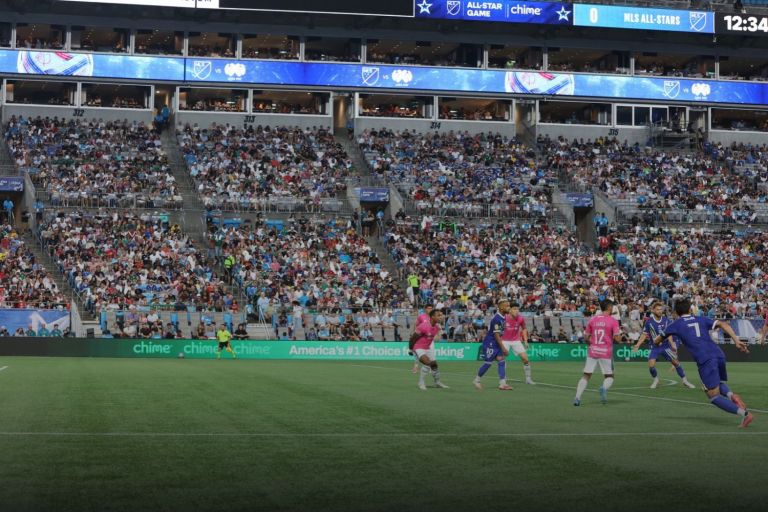
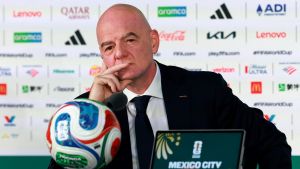
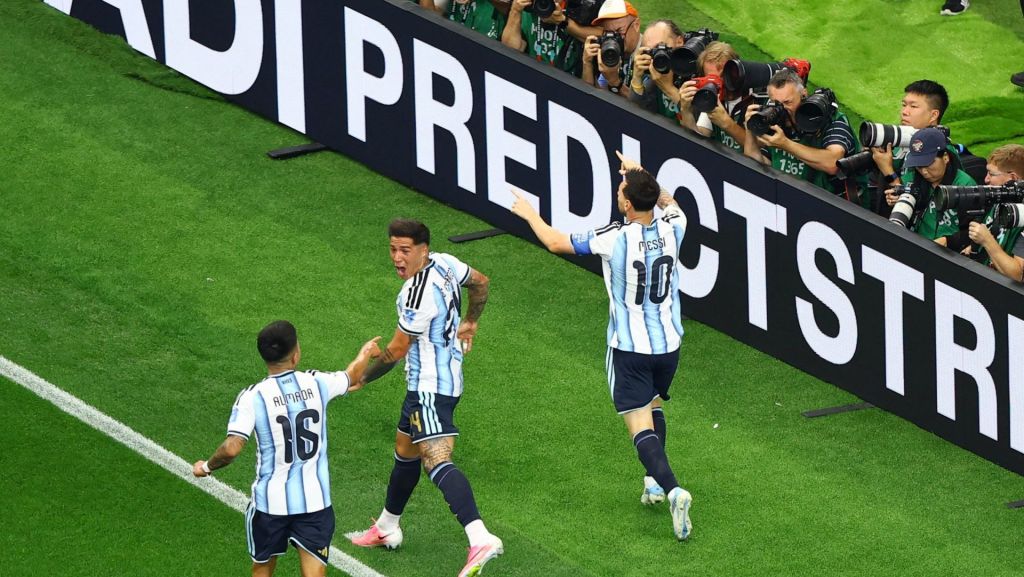
The logo appears behind every player and coach’s head when they talk to the media. It surrounds the pitch during matches, fully visible on TV. It’s on the jumbotron before matches, asking fans to guess which team will win, and appears in ads on the FIFA website.
ADI Predictstreet is everywhere at the World Cup.
The official FIFA sponsor is an obscure prediction market out of Abu Dhabi built on a relatively new blockchain and created just in time for the soccer tournament. Unlike Kalshi and Polymarket, which see huge volumes of money bet on sports, ADI Predictstreet wasn’t licensed to operate in the United States and didn’t have any existing deals with major sports leagues when its FIFA partnership was announced in April.
Almost two weeks into the World Cup, ADI Predictstreet is up and running, but it’s doing nowhere near the same business as Kalshi and Polymarket.
On Tuesday, the amount of money ADI Predictstreet said had been traded on the platform varied wildly. It said around $400,000 had been traded on the winner of Mexico’s Group A. On the other end of the spectrum, $13 had been traded on Algeria–Austria, and $17 on Croatia–Ghana.
Around $57,000 has been traded on the tournament winner, the platform’s website says.
Those numbers pale in comparison to the prediction-market giants. On the World Cup winner alone, close to $3 billion has been traded on Polymarket, and around $500 million on Kalshi.
Millions have been placed on individual markets on Polymarket, the company says, as well as more than $28 million on the winner of the Golden Boot award. A spokesperson for Polymarket did not specify total trading volume, instead just saying it’s over the $3 billion winner figure.
Kalshi also has several matches with millions traded on them. The company said on Monday that total trading volume on the platform for the World Cup is about $6.7 billion, and a Bank of America note, also from Monday, estimated that Kalshi will have $12 billion to $13 billion in total volume by the time the tournament ends.
ADI Expansion
A spokesperson for ADI Predictstreet tells Front Office Sports that the company, which is only regulated in Gibraltar, is “expanding access through a series of strategic partnerships.” One of those deals is with Fanatics, and last month the two companies announced a co-branded “World Cup Hub” that operates in 23 U.S. States. It’s also made deals with Matchbook and DAZN that it says allows it to expand elsewhere.
But in the case of Fanatics, that deal is just promotional, and doesn’t actually allow ADI Predictstreet to offer its markets in the U.S. The prediction markets on the Fanatics platform are instead from Crypto.com.
As of Tuesday afternoon, the ADI Predictstreet market on the Group A winner market was still open, even though Mexico clinched the group last week. Around $70,000 had been traded on the market from Monday to Tuesday, and the market isn’t set to close for a full week after Mexico already won the group. These markets are already closed on Kalshi and Polymarket. Kalshi also closed the market for Group D, which the U.S. won on Friday, though Polymarket and ADI Predictstreet have not. Neither company immediately responded to questions about those markets being open.
A spokesperson for ADI Predictstreet declined to answer a series of questions about its platform and total trading volume, instead providing a statement about its partnerships with Fanatics, Matchbook, and DAZN.
“The platform operates within established regulatory frameworks and is taking a disciplined, jurisdiction-by-jurisdiction approach to market expansion,” the spokesperson said. “These partnerships reflect ADI Predictstreet’s broader strategy of introducing prediction market experiences through trusted brands, highly engaged communities, and globally significant sporting events.”
ADI partner Fanatics doesn’t show the total volume for each market, instead providing the amount traded on certain outcomes at different price points. A Fanatics spokesperson declined to share total trading volume for the tournament.
Upside for FIFA
Even without official FIFA sponsorships, Polymarket and Kalshi are winning the World Cup prediction-markets battle.
Though ADI Predicstreet appears to be getting thoroughly routed by the existing prediction-market giants, it’s not for a lack of trying or brand visibility. You can see its diamond logo in the background of Lionel Messi’s Instagram posts. The company has deployed creators to fill its social media pages with World Cup content, including a video trying to spot its logos at a match. Before Monday night’s Norway–Senegal match in New Jersey, the in-stadium host asked fans to scan QR codes to predict the winner with ADI Predictstreet.
Not all countries are on board. Regulators in Germany are investigating whether ADI Predictstreet and its marketing at the World Cup violate the country’s illegal gambling laws.
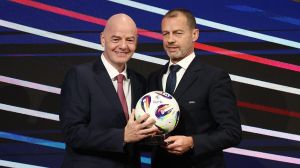
For FIFA, ADI Predictstreet strengthens financial ties to the United Arab Emirates and Abu Dhabi, which has hosted the Club World Cup five times under FIFA president Gianni Infantino.
ADI Predictstreet is under the umbrella companies of Sheikh Tahnoon bin Zayed al Nahyan, who is the brother of UAE’s president and the ruler of Abu Dhabi, the country’s national security advisor, and has a business empire of more than $1.3 trillion. Other Gulf states like Qatar and Saudi Arabia have been key financial partners and World Cup hosts for Infantino’s FIFA, and some experts view the ADI Predictstreet deal as Infantino trying to forge another alliance with a wealthy petrostate.
Without a deal, Kalshi calls the tournament the “World Soccer Cup,” though Polymarket calls it the “2026 FIFA World Cup.” A FIFA spokesperson did not immediately respond when asked if this is a violation of the tournament’s strict branding rules.
Download the FOS App
The business of sports, in your pocket.


Scan the QR code to get the app now.