Want more from Front Office Sports
in your search results?
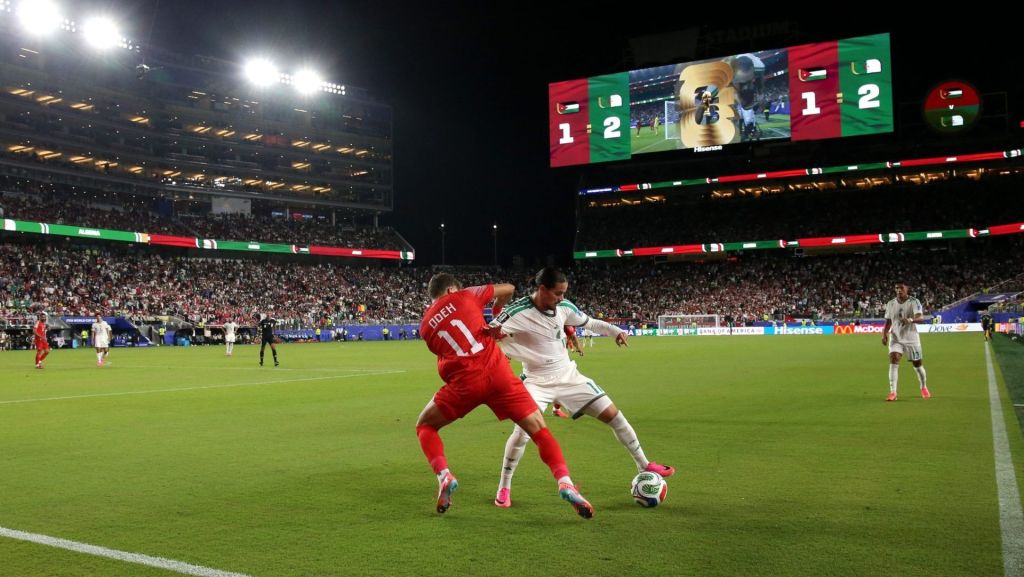
Federal agencies have seized more than 300 drones near FIFA World Cup sites across the U.S. since the tournament began on June 11, the Transportation Security Administration (TSA) confirmed to Front Office Sports on Tuesday.
“The federal government, led by the White House Task Force, and in partnership with FBI, DHS/TSA, FAA, and state/local law enforcement have implemented the most comprehensive airspace security and drone mitigation effort in U.S. history for the FIFA World Cup 2026,” a TSA spokesperson said in a statement to FOS. “Enforcement is swift and proactive.”
On match days, all aircraft, including drones, are prohibited within three nautical miles of stadiums and up to 3,000 feet above ground unless specifically authorized by air traffic control.
From June 11 to June 16, the Department of Homeland Security recorded 145 drone incursions across eight host cities, according to Politico. The initial count covered Atlanta, Dallas, Houston, Kansas City, Boston, Seattle, San Francisco, and Philadelphia. It did not include activity in Miami, Los Angeles, or New Jersey.
FOS obtained updated figures from FBI offices in Newark, Seattle, Dallas, and Los Angeles, which reported seven drones seized near MetLife Stadium, 16 during Seattle’s first two matches, 50 around Arlington’s AT&T Stadium and the Dallas fan festival, and 34 across Los Angeles since the tournament began.
Federal officials have not yet released a full city-by-city breakdown of the more than 300 seizures or revealed how many operators have been arrested or charged in total. There has also been no indication of whether the drones seized were carrying weapons or connected to planned attacks.
Still, officials have warned that even recreational drones can threaten players and fans, or interfere with aircraft operations near crowded stadiums.
“Every one of those had the potential not just to be enthusiasts, but every single one of those has the potential to be a terrorist act, too,” Homeland Security Secretary Markwayne Mullin said during an appearance on Newsmax last week.
Pilots who enter restricted World Cup airspace without authorization can face fines of up to $100,000, confiscation of their aircraft, and possible prison time, according to the Federal Aviation Administration.
The restrictions and seizures are an early test of the $250 million the federal government distributed for counter-drone security before the tournament. The Federal Emergency Management Agency awarded the funding to 11 World Cup host states and Washington, D.C., for equipment, software, and training used to detect, track, and disable unauthorized drones.
“On the counter-drone measures, everybody’s a little behind,” Mullin said before the tournament began. “Drones are my biggest concern.”
Download the FOS App
The business of sports, in your pocket.



Scan the QR code to get the app now.