Want more from Front Office Sports
in your search results?
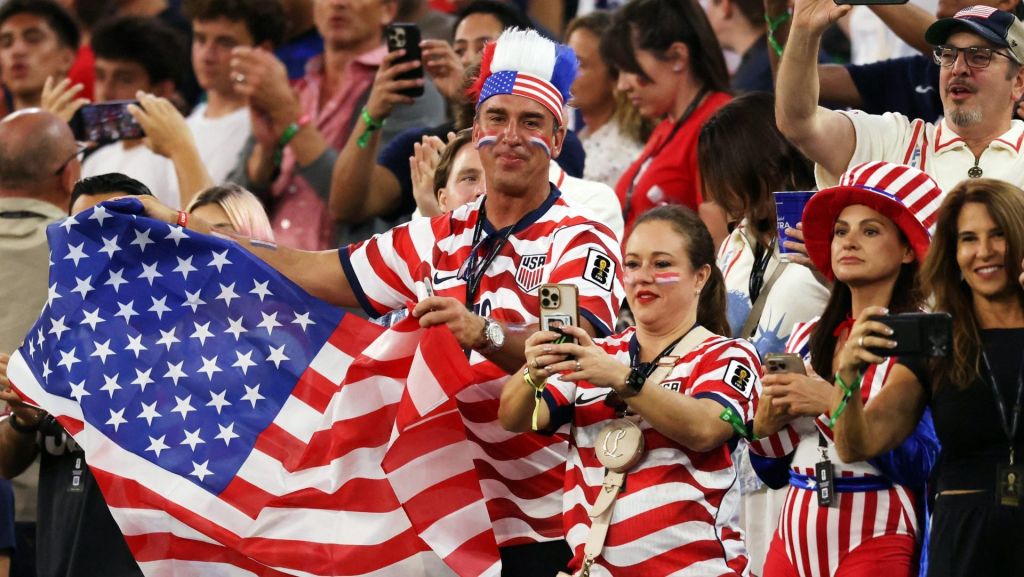
A giant American flag belonging to American Outlaws—the largest of three official supporters groups for the U.S. men’s and women’s national soccer teams—has been displayed inside venues at four World Cups.
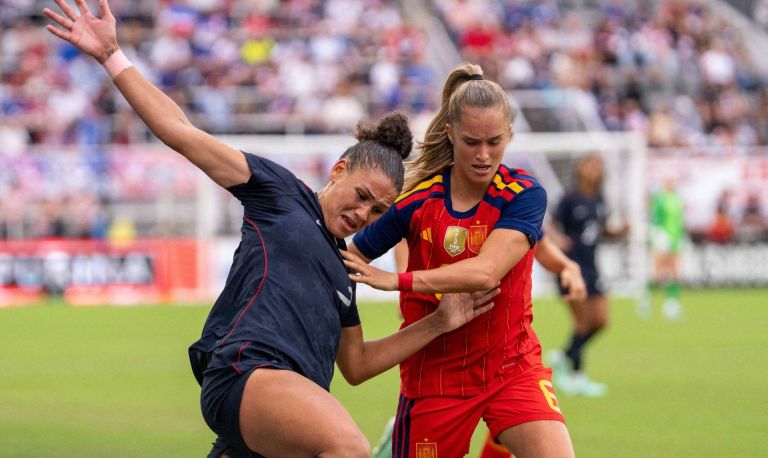
Last week, however, it wasn’t allowed into Los Angeles Stadium (temporarily renamed from SoFi Stadium) for the U.S. Men’s National Team’s World Cup opener against Paraguay, which it won in dominant fashion before a sold-out crowd of approximately 70,000.
“We submitted the flag for approval by FIFA, and it was denied for its size,” says Whitney Zaleski, operations manager for American Outlaws. “We’ve resubmitted it for approval for [the USMNT’s] next game in Seattle this Friday. It seems like it comes down to both FIFA and the stadium itself … things are kind of changing all the time.”
The rejected flag is one of several frustrations that U.S. fan-group leaders tell Front Office Sports they’ve encountered before the World Cup and during its opening week.
Their complaints are primarily tied to layers of approval from FIFA, stadium operators, security personnel, and U.S. Soccer. What they see as opaque, labyrinthine policies and procedures have left the American Outlaws and other fan groups confused about who is making the decisions—and a growing sense among U.S. supporters that they’re being pushed to the margins.
“It’s on our own soil, so we thought [the experience] was going to be bigger and better at home,” Zaleski says.
While American Outlaws’ oversized flag was denied entry to Los Angeles Stadium altogether, another official U.S. Soccer supporters group, Sammers SC, encountered different challenges. Board member Craig Hahn says the group’s smaller flag was approved but could not be displayed in its usual fashion—hung over a railing at the base of a seating section—because of restrictions surrounding advertising signage.
Sammers SC also spent several hours trying to get its drum into the stadium despite receiving prior approval. “We had the FIFA paperwork, but then stadium security itself said no,” says Hahn. “There’s some kind of disconnect between what FIFA says and what the stadiums are actually doing.”
Beyond the difficulty with celebration rituals, however, one of the most visible issues for supporters groups specifically has been where their ranks can sit. Instead of having dedicated sections in high-visibility areas such as behind the goal—a common setup in international soccer—members of U.S. supporters groups are largely dispersed across the nosebleeds due to a complicated ticketing process.
“We were spread out in the 300-level,” says American Outlaws’ chapter management lead, Trevin Wurm, of the USMNT’s first match in L.A. on June 12. “A lot of countries do have supporters behind the goal. But for the U.S., our sections are mostly up in the 300 or 400-levels, depending on the stadium.”
Late last year, following backlash over high World Cup ticket prices and limited availability of affordable tickets, FIFA made a small number of additional $60 tickets available for fans of each country through what it called the “Supporter Entry Tier.” The low-cost tickets were limited to roughly 500 seats per participating team, per match—and members of official supporters groups were supposed to have priority access.
However, the rollout of these tickets did not go as planned. Wurm says the “whole allocation process was murky,” adding that many people in his group didn’t even know where their tickets were going to be until a couple of weeks before kickoff. The scattered arrangement, he argues, comes at a cost: “[Our group] not being together cuts down on our ability to push the players.”
Gerald Foston, president of Sammers SC, places some additional blame on U.S. Soccer and its “Insiders” loyalty program, which directed fans to apply for the discounted tickets via unique links and codes that did not pan out. (Most supporters group members are also U.S. Soccer Insiders because the program promises to deliver extra exclusive benefits.)
“We are not happy with U.S. Soccer,” says Foston. “We have people who are higher-up ‘Insiders’ members. They pay $4,000 or $5,000 a year and they got zero tickets.”
U.S. Soccer did not respond to a request for comment.
Still, the USMNT’s 4–1 victory over Paraguay “really gave people something to get excited about,” says American Outlaws’ Zaleski, who added that the group drew “several thousand fans” to its pregame festivities around L.A. last Friday.
Supporters are particularly optimistic about the USMNT’s next group-stage matchup against Australia. Hahn of Sammers SC says he expects Seattle Stadium “may be more lenient” given the city’s reputation as a U.S. soccer hub.
After the final whistle blows in July, Foston says the official U.S. supporters groups, which also include Barra 76, will likely hold a post-mortem to discuss their experiences and potentially reach out to U.S. Soccer with ideas for improvements moving forward.
For now, U.S. supporters are trying their best to focus on enjoying a World Cup they waited decades to host. “As big as FIFA tries to make themselves,” Wurm says, “they’re still not bigger than the World Cup.”
Download the FOS App
The business of sports, in your pocket.



Scan the QR code to get the app now.