Want more from Front Office Sports
in your search results?
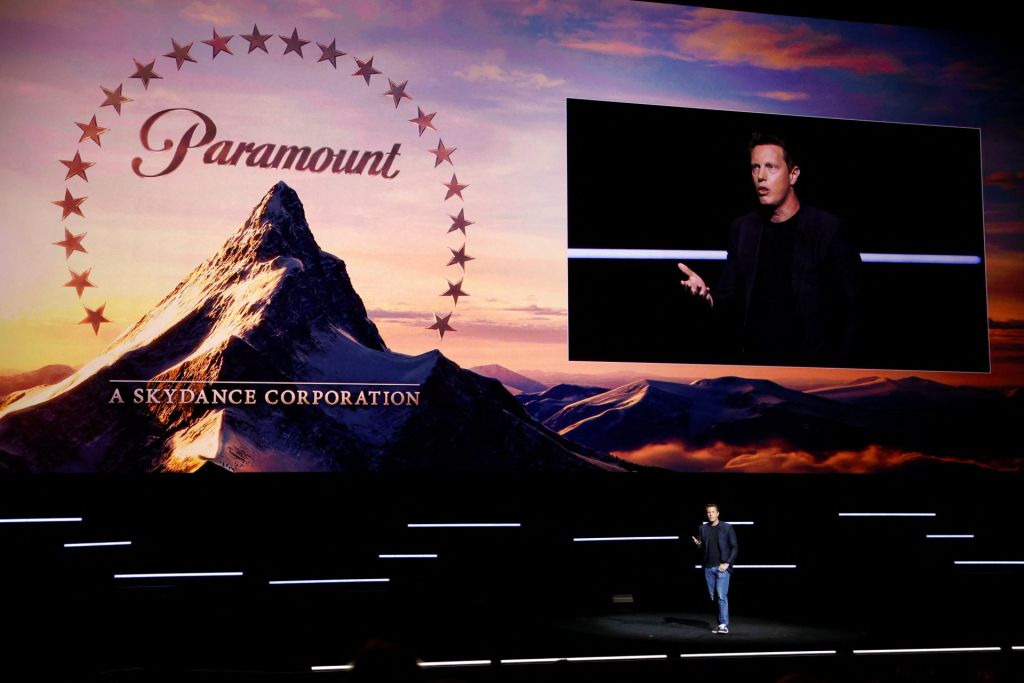
Amid mounting obstacles and delays to a planned $110 billion takeover of Warner Bros. Discovery, CBS Sports parent company Paramount is still growing more defiant that it can—and should—close the deal.
After Paramount agreed late last month to an elongated schedule for the media megadeal as it fights an antitrust challenge from 12 states, company CEO David Ellison attacked the plaintiffs in a New York Times op-ed.
More specifically, Ellison claimed the complaint from the dozen states is not really about an illegal concentration of Hollywood market share, as they allege, but rather Paramount’s planned ownership of WBD’s CNN.
“I believe this fight is not really about market share,” Ellison wrote in the piece published Tuesday. “If it were, it wouldn’t have been reviewed and approved by regulators reflecting 65 countries, including the United States and China, as well as the European Union. I believe a plainer worry sits beneath the briefs and the news releases: the news. The issue is whether I can be trusted as a steward of Warner’s CNN. There has been speculation about my politics, my loyalties, my intentions.”
Furthering that speculation is the repeated criticism of CNN by U.S. President Donald Trump, who has a close relationship with Ellison. Trump isn’t mentioned in the op-ed, but Ellison insists that the news network, along with Paramount’s existing CBS News, would operate free from his influence. Notably, the arrival of CBS News editor Bari Weiss under Paramount, and the subsequent upheaval at that outlet, are also not discussed in Ellison’s op-ed.
“Great news organizations like CNN and CBS News are here to tell it straight down the middle,” Eillson wrote. “That requires newsrooms that reflect the whole world, not one side of it. And it requires independence.”
Later Tuesday, Paramount continued on many of the same themes as the company reported its second-quarter earnings.
“We fully expect the transaction to close and remain focused on preparing for a successful combination once it is complete,” Ellison said in a letter to shareholders. “The claims in the pending antitrust litigation do not reflect the realities of today’s highly competitive entertainment marketplace.”
While the legal case focuses primarily on the potential Hollywood-related impacts of the deal, and an alleged violation of federal antitrust law, the Paramount-WBD agreement also has far-reaching sports impacts. The planned combination of TNT Sports and CBS Sports would have touchpoints in nearly every major pro and college sports entity in the U.S., with the notable exception of the NBA.
Paramount, meanwhile, has agreed to delay closing on the WBD acquisition until after the states’ antitrust case is heard, or by June 2027—whichever comes first. On Tuesday, a U.S. District Court judge set the trial to begin on March 2, 2027, far later than the November timing Paramount had been hoping for to begin the proceedings.
That timing will be expensive for Paramount: The company is on the hook to pay WBD shareholders about $650 million for each quarter that the deal is not complete, beginning Oct. 1.
Broader Results
Paramount said late Tuesday that it generated $6.91 billion in revenue for the second quarter, up 1% from the same period a year ago, and net income of $41 million, down 28%. Erosion in the company’s linear TV operations cut into the company’s earnings.
Paramount, however, pointed to growth in other parts of the business, including a 6% year-over-year lift in Paramount+ subscribers to a worldwide count of 81.6 million.
Ellison also touted the ongoing success of UFC on Paramount platforms, particularly Paramount+, including the U.S. reach figure of 17 million who watched UFC Freedom 250 in June.
“Our seven-year UFC media rights agreement brought every UFC event to Paramount+ beginning this year, and within just a few months, has delivered some of the platform’s biggest audiences ever,” Ellison wrote in the shareholder letter. “It’s a powerful validation of what we’ve long believed: premium live sports improve engagement, strengthen retention, and increase the value of our service for subscribers.”
Download the FOS App
The business of sports, in your pocket.



Scan the QR code to get the app now.