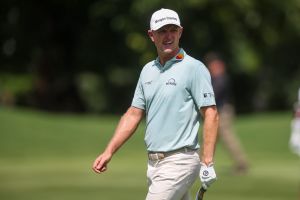
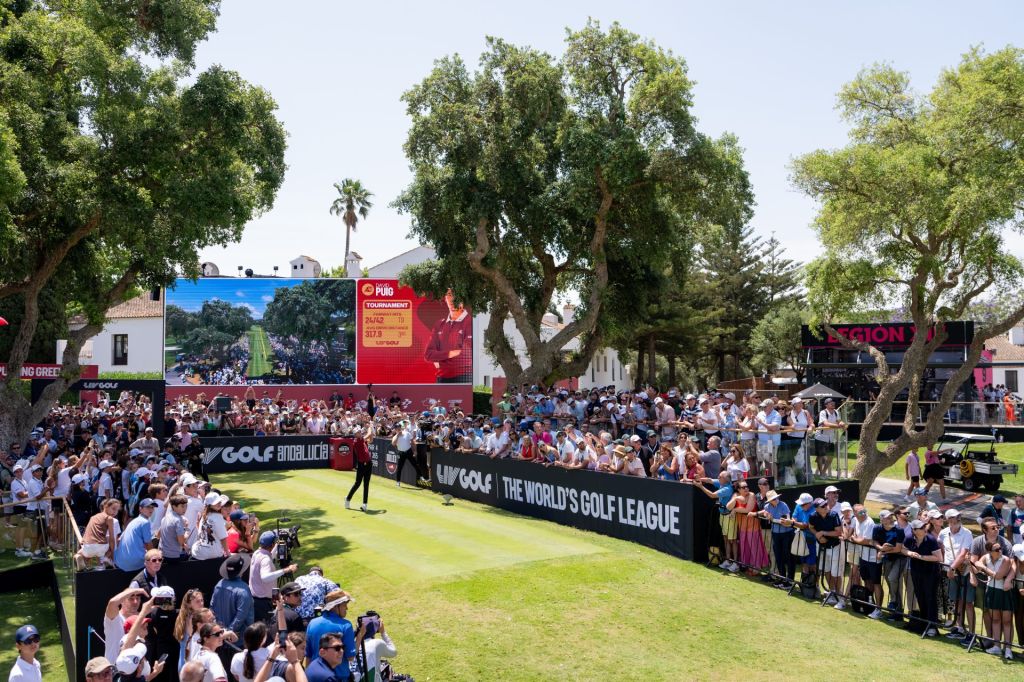
After Tyrrell Hatton defeated LIV Golf teammate Jon Rahm by two strokes in Spain on Sunday to win another $4 million, the league now has 47 days until its next scheduled tournament.
As that unintended summer break—due to LIV canceling its New Orleans event in April—approaches, there is a growing sentiment among those in and around LIV that the funding from Saudi PIF could dry up even earlier than expected, multiple sources told Front Office Sports.
The PIF, which has spent more than $6 billion on LIV since 2022, announced in April that it had “made the decision to fund LIV Golf only for the remainder of the 2026 season.” But now questions are mounting about the viability of the four remaining events—beginning with LIV Golf U.K., July 23-26, followed by three tournaments in the U.S.
“Every remaining tournament is on the fence,” a high-ranking executive at one of LIV’s major league-level partners told FOS.
That uncertainty is shared by many sources inside LIV and with close ties to the league who spoke to FOS.
“I truly don’t think anyone knows,” the executive said. “LIV Golf doesn’t know if or when the PIF will shut off the spigot.”
While exact details of the PIF’s remaining financial commitment to LIV are not public, one high-level league source told FOS LIV receives its funding from the PIF on a monthly basis. LIV is still operating under the assumption that those payments will continue for the remainder of the season, the source said.
“We continue to see strong momentum both on and off the course,” LIV CEO Scott O’Neil said in a statement to FOS. “We’ve begun sharing our business plan with prospective partners who recognize the opportunity in team golf on a global scale.”
LIV is searching for new investors, hired two new independent board directors, and brought on U.S.-based Ducera Partners as its investment banking adviser.
Amid the uncertainty, LIV says it has seen some year-over-year Q1 revenue increases in ticketing (+129%) and sponsorship (+40%), although exact figures are not available.
“Our business plan reflects a foundation built for long-term franchise value: a global sports platform with meaningful commercial traction, world-class team golf, and elite competition,” O’Neil said. “The plan introduces a disciplined path to profitability that we believe creates significant value for the right long-term partners.”
A New Mindset
Since the PIF’s decision to end its funding, though, LIV’s framework has been changing in real time.
Travel expenses are coming under a tighter microscope, multiple sources told FOS.
The move is part of LIV’s transition to a more “disciplined and sustainable business,” another source with knowledge of the league’s operations told FOS. In some cases, travel for certain employees that previously hit the road on a regular basis is no longer being considered essential, according to the source.
Additionally, LIV decided to end its “Any Shot, Any Time” feature in the league’s app last month. The company that was providing that technology, Mobii, had not been paid for months, a source previously told Sports Illustrated.
Out of the four remaining events, LIV Golf New York at Trump National Golf Club Bedminster Aug. 6-9 seems to be the safest bet to not be impacted by any further PIF funding decisions, sources believe, given President Donald Trump’s close ties to Saudi Arabia. LIV Golf Virginia was played at Trump National Golf Club, Washington, D.C. last month.
LIV’s regular season finale in Indianapolis Aug. 20-23 and its $40 million team championship in Michigan Aug. 27-30 have more stakeholders worried. Those tournaments don’t have the luxury of being affiliated with Trump or as strong financial backing from local governments as some of LIV’s international events do.
“I don’t think they’ll ever get to Michigan,” a prominent person in the golf industry with professional ties to both LIV and PGA Tour players told FOS.
LIV 2.0 Coming Into Focus
Many insiders are expecting to hear more news about LIV’s future during the upcoming nearly seven-week break. However, LIV sources would not guarantee any public announcements will be made.
The final two majors of the year, the U.S. Open and Open Championship, will be played within that timespan, which should serve as a key opportunity for LIV CEO Scott O’Neil and the league’s new board members to continue pitching LIV 2.0 to investors.
LIV has reached out to hundreds of prospective investors, a source told FOS, with those interested in moving forward signing non-disclosure agreements and getting a peek inside LIV’s financial outlook. More virtual meetings are expected over the next several weeks before in-person meetings take place and ultimately any bid process plays out.
LIV’s next iteration is trending toward having an even bigger focus on the team aspect, according to a pitch deck that has been circulating to potential investors.
Proposals for a 2027 schedule include 10 events—five “team majors” in markets LIV has had its most success like Australia and South Africa and five predominantly U.S.-based “team signature events” timed ahead of individual major championships, according to sources.
LIV also has ambitions to scale eight to 10 national opens in order to provide more opportunities around individual players to receive Official World Golf Ranking points, which LIV events began receiving this year.
Prize money at future LIV events will drop significantly from the $32.3 million purses events have paid out this year, which was an increase over the $25 million purses at LIV events from 2022-2025.
While no exact figures have been decided, purses are still expected to be higher than those on the DP World Tour, many of which are around $3 million to $4 million, with some premier events paying $9 million to $10 million.
LIV’s purses will likely be lower than the PGA Tour’s $20 million signature events, but potentially higher than non-signature events, which are around $9 million.
LIV executives in January said they envisioned the league one day having 13 $1 billion franchises. More recently, LIV had been pitching potential investors on buying into teams at a $300 million valuation.
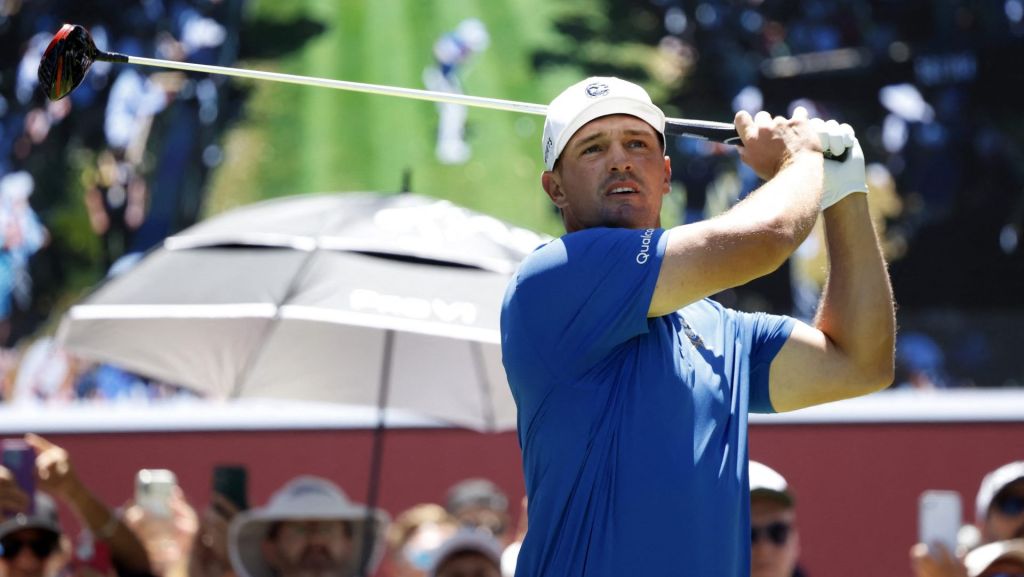
“There’s a couple ideas that we have—quite a few ideas that we have that could be interesting,” Bryson DeChambeau said last month. “We’ll see if investors like it or not.” After the first round at LIV Golf Andalucía Thursday, DeChambeau said, “We get the top co right and we get what we’re doing on the top side right, I think the momentum could be endless for us.”
In the meantime, DeChambeau and Jon Rahm remain the two biggest chess pieces for LIV in its fight for survival.
DeChambeau’s LIV contract is expiring after this season, and he has said he could opt to not play on any tour full-time and instead focus on content creation and playing the four major championships.
Rahm on Tuesday said he was not interested in going out of his way to help LIV find new investors. Multiple sources told FOS they believe Rahm is waiting—maybe even hoping for—LIV to miss a paycheck or file for bankruptcy so that he can exit his contract, which one source told FOS runs through 2029.
During LIV’s summer break, Rahm and DeChambeau will each be seeking their third major championship title before their league returns to action.
What LIV looks like when they and the rest of the league returns July 23 at JCB Golf & Country Club in England remains to be seen.