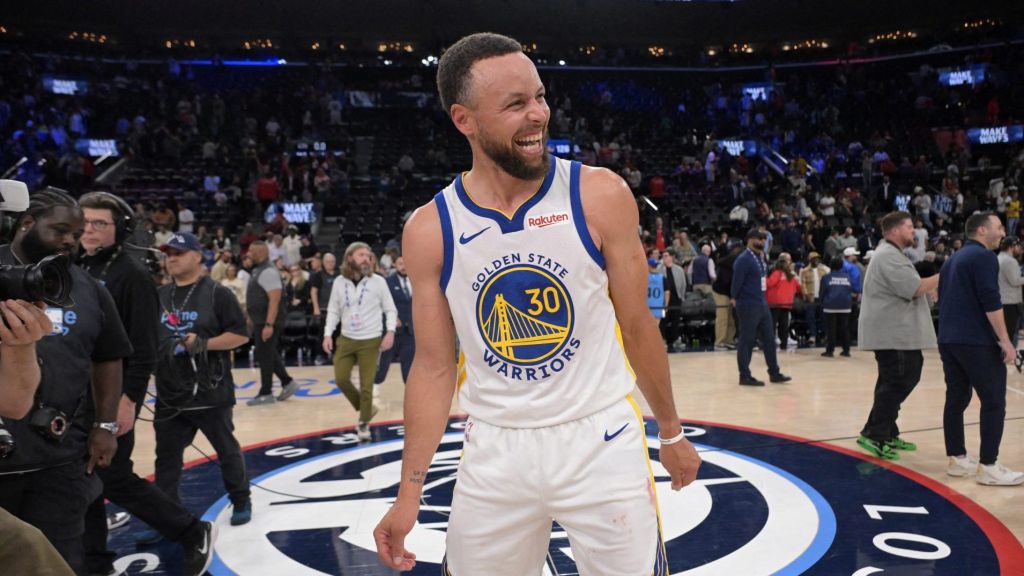
Steph Curry is still chasing the kind of standalone empire Michael Jordan built at Nike. The sneaker company he just signed with, China’s Li-Ning, is chasing something, too: a place among the world’s biggest sportswear brands.
Curry’s long-term deal with Li-Ning, announced Monday, comes a little over six months since the two-time NBA MVP left Under Armour following a 12-year run, something Under Armour is selling to shareholders as part of a broader sports reset.
That the four-time NBA champion would sign with a Chinese sneaker company over well-known U.S. giants like Nike or Adidas seems stunning, but experts are unsurprised.
“I was not shocked,” Telsey Advisory Group analyst Cristina Fernández tells Front Office Sports. “I thought one of the two Chinese brands—Li-Ning or Anta—would be most likely. Li-Ning was probably willing to offer a lot of money and other things Curry wanted.”
Fernández, who has covered Under Armour for years, has a strong sense of what Curry sought to build at Under Armour. “His vision was for the brand to become bigger than it ever did, have stores, and sign other athletes—things Under Armour talked about, but never really did.”
“Curry Brand seems like it was modeled after Jordan Brand,” she tells FOS. “The challenge is that Jordan Brand is a once-in-a-lifetime opportunity. It’s not going to happen again to that scale.”
Curry retained his intellectual property as part of his Under Armour breakup, meaning he’s bringing Curry Brand with him to Li-Ning. But the level of global success for Jordan Brand—which is owned by Nike—is a high bar to clear. In 2025, more than two decades after Jordan retired from the NBA for the second time, Jordan Brand alone generated revenue of almost $7.3 billion—that’s more than Under Armour’s full-year 2025 revenue of $5 billion.
Curry doesn’t need to hit the same heights to be a success. He can build a lasting legacy by helping Li-Ning gain global prominence. The company, formed in 1990 by former Chinese gymnast Li Ning—who won three Olympic gold medals in 1984—has made clear that increasing its brand awareness is a focus. By corralling Curry, the company bolstered a growing roster of well-known NBA athletes that also includes Dwyane Wade, CJ McCollum, and Curry’s Warriors teammate Jimmy Butler.
Simeon Siegel of Guggenheim Partners tells FOS that while analysts would like to believe that big deals like this are being driven by “very specific shoe sales,” there is a “brand halo dynamic of a high-profile signing.”
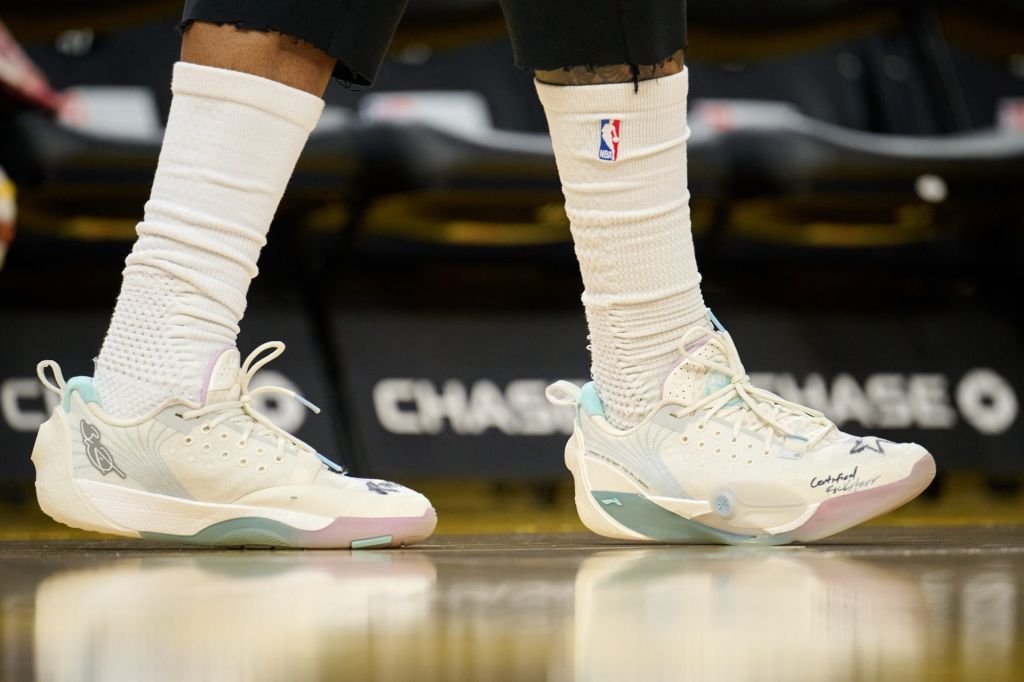
The partnership will include basketball and golf shoes and apparel. Matt Powell, a footwear and retail industry expert who heads consulting firm Spurwink River, tells FOS the sportswear piece “could be bigger than the basketball piece.”
“That’s where the money is, frankly,” he says.
The plan is to launch Curry Brand stores in the U.S. and China, Curry said in a letter he posted about the deal, something Li-Ning says it can do because a 2022 U.S.Customs and Border Protection restriction on the import of the company’s products “is no longer in effect.” That restriction was placed on Li-Ning products over claims that illegal North Korean labor was used as part of the supply chain. A Li-Ning spokesperson tells FOS the CBP action has not been in effect since March 14, 2025, and the company’s “goods are no longer subject to detention.”
A representative for CBP told FOS Tuesday it could not immediately confirm whether the restriction had been lifted.
Li-Ning products are not currently available online at U.S. retailers like Dick’s Sporting Goods, Foot Locker, Hibbett Sports, and Finish Line. They can be purchased online, primarily through the Way of Wade website that’s part of the company’s partnership with the former Heat star.
That helps explain why Li-Ning remains overwhelmingly dependent on its home market. Close to 99% of its total 2025 revenue of $4.2 billion (28.7 billion renminbi) came from China, and 49.5% of the revenue was from footwear. “They are credible players, and in China they have become real competitors to Nike, Adidas, and others,” Fernández says.
Li-Ning shares popped after the news was announced Monday evening, but have since settled down.
Li-Ning Paid What?
The terms of Curry’s deal were not disclosed. Local Chinese media has reported the agreement is worth $300 million over 10 years, or $30 million annually—a source tells FOS the actual amount is significantly higher than that.
While specific terms of sneaker deals are not typically disclosed, experts say even the $300 million figure would be high.
“Yikes,” Powell tells FOS. “That would be an extremely rich deal.”
A representative for Curry declined to comment on the terms of the deal, and representatives for Li-Ning did not respond to requests for comment.
Powell tells FOS that most sneaker deals, even for top athletes like LeBron James, don’t necessarily earn companies money. “But that’s a business decision,” he says. “Here, maybe Li-Ning wants to get a stake in the ground in the U.S. market, and they see a proven athlete.”
It will be an uphill climb for Li-Ning to make money on the deal, according to Morningstar analyst Ivan Su. While $300 million over 10 years equates to $30 million a year, “the true economics are more demanding than the headline implies,” Su wrote in a research note. Morningstar estimates that in total, annual cost—including base compensation, royalties, and marketing support—could reach $60 million, or roughly 14% of Li-Ning’s 2025 net profit of about $445 million.
“This means Li-Ning could need $360 million in additional basketball revenue to break even,” Su wrote. He said that equates to roughly three million pairs of shoes sold each year at an average of $70 apiece. Su noted that Anta, which is a bigger company than Li-Ning with 2025 revenue of almost $12 billion—or $7 billion more than Li-Ning—has averaged selling just one million pairs at $50 each annually since 2014.
“Li Ning therefore needs Curry to deliver about three times the volume, at a higher price point, simply to break even,” Su said.