Want more from Front Office Sports
in your search results?
The Trump administration has been supportive of prediction markets, but the president himself threw some cold water on the industry after a U.S. soldier was indicted for using inside information to make more than $400,000 trading on Polymarket.
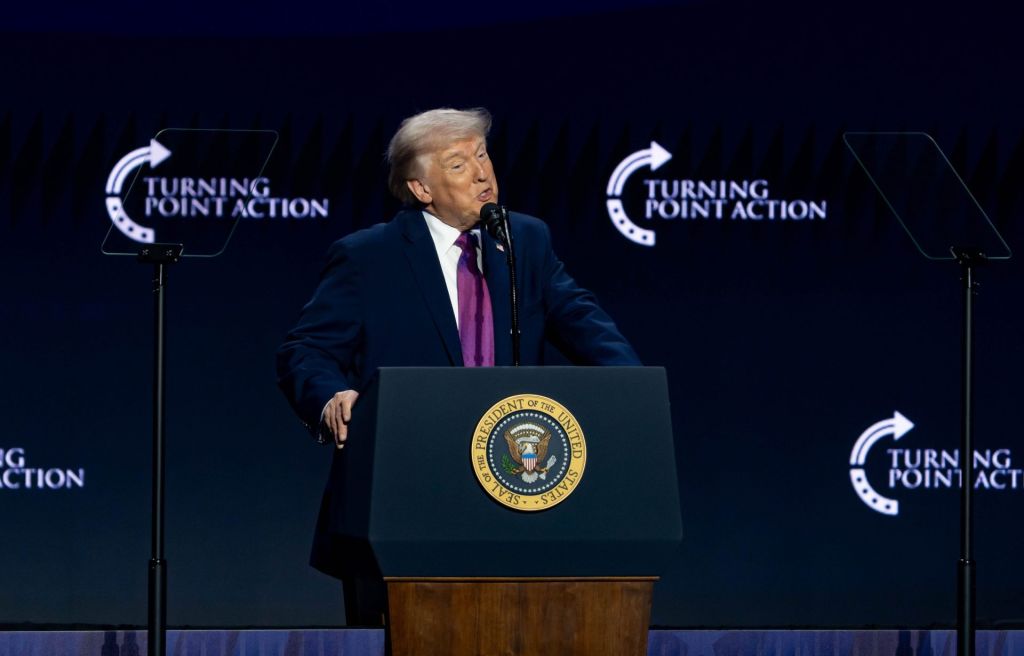
“The world, unfortunately, has become somewhat of a casino,” President Donald Trump said in the Oval Office Thursday in response to a reporter’s question about U.S army soldier Gannon Ken Van Dyke. The U.S. Department of Justice charged the soldier with unlawfully using confidential government information to make money trading on when the U.S. military would capture Venezuelan President Nicolás Maduro.
“You look at what’s going on all over the world, in Europe, and every place, they’re doing these betting things,” Trump said. “I was never much in favor of it. I don’t like it, conceptually. But it is what it is.”
“I’m not happy with any of that stuff,” Trump added. “But they have all these different sites. They have predictive markets. It’s a crazy world. It’s a much different world than it was.”
Trump—who has experience owning and operating casinos through companies that filed for Chapter 11 bankruptcy protection—asked if Van Dyke bet on whether the U.S. would capture Maduro or not capture him. When told his money was wagered on the U.S. capturing Maduro, Trump likened the situation to the late MLB star Pete Rose.
“That’s like Pete Rose betting on his own team,” Trump said. “Pete Rose, they kept him out of the Hall of Fame because he bet on his own team. Now if he bet against his team, that would be no good.”
Trump has long shown interest in Rose, saying last March he intended to posthumously pardon the former Reds great, who has the most hits in MLB history. Not long after that, MLB commissioner Rob Manfred removed Rose and 16 others from the league’s permanently ineligible list, paving the way for Rose to be eligible for a Hall of Fame vote in 2027. Rose died in the fall of 2024, reviving consideration of the issue.
Legislation Targeting Insider Trading
The Maduro situation highlights concerns that many lawmakers have been expressing, including Rep. Ritchie Torres (D., N.Y.), who proposed legislation in January as a direct response to the suspiciously timed Polymarket trades tied to the U.S. military action in Venezuela in January.
“I found it shocking that an anonymous trader could pocket $400,000 from the capture of Maduro,” Torres told Front Office Sports at the time. “The fact that the account could have been a government insider is cause for concern. This has all the hallmarks of potential insider trading. That alone is reason enough to legislate.”
In the ensuing months, many other lawmakers have taken notice of the growing prediction-market industry, and numerous bills have been proposed from politicians on both sides of the aisle, including some aimed at prohibiting sports event contracts.
Trump Jr.’s Involvement
While Trump didn’t sound particularly enthused about the proliferation of prediction markets, his son, Donald Trump Jr., is deeply involved in the industry. Trump Jr. is an investor in Polymarket through his investment firm, 1789 Capital, and is also a strategic advisor to Kalshi.
The Maduro trade was done on Polymarket’s international platform, not its U.S. app. The international platform is not allowed in the U.S., although users can still access it using a VPN. The U.S. app, which is still being fully rolled out, falls under Commodity Futures Trading Commission oversight. The CFTC separately accused Van Dyke of violating the Commodity Exchange Act on Thursday.
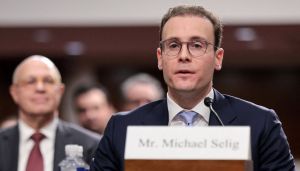
CFTC chairman Michael Selig has argued that federal oversight is the appropriate framework for the prediction-market industry, which he views as regulated financial derivatives rather than gambling products. Earlier this month, the CFTC sued the states of Illinois, Arizona, and Connecticut for attempting to ban platforms from offering sports event contracts in their states.
“I have been crystal clear that anyone who engages in fraud, manipulation, or insider trading in any of our markets will face the full force of the law,” Selig said in a Thursday statement.
Download the FOS App
The business of sports, in your pocket.



Scan the QR code to get the app now.