Want more from Front Office Sports
in your search results?
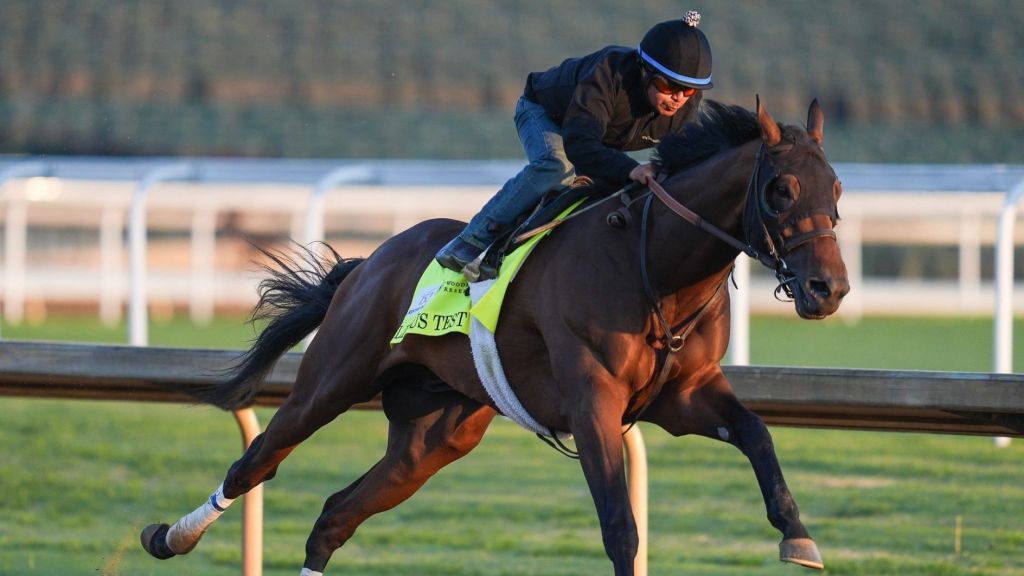
The owner of the Kentucky Derby is paying $85 million for the intellectual property of the Preakness Stakes, giving it a commercial stake in two of the three legs that make up the Triple Crown.
The deal sees Churchill Downs buying the IP of both the Preakness and the Black-Eyed Susan Stakes from an affiliate of 1 S/T Racing, a division of The Stronach Group. Churchill will not own or operate the race itself. The race is operated by Stronach, while Pimlico Race Course—which is undergoing a $400 million renovation that’s expected to be finished by sometime next year—is owned by the state of Maryland.
Churchill will license the IP back to the state of Maryland under a fee structure that was outlined during Thursday’s earnings call by Churchill CEO Bill Carstanjen: Starting next year, Maryland will pay a base fee of $3 million, and beginning in 2028 that fee will grow 2.5% each year. Meanwhile, Maryland will pay Churchill 2% of handle for both the Preakness and Black-Eyed Susan days. “You add those two amounts together, and you get the total,” Carstanjen said.
The transaction comes with this year’s Kentucky Derby right around the corner, on May 2. The Preakness will be held on May 16, followed by the final leg of the Triple Crown, the Belmont Stakes, on June 6.
The deal prompted speculation about whether Churchill Downs could eventually seek a larger role in the Preakness itself, including operating rights, as well as whether it could pursue a de facto consolidation of the Triple Crown by acquiring the Belmont Stakes, currently owned by the New York Racing Association.
It wouldn’t be shocking if Churchill Downs has interest in ultimately getting deeper into business with the Preakness, according to Barry Jonas, senior gaming analyst at Truist Securities.
“It’s clear they are not running or operating it, but I think they would like to if the opportunity presents itself in the future,” Jonas tells Front Office Sports. “This gets them under the tent, so to speak.”
Jonas says the fee-based structure of the deal suggests longer-term strategic intent beyond the immediate economics.
“That’s the starting point,” Jonas says. “I can’t imagine they bought this only for the fees in the long run.”
More broadly, Jonas points to the durability of Churchill Downs’s core asset, the Kentucky Derby, as a reason the company may look to extend its footprint across other marquee races in the sport. Churchill posted record revenue of $663 million in the first quarter of this year, up 3% from a year ago, and record adjusted earnings before interest, taxes, depreciation, and amortization of $257 million, up 5% from 2025.
The thinking could be that Churchill Downs would be a good steward of other tentpole races to help a struggling industry. Racing database platform Equibase says betting on U.S. horse racing totaled about $11 billion in 2025, down 2.1% from the prior year. Overall, there has been a multiyear pattern of modest declines in betting handle.
“It’s no secret that horse racing, in general, has been challenged for a while,” Jonas says. “But the Kentucky Derby continues to grow and be seen as a classic American tradition. If there’s opportunity to extend that to other parts of the Triple Crown, Churchill is clearly well positioned to do that.”
Still, he clarifies that is his personal speculation based on the announcement and comments made during the earnings call—and says there is currently no evidence that Churchill might eventually try to get in on the Belmont Stakes.
“I think we’re nowhere near that,” Jonas said. “We’re even getting ahead of ourselves on the Preakness.”
Representatives for the state of Maryland and the New York Racing Association did not immediately respond to requests for comment.